 Alistair Finch
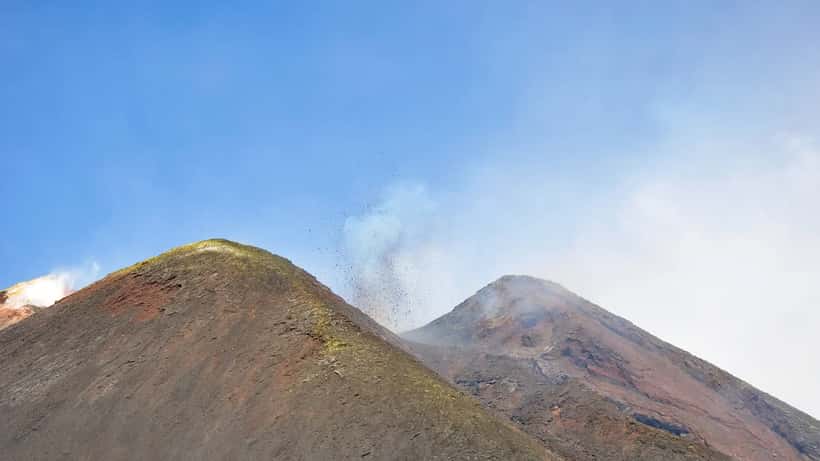
Mount Etna erupted again this month. Strombolian activity at the volcano's South-East Crater between 5 and 11 May 2026 sent an ash cloud drifting east toward Catania, Sicily's busiest international airport — a gateway used by millions of UK holidaymakers every summer. Flight warnings were issued. Disruption followed.
For the thousands of British travellers with Sicily bookings this summer, the question is no longer academic: what happens to your money, your flights, and your legal rights when a volcano interrupts your holiday?
What Etna Is Doing Right Now
Etna has been in an unusually active eruption cycle throughout 2026. A significant flank eruption began on 1 January from a fissure at approximately 2,000 metres, sending lava flows into the Valle del Bove. By May, scientists at the National Institute of Geophysics and Volcanology (INGV) were tracking simultaneous gas emissions from four separate craters: Bocca Nuova, the NE Crater, Voragine, and the SE Crater.
In April 2026, researchers from the University of Lausanne published a study in the Journal of Geophysical Research confirming that Etna draws magma from 80 kilometres below the Earth's surface — a depth and mechanism unique among major European volcanoes, linked to the unusual collision of the African and Eurasian tectonic plates beneath Sicily.
Translation for travellers: Etna is not going quiet. Its activity is structurally driven and geologically unlike anything else in Europe. Ash disruptions to Catania's Fontanarossa Airport (CTA) are expected to continue intermittently across the summer season.
Are Sicily Holidays Currently Safe?
Yes — with an important caveat. All four of Sicily's airports (Palermo, Catania, Trapani, Comiso) are currently operational, and the UK Foreign Commonwealth and Development Office (FCDO) has not issued a travel warning for Sicily. This has practical legal significance, explored below.
Tour operators and airlines have been instructed to keep guided excursions away from Etna's summit zones during active eruption phases. The towns and coastlines that most UK visitors come for — Taormina, Palermo, the Aeolian Islands — are unaffected by volcanic activity.
Your Legal Rights When Etna Disrupts Your Flight
This is where the legal complexity begins — and where UK travellers typically need professional guidance.
Scenario 1: Your flight is cancelled because of ash
Under the UK's retained version of EU Regulation 261/2004 — which still applies to flights departing from UK airports — airlines must offer you a choice between a full refund or an alternative flight when they cancel a service. This applies regardless of the reason for cancellation, including volcanic ash.
However, there is a critical distinction: airlines can avoid paying compensation (which ranges from £220 to £520 per passenger depending on flight distance) if the cancellation is caused by "extraordinary circumstances." Volcanic eruptions have been accepted as extraordinary circumstances in UK and European courts since the Eyjafjallajökull eruptions in 2010.
In practice: you are entitled to a refund or rebooking, but compensation for the cancellation itself may not be payable if the airline successfully argues extraordinary circumstances.
Scenario 2: Your flight is significantly delayed because of ash
If your flight is delayed by more than five hours, you can choose to abandon the journey entirely and claim a full refund under UK Regulation 261/2004. If you choose to continue, you are entitled to meals, refreshments, and accommodation during waits of two hours or more — depending on flight distance.
Again, compensation for the delay itself is subject to the extraordinary circumstances defence.
Scenario 3: Your package holiday is affected
If you booked a package holiday (flights, accommodation, and transfers sold together), UK package travel regulations offer stronger protection. The organiser has a duty to provide the holiday as contracted. If they cannot — due to Etna disrupting flights, for example — they must offer you an alternative of equivalent or higher quality, a lower-cost substitute with a price adjustment, or a full refund within 14 days.
According to UK Civil Aviation Authority guidance on flight disruption, airlines are also required to inform passengers of their rights at the point of disruption — a duty that is frequently not met in chaotic airport situations.
For more detail on how these rights apply across Italian airport disruptions generally, see this guide on Italy jet fuel rationing and passenger rights in 2026.
The Travel Insurance Question
Travel insurance is where many UK holidaymakers are caught out by ambiguous policy language.
Standard travel insurance covers cancellation by airlines (a "travel supplier insolvency" or "cancellation" clause). But volcanic disruption is often categorised as a "natural disaster" — which may be excluded from standard policies, covered by optional add-ons, or subject to a specific "natural catastrophe" limit.
The key question to ask your insurer now, before disruption occurs, is whether your policy covers:
- Trip cancellation due to volcanic ash affecting airports at your destination
- Additional accommodation and transfer costs if you are stranded in Sicily by an ash closure
- Medical costs if you are affected by volcanic gas emissions (sulphur dioxide, which Etna emits in significant quantities)
A legal adviser specialising in travel and insurance disputes can review your policy wording and identify gaps before you travel — a process that takes less than an hour but can be worth hundreds of pounds in the event of a claim.
What the 2010 Precedent Tells UK Travellers
The Eyjafjallajökull eruptions in 2010 are the closest precedent: 100,000 flights cancelled, airlines initially refusing care costs, courts later ruling they were obligated. For Sicily 2026, the risk is lower — Etna's ash clouds are localised — but the legal framework is identical. Airlines must follow UK Regulation 261/2004; package providers must comply with Package Travel Regulations 2018; insurers are bound by policy terms, nothing more.
Knowing your rights before disruption happens is the difference between a resolved claim and a stressful one.
What to Do If Your Sicily Holiday Is Disrupted This Summer
If Etna disrupts your plans:
- Do not accept vouchers — you are entitled to a cash refund if your flight is cancelled. Vouchers are offered at the airline's convenience, not yours.
- Keep all receipts for meals, accommodation, and transfers incurred due to the disruption. UK Regulation 261/2004 entitles you to reasonable care costs.
- Document everything — note the time your flight was cancelled or delayed, keep emails from the airline, and photograph any departure board confirmation.
- Contact your travel insurer immediately — most policies have time limits for notification of claims.
- Seek legal advice if you receive a refusal — airlines and insurers regularly reject valid claims, banking on passengers not pursuing them.
A travel law solicitor can assess your case on a no-win, no-fee basis in many instances, and UK small claims court provides an accessible route for claims under £10,000 without requiring legal representation.
Sicily is one of Europe's great summer destinations. Etna is one of its great geological spectacles. Going this summer with full knowledge of your legal rights costs nothing — and may save you considerably more than the price of a plane ticket.
This article provides general legal information and does not constitute legal advice. Individual circumstances vary. Consult a qualified solicitor for advice specific to your situation.
