 Charlotte Hughes
Adolescence Takes 4 BAFTAs: What Wasteman at Shepton Mallet Prison Gets Right About UK Youth Justice
On 10 May 2026, the Netflix drama "Adolescence" swept the BAFTA Television Awards, winning four major categories: Limited Drama, Leading Actor (Stephen Graham), Supporting Actor (Owen Cooper), and Supporting Actress (Christine Tremarco). The same evening, film enthusiasts were reminded that Philip Barantini — the director of "Adolescence" — also produced "Wasteman," a prison thriller filmed almost entirely inside the Victorian B Wing of Shepton Mallet Prison in Somerset, which had received a BAFTA Film Award nomination earlier in 2026.
The two productions together have placed the UK's youth and criminal justice systems under sustained public scrutiny. "Adolescence" dramatises a 13-year-old boy charged with murder; "Wasteman" explores life inside one of Britain's most historically significant prisons. As audiences process both works, the questions they raise — how does the UK legal system treat young offenders? What rights do defendants have? What happens inside the custody system? — deserve honest answers.
Shepton Mallet Prison and "Wasteman": A Brief Context
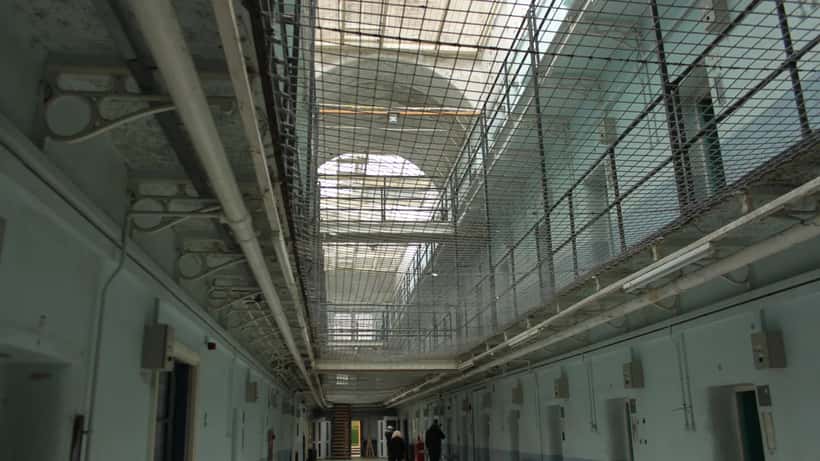
Shepton Mallet Prison in Somerset is one of the oldest continuously operational prisons in England, having held inmates from the Napoleonic era through to its closure in 2013. Since its decommissioning, it has been acquired by the Cove Group and developed as a heritage and visitor destination — as well as an increasingly popular film location.
"Wasteman," directed by Elliott Tittensor and starring David Jonsson and Tom Blyth, was filmed in June 2024 using the prison's original Victorian B Wing as the central set. The production was a debut feature for its director and earned an Outstanding British Debut nomination at the 2026 BAFTA Film Awards, bringing national media attention to the Shepton Mallet location.
The decision to film on site gives the production an authenticity that studio sets rarely achieve — and it reflects a broader trend of UK productions using genuine custodial environments to ground narratives about the justice system in visible, physical reality.
What "Adolescence" Captures — and What It Omits
"Adolescence" follows the investigation and arrest of 13-year-old Jamie Miller after a teenage girl is found dead in his community. The drama unfolds across four episodes, each filmed in a single unbroken take. Its depiction of how a child enters the criminal justice system — custody, legal representation, interview procedures, the Crown Prosecution Service's charging decision — has been praised by legal professionals for its accuracy.
Several specific elements stand out. The drama correctly depicts the requirement that a child suspect have an "appropriate adult" present during police interviews — a safeguard under the Police and Criminal Evidence Act 1984 (PACE) that ensures a responsible adult, usually a parent or social worker, is present when a minor is questioned. The absence or inadequacy of this safeguard in real cases has been cited in miscarriage of justice reviews.
The drama also accurately portrays the separate court pathway for children. Cases involving defendants under 18 are heard in the Youth Court, not the Crown Court, unless the charge is sufficiently serious. A murder charge by a 13-year-old, as depicted, would be transferred to Crown Court — which the series handles correctly.
Where "Adolescence" is deliberately opaque is in its final answer: Jamie's guilt or innocence is never definitively confirmed. This ambiguity is artistically intentional. In legal terms, it reflects the standard of proof — beyond reasonable doubt — that the prosecution must meet, and the human difficulty of establishing certainty in complex cases involving minors.
The UK Youth Justice System: What Criminal Lawyers Need You to Know
The UK has one of the lowest ages of criminal responsibility in Europe. In England and Wales, a child can be prosecuted from the age of 10. Scotland's age of criminal responsibility was raised to 12 in 2021, and reform advocates continue to push for further increases. France, Germany, and most of northern Europe set the threshold at 14 or above.
For families who find themselves navigating the youth justice system — whether as the defendant's family or, in rarer cases, as complainants — the process is often bewildering. A criminal defence solicitor with youth justice experience can:
Advise on the appropriate adult requirement and ensure a child's rights under PACE are fully observed during police questioning. Assess whether an interview conducted without proper safeguards should be challenged. Advise on the distinction between cautions, conditional cautions, and formal prosecution — and when a caution is in the child's long-term interest. Represent a child before the Youth Court or Crown Court, ensuring they understand proceedings conducted in accessible language. Navigate the referral order system, which is the standard first custodial response for most youth offenders and operates through youth offender panels, not prison.
According to the Youth Justice Board for England and Wales, the number of children entering the criminal justice system has fallen significantly over the past decade, from over 100,000 first-time entrants in 2008 to under 20,000 by the mid-2020s. This reflects changes in policing policy, diversion programmes, and early intervention. But the cases that do proceed through the formal system are often among the most serious and the most complex.
Crime in the Real Shepton Mallet — A Local Angle
While "Wasteman" draws audiences to Shepton Mallet through cinema, local crime data presents a different picture of Somerset justice concerns. Shepton Mallet recorded 138 offences in March 2026, up from 84 in February — a sharp month-on-month rise in which violent crime was the single largest category at 67 incidents. Local crime analysis consistently ranks the town among Somerset's higher-risk small urban areas.
For Somerset residents concerned about local crime, understanding the reporting process, victim support rights, and community safety orders can make a material difference. A solicitor with local criminal law expertise can advise residents on civil remedies for anti-social behaviour, how to engage effectively with police and local authority safety teams, and — in the most serious cases — whether civil injunctions are an appropriate response to persistent criminal conduct by identifiable individuals.
Art, Justice, and the Expert Perspective
The enduring power of productions like "Adolescence" and "Wasteman" is that they make the abstract mechanics of the justice system viscerally real. An audience watching a 13-year-old taken into custody understands the appropriate adult requirement in a way that no legal textbook achieves.
That public understanding matters. Families who know what safeguards exist — and who to call when those safeguards are not applied — are better placed to protect their children when contact with the criminal justice system cannot be avoided.
If you have a family law, criminal defence, or youth justice matter, a specialist solicitor is the right first call.
Legal disclaimer: This article is for informational purposes only and does not constitute legal advice. Criminal and youth justice proceedings are highly fact-specific. Consult a qualified criminal solicitor for advice relevant to your situation.
