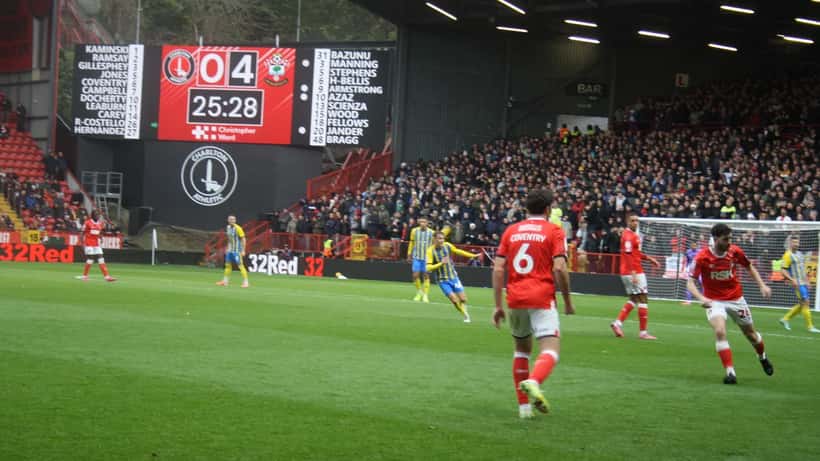
Southampton midfielder Shea Charles wrote his name into FA Cup folklore on 4 April 2026, scoring a late winner to send Arsenal crashing out of the competition and propel his Championship side into the semi-finals. The goal, struck with composure beyond his years, capped a remarkable twelve months for the Northern Ireland international that has seen him transform from Manchester City academy graduate to one of English football's most talked-about young talents.
Charles, who joined Southampton from Manchester City in the summer of 2023, has steadily grown into a pivotal figure for the South Coast club. His stoppage-time strike against Leicester City on 10 February 2026 — a 96th-minute winner that completed a stunning 4-3 comeback from 3-1 down — already demonstrated his capacity for decisive moments. The FA Cup quarter-final winner against Premier League opposition merely confirmed what scouts and coaches have long suspected: the 20-year-old possesses the mentality to match his technical ability.
From Manchester City's academy to Southampton's stage
Charles began his football education at one of the most prestigious academies in world football. Manchester City's youth setup has produced a conveyor belt of talent in recent years, from Phil Foden to Cole Palmer, but not every graduate thrives after leaving the Etihad Campus. For every success story, dozens of players drift into the lower leagues or out of professional football entirely, unable to adapt to the demands of senior competition.
Southampton's reputation for developing young players made them an obvious destination. The club's academy, consistently ranked among England's best, has a track record of giving teenagers first-team opportunities and selling them on to elite clubs for substantial fees. Under their current management, Charles has benefited from regular playing time in the Championship — experience that would have been harder to come by had he remained at City, where the midfield competition includes established internationals and billion-pound recruits.
The move has paid dividends for both player and club. Charles has started the majority of Southampton's league fixtures in 2025-26, operating primarily as a defensive midfielder but showing increasing versatility by advancing into goalscoring positions. His two stoppage-time winners in the space of seven weeks suggest a player who relishes high-pressure situations rather than shrinking from them.
The pressure on young footballers in the modern game
Charles's rapid ascent highlights both the opportunities and the risks facing young professional athletes in 2026. Social media scrutiny begins the moment a teenager signs their first scholarship. Every performance is analysed, every mistake archived, and every rumour amplified across platforms that reach millions within seconds. The mental load on a 20-year-old who is still learning his trade is immense.
Sports psychologists who work with academy players note that the transition from youth football to senior competition represents one of the most vulnerable periods in an athlete's career. The technical gap is often less significant than the psychological one. Young players must adapt to faster decision-making, more physical opponents, and the realisation that their livelihood depends on results. Those who handle this transition well typically share certain traits: emotional stability, strong support networks, and the ability to compartmentalise criticism.
Charles appears to possess these qualities. His post-match interviews are notably measured, focusing on team achievements rather than individual plaudits. Northern Ireland manager Michael O'Neill has praised his professionalism at international level, where Charles has already accumulated double-digit caps despite his age. This maturity bodes well for his long-term trajectory, even as the inevitable transfer speculation intensifies.
What football development experts look for in emerging talent
Scouts and recruitment analysts evaluate young midfielders across several dimensions. Technical proficiency — passing range, first touch, ball retention under pressure — is the baseline requirement. Physical attributes such as stamina, acceleration, and aerial ability determine whether a player can survive the demands of senior football. But the decisive factor, according to research published by the Football Association's coaching department, is often cognitive: the speed at which a player reads the game and anticipates play development.
Charles excels in this area. His goal against Arsenal came not from a set-piece or a fortunate deflection, but from intelligent positioning in the penalty area as the ball broke loose from a corner. He arrived at the right moment, adjusted his body shape under pressure, and finished with precision. These are not instincts that can be easily coached; they reflect a natural football intelligence that separates promising youngsters from future elite players.
Tactical flexibility is another valued trait. Modern midfielders are rarely pure specialists. Charles has played as a holding midfielder, a box-to-box presence, and even as an auxiliary centre-back when Southampton have needed to see out tight matches. This versatility increases his value to prospective buyers and extends his career longevity by reducing the risk of being typecast in a single role.
What happens next for Charles and Southampton
Southampton's FA Cup run has provided a welcome distraction from their Championship promotion push, but the club faces a delicate balancing act. Charles is already attracting interest from Premier League clubs, with scouts reportedly monitoring his performances closely. Southampton's business model has historically involved selling developed talent to fund continued academy investment, and Charles could command a significant fee if the club decides to cash in during the summer transfer window.
For Northern Ireland, Charles represents a generational talent. The national team has struggled to produce elite-level players in recent decades, and his emergence offers hope of a more competitive future in European Championship and World Cup qualifying campaigns. Manager Michael O'Neill will be eager to build his midfield around Charles for the next decade.
British football fans watching Charles's development should appreciate the rarity of what they are witnessing. Not every academy graduate becomes a match-winner at 20. Not every match-winner maintains the humility to keep improving. If Charles continues on his current path, his name will soon feature in conversations about the best young midfielders in Europe — and Southampton's faith in giving youth a chance will have been vindicated once again.
