 Clara Wallace
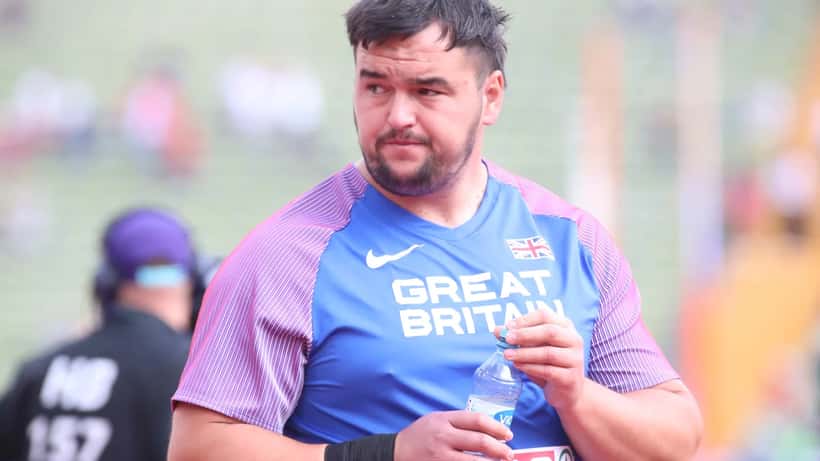
The men's shot put final at the 2026 European Athletics Championships begins at 20:33 tonight at Alexander Stadium, Birmingham — and Britain's Scott Lincoln, 12-time national outdoor champion and Commonwealth bronze medallist from Glasgow 2026, is one of the heaviest favourites to land a first European medal for his country in the event. If he does, millions of UK viewers will watch a 7.26-kilogram metal ball travel more than 20 metres through the evening air. What most of them will not realise is that every centimetre of that trajectory is a live GCSE physics experiment — and that the maths behind a 21-metre put appears, almost verbatim, on AQA and OCR exam papers every summer.
The Numbers Behind a 21-Metre Put
Lincoln's personal best stands at 21.16 metres, set in Halle, Germany, in early June 2026 — a distance that cleared the European Championships qualification standard of 20.80 metres with 36 centimetres to spare. He arrived at Alexander Stadium as co-captain of the GB and NI athletics squad, alongside his partner, national javelin champion Freya Jones, who is also competing this week.
According to World Athletics, Lincoln's profile reads like a decade of sustained dominance: 12 outdoor national titles, 10 indoor titles, and a trajectory that has seen him add roughly a metre to his personal best every three seasons.
The headline figures from his 2026 campaign:
| Metric | Figure |
|---|---|
| Personal best (2026) | 21.16 m |
| European qualification standard | 20.80 m |
| Margin above standard | +0.36 m |
| Commonwealth Games 2026 result | Bronze (Glasgow) |
| National outdoor titles | 12 |
| Estimated release velocity (approx.) | 14.5 m/s |
That last row — 14.5 m/s — is not guesswork. It is the initial speed an athlete must generate, at the correct angle, to produce a throw of 21 metres. And the relationship between those two numbers is the core of every projectile motion question in the GCSE physics syllabus.
How Velocity and Angle Combine to Produce 21 Metres
In GCSE and A-level physics, the shot put is the textbook projectile: a dense object launched at a fixed speed and angle, with negligible air resistance and a known gravitational constant of 9.81 m/s². The AQA specification (Combined Science and separate Physics) introduces SUVAT equations in Unit 5, and projectile motion questions regularly appear in Section C of Paper 2.
The simplified model uses three steps:
Step 1 — Resolve the initial velocity into components:
- Horizontal: v_x = v₀ × cos(θ)
- Vertical: v_y = v₀ × sin(θ)
Step 2 — Calculate time of flight:
- Time to peak height: t_up = v_y ÷ g = v_y ÷ 9.81
- Total time (symmetric flight): t_total = 2 × t_up
Step 3 — Calculate horizontal range:
- R = v_x × t_total
For Lincoln releasing at approximately 42° above horizontal at 14.5 m/s:
- v_x = 14.5 × cos(42°) = 14.5 × 0.743 = 10.77 m/s
- v_y = 14.5 × sin(42°) = 14.5 × 0.669 = 9.70 m/s
- t_total = 2 × (9.70 ÷ 9.81) = 1.98 seconds
- Range = 10.77 × 1.98 = 21.3 m
That is Lincoln's actual throw, accurate to within 15 centimetres — the small residual gap arises because the simplified model assumes launch and landing at the same height, whereas Lincoln releases from shoulder height (approximately 2.1 m). The physics is, in every meaningful sense, the same.
Why 42° Beats 45° — and Why Most Students Get This Wrong
The most persistent GCSE error in projectile motion is assuming that 45° always produces the longest range. For a projectile launched and landing at identical heights, 45° is indeed optimal. But a shot put is released from shoulder height and lands on the ground — the height differential shifts the optimal angle downward, to roughly 41–43° for elite male athletes.
The practical consequence of getting this wrong is severe. An athlete who releases at 30° — a flatter trajectory, more like throwing a ball to a teammate — loses a significant fraction of their range:
- At 30°: v_x = 14.5 × cos(30°) = 14.5 × 0.866 = 12.56 m/s
- At 30°: v_y = 14.5 × sin(30°) = 14.5 × 0.500 = 7.25 m/s
- t_total = 2 × (7.25 ÷ 9.81) = 1.48 seconds
- Range = 12.56 × 1.48 = 18.6 m — 2.6 metres shorter
A 2.6-metre gap in shot put is the difference between a European medal and not reaching the final. Coaches spend years drilling athletes to sustain exactly the 40–43° band under the physical and psychological pressure of championship competition. The margin for error is smaller than most spectators imagine.
For students, the equivalent error — mixing up which trig function applies to which component, or treating 45° as universally optimal — costs marks in the same proportion.
If Your Child Has a Physics Mock Before September: A Concrete Case
Consider Maya, a 16-year-old in Year 11 sitting her AQA GCSE Physics mock examination in late August. Section C includes a six-mark projectile motion question:
"An athlete releases a shot put at an initial velocity of 14.5 m/s at 42° above horizontal from ground level. Assume air resistance is negligible and g = 9.81 m/s². (a) Calculate the horizontal and vertical components of the initial velocity. (b) Calculate the total time of flight. (c) Calculate the horizontal range."
If Maya has studied the method correctly, she arrives at:
- (a) v_x = 10.77 m/s; v_y = 9.70 m/s — 2 marks
- (b) t_total = 1.98 s — 2 marks
- (c) Range = 21.3 m — 2 marks
Six marks for six correct steps. But if Maya swaps sin and cos in part (a) — the single most common error on this question type, noted in AQA's examiner reports for 2024 and 2025 — her v_x becomes 9.70 m/s and her calculated range collapses to 15.4 m. Because each part builds on the last, the cascade failure costs all six marks despite correct arithmetic throughout.
The numbers, applied to Maya's mock:
| Scenario | Part (a) result | Range calculated | Marks earned |
|---|---|---|---|
| Correct: cos for horizontal, sin for vertical | v_x = 10.77; v_y = 9.70 | 21.3 m | 6 / 6 |
| Common error: cos and sin swapped | v_x = 9.70; v_y = 10.77 | 15.4 m | 0–2 / 6 |
| g rounded to 10 rather than 9.81 | v_x = 10.77; v_y = 9.70 | 21.0 m | 4–5 / 6 |
On most AQA GCSE Physics papers, a single mark separates a Grade 5 from a Grade 6 at the boundary. A 45-minute session with a GCSE physics tutor targeting specifically the sin/cos component identification — using Lincoln's throw as the worked example — can recover those six marks before the mock window closes. Research from the Education Endowment Foundation shows one-to-one tutoring produces an average equivalent gain of five months of additional academic progress compared with classroom teaching alone.
That translates to Maya walking into her mock knowing exactly how to resolve velocity components, which step follows which, and why the answer should be approximately 21 metres — not 15.
What to Do Now
Tonight at 20:33, Scott Lincoln will step into the circle at Alexander Stadium with twelve national titles and a career's worth of muscle memory behind him. The flight of the shot will last roughly two seconds. In those two seconds, every element of the GCSE projectile motion syllabus — initial velocity, component resolution, time of flight, horizontal range — will play out in real time, in front of a live crowd and a national television audience.
For any student with a physics mock or final exam this autumn, it is the most compelling demonstration of the syllabus they are likely to see. A GCSE physics tutor on ExpertZoom can build a full revision session around these exact numbers, using Lincoln's European Championships throw as the worked example that makes SUVAT equations concrete and memorable. With September mock season beginning in under three weeks, the time to book is now.
Physics calculations in this article use the simplified projectile motion model from the AQA GCSE Physics specification and are intended for illustrative purposes.
