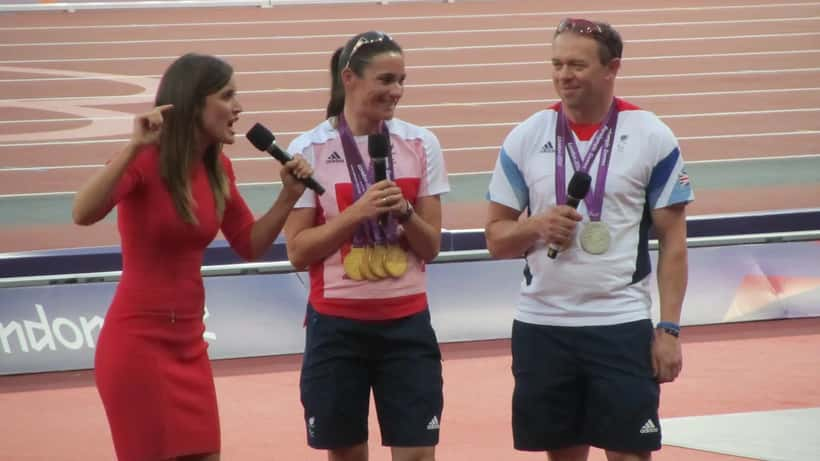
 Abigail Clarke
Dame Sarah Storey, Great Britain's most decorated Paralympic athlete, stepped back from competitive cycling in July 2026 after nearly three decades competing at the highest level across two Paralympic sports. Having claimed 19 gold medals across nine Paralympic Games — and announcing she will not pursue a tenth Games in Los Angeles 2028 — Storey's retirement has reignited a conversation that most disabled athletes avoid until it is too late: the long-term health consequences of elite para-sport, and when to seek expert guidance before and after competitive careers end.
Three Decades of Elite Competition — and What It Does to the Body
Storey began her Paralympic career as a swimmer in 1992, before switching to cycling and redefining what was thought possible for a limb-deficient athlete. According to British Cycling, she competed into her late 40s at speeds and intensities that rival able-bodied elite cyclists — a remarkable achievement, but one that carries cumulative physiological costs that are rarely discussed publicly.
Elite Paralympic cycling places sustained pressure on the cardiovascular system, joints, and connective tissue. For athletes with upper limb differences or other physical impairments — the classification in which Storey has competed — the dominant limb and compensating muscle groups often absorb asymmetric load across decades of training and competition. Published research has identified higher rates of overuse injuries and musculoskeletal asymmetry in para-athletes who compete with limb differences compared with able-bodied counterparts, particularly in the load-bearing and propulsive limbs.
At 48, Storey joins a growing cohort of retired elite Paralympic athletes who are navigating life after the professional support structures of national sports programmes — and, in many cases, discovering health issues that were masked by competitive adrenaline and team medical infrastructure. For athletes who are not at the pinnacle of the GB programme, accessing that level of ongoing medical care after retirement is far from guaranteed.
The Expert Gap: Why Retired Disabled Athletes Often Fall Through the Cracks
In the UK, the route to specialist sports medicine or occupational health support for disabled athletes is not straightforward. NHS GP appointments provide a starting point, but GPs are rarely trained in the specific intersection of disability, high-performance athletic history, and age-related decline. A retired Paralympic swimmer or cyclist is a genuinely unusual patient: their body has adapted around a disability over decades, and the physiological changes that come with ageing interact with those adaptations in ways that general practitioners are not always equipped to assess.
This is what experts call the "transition gap" — the space between "your bloods are fine" and "here is an adapted health plan that accounts for your lifetime of asymmetric loading, your cardiovascular history, and your current limb function." Very few NHS pathways fill it without a referral chain that a patient must initiate themselves — and that chain often begins with knowing which specialist questions to ask.
Health specialists with experience in para-sport and adaptive medicine can assess these specific risks directly. A sports medicine consultant or occupational health expert with a disability focus can map the cumulative effects of a para-athletic career onto a personalised health plan — identifying, for instance, whether shoulder function has declined sufficiently to warrant targeted physiotherapy, or whether years of intense cardiovascular training have altered resting cardiac rhythms in ways worth monitoring beyond standard GP checks.
Dame Sarah Storey — as a high-profile, publicly supported athlete — will retain access to elite-level expert guidance through her transition into her new role as broadcaster for the Milano Cortina 2026 Winter Paralympics. The question is whether the thousands of club-level and national-level disabled athletes across the UK, retiring from their sports every year with far less fanfare, know that equivalent expert consultation exists for them too.
A Concrete Scenario: What Happens When Programme Support Ends
Consider the situation of a 42-year-old British woman who has competed in Paralympic cycling at national level for 18 years, with a below-knee amputation on her dominant pedalling side. She has never suffered an injury serious enough to end a season, but has managed persistent knee pain in her intact leg — the leg carrying the majority of pedalling load — for the last five years.
She retires in September 2026. Her GB programme medical support ends 90 days after her final competition date. She returns to her GP.
If her GP treats the knee complaint through standard pathways, she may wait 12 to 18 weeks for an NHS physiotherapy referral. A sports medicine specialist with adaptive sport experience would likely identify the condition far more precisely within two consultations: chronic patellar tendinopathy caused by 18 years of asymmetric pedalling load — a condition that responds well to specific eccentric loading exercises adapted for single-sided engagement, but which standard physiotherapy protocols frequently fail to address.
The financial arithmetic matters here. A private sports medicine consultation in the UK runs between £150 and £250 per session. Two sessions — an assessment and a follow-up — means an out-of-pocket cost of roughly £300 to £500. Against the alternative of a 14-month NHS queue that ends with generic physiotherapy, many retired disabled athletes find this calculation favours early expert consultation — particularly when unmanaged patellar tendinopathy, if left for 18 months or more, carries a meaningful risk of progressing to conditions requiring surgical intervention costing several thousand pounds.
If she consults a specialist within three months of retirement, the probability of resolving the tendinopathy through conservative treatment alone is significantly higher. If she waits 18 months, the window for non-surgical intervention narrows substantially. The expert difference is not just clinical — it is economic, and it is time-sensitive.
Important: The scenario above is illustrative only and does not constitute medical advice. Individual health situations vary. Always consult a qualified health professional for personal assessment and treatment.
When Should a Disabled Athlete Seek Expert Consultation?
Dame Sarah Storey's retirement is a moment of celebration for British para-sport. It is also a prompt for a wider conversation about what disabled athletes at every level should do when their competitive careers end — particularly those retiring from sport without the visibility or resources of an Olympic programme.
According to ParalympicsGB, Storey competed across nine Paralympic Games spanning 34 years — an extraordinary span of elite physical stress. For athletes who have competed at any level for a decade or more, the transition out of competitive structure warrants proactive health planning, not a passive wait for symptoms to worsen.
Three specific triggers should prompt a consultation with a sports medicine or occupational health specialist:
Within 90 days of retirement from structured competition. This is the critical window when baseline function is highest and most measurable. An expert assessment at this point creates a comparison point for future monitoring and identifies compensatory patterns before they become symptomatic.
When a GP referral takes longer than eight weeks for a complaint with athletic history. Standard NHS pathways are not calibrated for the complexity of disabled athletic bodies. If a referral is delayed or results in generic advice, seeking a specialist with para-sport experience is a reasonable and cost-effective step.
At any point where asymmetric pain or reduced function is dismissed without acknowledgement of athletic history. Disabled athletes frequently report that their years of competitive adaptation — and the health effects this carries — are not taken into account in standard clinical assessments. A specialist who understands para-sport physiology will ask different questions and reach different, more precise conclusions.
For disabled athletes across the UK who have given years to their sport and who are now navigating retirement without the support infrastructure of national programmes, the right expert is available. The pathway is not always obvious, but the consultation exists — and the evidence consistently shows that acting early is less expensive, less disruptive, and more effective than waiting.
Dame Sarah Storey's incomparable career ends with 19 golds and a legacy that will define British Paralympic sport for a generation. For the thousands of athletes inspired by her — many of whom are managing the slow, quiet exits of club retirements rather than national celebrations — her departure might also be the most valuable reminder of all: that after a lifetime of competing around and through a disability, expert health support is not a luxury. It is the next event on the calendar.
