 Sophia Hamilton
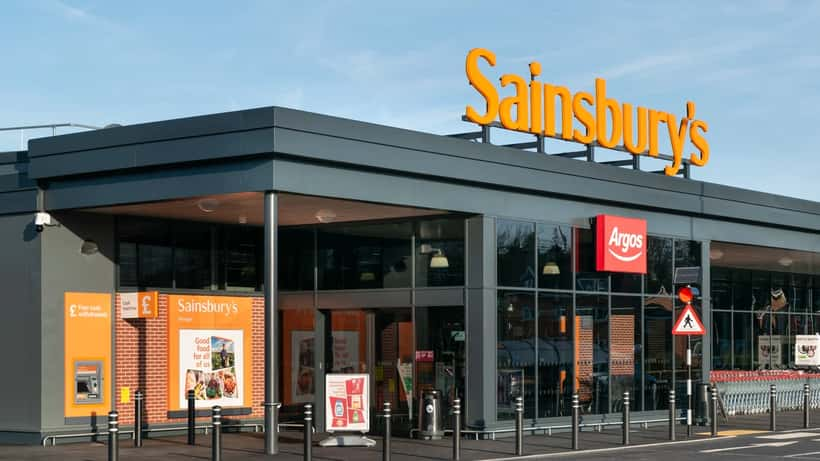
Reports published on 5 October 2026 confirm that Sainsbury's held preliminary merger talks with Morrisons between November 2025 and February 2026, before walking away from the discussions. The Financial Times broke the story on Monday, revealing that the UK's second and fifth largest supermarkets considered combining into a business that would command approximately 24% of the grocery market. No deal has been agreed, but sources close to both parties say talks could yet resume.
What Just Happened — and Why It Matters Now
The talks, had they progressed, would have created the UK's second-largest grocery chain by market share. Sainsbury's currently holds 15.6% of the market and Morrisons 8.4%. A combined entity would have exceeded Asda's 11.5% share and come within four percentage points of Tesco, which commands 27.8% of UK grocery spend.
Morrisons is owned by private equity firm Clayton Dubilier & Rice, which acquired the chain in a £7bn takeover in 2021 and is widely expected to seek an eventual exit. A merger with Sainsbury's would provide that exit while giving Sainsbury's the scale it needs to compete more aggressively with Tesco and the German discounters, Aldi and Lidl, which have collectively grown to control over 18% of UK grocery spend in 2026.
The immediate obstacle to any deal is the Competition and Markets Authority. In 2019, the CMA rejected Sainsbury's proposed £7.3bn acquisition of Asda, concluding that a merger would push up prices for consumers and reduce competition. A renewed attempt to combine with Morrisons would invite the same level of scrutiny — and almost certainly require the disposal of stores in areas where the two chains significantly overlap.
The Question Every Supplier Is Actually Asking
For the UK's tens of thousands of food and drink producers that supply either Sainsbury's or Morrisons, the concern is not about shareholder returns or market share percentages. It is far more direct: what happens to my supply contract?
Supermarket mergers consistently trigger a rationalisation of supplier bases. When two large buyers become one entity, the merged retailer reviews its supplier list for duplication — particularly in own-brand categories, fresh produce, and regional lines. A supplier that lists exclusively with Morrisons but not Sainsbury's (or vice versa) can find itself without a customer after integration.
This is not hypothetical. During the Sainsbury's-Asda review process in 2018, fresh produce and bakery suppliers gave evidence to the CMA describing the pressure a merged buying desk would exert on input prices and listing security. The CMA ultimately cited these supply chain concerns as part of its rationale for blocking the deal.
How GSCOP Protects — and Where It Doesn't
The Groceries Supply Code of Practice (GSCOP) governs how the UK's 14 largest designated retailers, including both Sainsbury's and Morrisons, must treat their suppliers. Any merged entity that exceeds the £1bn turnover threshold — which a combined Sainsbury's-Morrisons would, by a factor of roughly 28 — remains covered by GSCOP. The enforcing body is the independent Groceries Code Adjudicator, which can investigate, publicly name, and fine retailers who breach the code.
GSCOP's core protections for suppliers include:
- No retrospective changes to agreed supply terms. A merged entity cannot unilaterally replace your existing supply agreement with less favourable terms without proper notice and agreement.
- Delisting notice requirements. A retailer must give reasonable advance notice before removing a product from range. The established industry standard, consistently upheld by the GCA, is a minimum of six months.
- Protection against unjustified forecasting penalties. If a retailer over-orders and tries to force you to absorb unsold stock, GSCOP provides a route to compensation.
Where GSCOP does not protect suppliers is in the forward-looking decision of whether to stock a product at all. After a merger, the new entity can choose not to renew a listing agreement — provided it gives adequate notice — without any GSCOP violation. This is the legal grey zone that makes small producers genuinely vulnerable in any consolidation scenario.
The CMA's Phase 1 review of a formal merger would last 40 working days. If remedies are not agreed, a Phase 2 investigation can run for up to 24 weeks. Suppliers can and do submit evidence at both stages, particularly where they can demonstrate that the merged entity's buying power would allow it to extract value from the supply chain in ways the current competitive structure prevents. A solicitor with competition law experience can advise on whether a submission is warranted and how to frame it effectively — a process comparable to how UK media companies approached the CMA during the ITV–Sky competition review.
Concrete Case: A Yorkshire Cheese Producer's Numbers
Consider a North Yorkshire artisan cheese producer supplying 180 Morrisons stores under a three-year listing agreement, generating £240,000 in annual revenue — roughly 38% of their total turnover. The listing was won on the back of Morrisons' longstanding commitment to regional British produce, a positioning the merged entity might not maintain with the same rigour.
Under a standard Morrisons supply contract of this type, the listing can be terminated with six months' notice. If a merger completes in mid-2027 and the new entity conducts a supplier rationalisation exercise in Q3 2027 — a realistic integration timeline — the producer could receive a delisting notice as early as March 2027, with products removed by September 2027.
The financial exposure breaks down as follows:
- Lost revenue during notice period: approximately £120,000 — equivalent to six months of the annual contract value
- If the delisting breaches GSCOP (for instance, if terms are changed without notice during integration): a formal complaint to the Groceries Code Adjudicator carries no filing fee and the GCA can compel retailer compliance within weeks
- If legal advice is needed to assess a GSCOP breach or prepare a CMA submission: a commercial solicitor typically charges £8,000–£15,000 for preparation and drafting work
- Cost of a proactive contract review before any deal is announced: £500–£1,500
The if/then logic is straightforward: if your business currently derives more than 25% of its annual turnover from either Sainsbury's or Morrisons, then any GSCOP breach that occurs within 12 months of a merger-related listing change gives you a free right of complaint to the GCA — but only if you can produce clear documentary evidence of your original agreed supply terms. A supply agreement reviewed now, with key obligations and notice periods clearly identified, costs roughly 1% of the revenue at risk. Waiting for a delisting notice to arrive before seeking advice dramatically increases both cost and complexity.
What to Do Before Any Deal Is Confirmed
Audit your supply contract today. Identify what notice periods apply, whether your agreement includes a change-of-control clause (which can trigger early termination rights or early renegotiation rights), and what minimum commitment obligations are in place. Some contracts drafted before 2023 do not reflect the updated GSCOP guidance issued by the GCA in February 2024 — a gap worth closing.
Model your revenue concentration risk. If one of these two supermarket chains accounts for 20% or more of your annual turnover, this merger is a material commercial risk, not a background development. Alternative listings, whether through food service, independent retail, or direct-to-consumer channels, take 6 to 18 months to build. The time to start is before uncertainty sets in.
Consider timing a contract renewal strategically. The window between merger rumour and formal deal announcement is historically the strongest negotiating period for suppliers. Once due diligence is under way, the merged entity's procurement teams shift into cost-reduction mode — not relationship-development mode.
Prepare your GCA complaint template in advance. If you have experienced any practice that you believe may already breach GSCOP — delayed payments, requests for retrospective discounts, forecasting pressure — document it now. The GCA investigates complaints on the basis of evidence. Suppliers who have their records in order are significantly better placed than those who reconstruct events after the fact.
The Sainsbury's-Morrisons deal may or may not happen. But the news published today confirms that the consolidation pressure in UK grocery is real and actively in play. For any food producer with meaningful exposure to either chain, acting now — with qualified legal advice — is the lowest-cost way to protect a contract that may be worth significantly more than the cost of reviewing it.
This article is for informational purposes only and does not constitute legal advice. For advice specific to your supply agreements, consult a qualified commercial solicitor.
