 Abigail Clarke
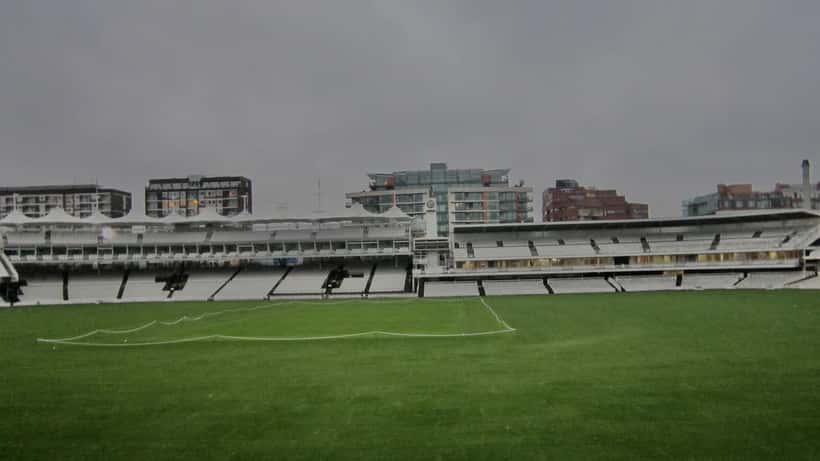
The Ruth Strauss Foundation marked its eighth #RedforRuth Day at Lord's yesterday, 5 June 2026, turning day two of the Rothesay Men's Test red in support of families facing incurable cancer and to fund research into lung cancers that affect people who have never smoked. The charity, founded by former England cricket captain Sir Andrew Strauss after his wife Ruth died in 2018 from a non-smoker's lung cancer, has now raised more than £4.4 million across seven years, supported over 5,000 families, and trained more than 1,800 cancer healthcare professionals.
This year's appeal was lifted by a £10,000 matched-fund donation that doubled every contribution up to a ceiling of £85,000. But the more important number for UK adults is one the foundation has campaigned on for years: roughly 15 to 20% of UK lung cancers are diagnosed in people who have never smoked. That fact alone changes how the symptoms below should be read.
Important: This article provides general health information drawn from public NHS guidance and the Ruth Strauss Foundation's published materials. It is not medical advice. Anyone with persistent symptoms should consult a GP or call NHS 111.
Why "non-smoker lung cancer" is not a small category
Cancer Research UK and the NHS both note that smoking accounts for the majority of UK lung cancer cases, but the absolute number of non-smoker cases is large. With roughly 49,000 UK lung cancer diagnoses each year, a 15-20% non-smoker share works out at between 7,000 and 10,000 people annually — broadly comparable to UK cases of cervical or ovarian cancer in scale.
These cancers tend to occur in adults under 60 more often than the smoker-driven cases, and are more frequent in women, particularly women of East Asian heritage. They are also disproportionately driven by specific genetic mutations — EGFR, ALK and ROS1 — that respond well to targeted treatments developed in the last decade, provided the diagnosis is made early enough.
That last clause is the consistent foundation message: the gap between early-stage and late-stage lung cancer survival is wider than for almost any other UK cancer. Five-year survival exceeds 60% at stage one but drops below 5% at stage four.
The symptoms that get dismissed in non-smokers
NHS guidance lists the same symptoms for non-smokers as for smokers. The pattern of missed diagnoses, identified in studies cited by the Royal College of GPs, has less to do with the symptoms themselves and more to do with how they are read when the patient is "not a typical case":
- A cough lasting three weeks or more, or a change in an existing cough
- Shortness of breath that is new or worsening
- Chest infections that recur or do not clear with standard treatment
- Unexplained weight loss, fatigue or loss of appetite
- Aches or pains in the chest or shoulder
- Coughing up blood
- A hoarse voice that lasts more than three weeks
The NHS lung cancer symptoms page provides the official guidance on when to contact a GP. The Ruth Strauss Foundation's clinical advisors have specifically asked the public to flag the "but I don't smoke" reaction — from a GP, a friend or the patient themselves — as a reason to push for, not delay, further investigation.
What the NHS Targeted Lung Cancer Screening Programme covers
England's NHS Targeted Lung Health Check programme, currently rolling out to all integrated care boards, screens people aged 55 to 74 with a smoking history. The eligibility criteria are deliberately tight; non-smokers fall outside the programme. That gap is one of the explicit policy questions the Ruth Strauss Foundation is lobbying on with NHS England in 2026.
For non-smokers under 55, the practical route remains GP referral when symptoms persist, with the National Institute for Health and Care Excellence (NICE) NG12 guideline setting a two-week wait standard for suspected lung cancer in primary care. Patients aware of the guideline are more likely to receive it.
Pre-bereavement support — the foundation's other half
The other strand of the foundation's work, easier to overlook in a cricket-stadium fundraising story, is pre-bereavement support for families with school-age children. Ruth Strauss left two sons aged 10 and 13 at the time of her death. The foundation now funds and trains specialist family workers in NHS oncology teams across England, Scotland and Wales — the 1,800 healthcare professionals trained over seven years.
This is the strand most readers underestimate. Practical, structured support during the months between a terminal diagnosis and bereavement has been shown in published outcomes studies to improve mental-health trajectories for children and surviving partners for years afterwards. It is the part of cancer care the NHS does not consistently fund directly.
What an expert can actually help with
For UK adults reading this with no symptoms, the practical step is to know the warning list above and to push for review if symptoms persist beyond three weeks, particularly when their GP's first instinct may be to discount lung cancer because the patient does not smoke. For families already in the diagnosis pathway, three professional contacts matter.
A GP remains the gatekeeper for two-week-wait NICE NG12 referrals — written symptom logs and a specific request for the referral pathway accelerate the conversation. An oncology clinical nurse specialist, once assigned, is the single most useful day-to-day contact during treatment. And a specialist family bereavement worker, available through Ruth Strauss Foundation-supported NHS teams in most major UK cities, is the contact families consistently report wishing they had reached earlier.
For private GP consultations or second-opinion oncology referrals, a private medical insurance review with a regulated health adviser is sometimes useful — particularly where employer-provided cover offers consultant-led routes outside the NHS waiting framework. None of these substitute for NHS care; they sit alongside it.
#RedforRuth raised an unconfirmed total at Lord's on Friday that the foundation will publish next week. The larger objective, repeated by Sir Andrew Strauss in his pre-match address, is the awareness change that pushes a single UK reader to take a three-week cough seriously when their GP first dismisses it. That awareness is what closes the early-versus-late-stage survival gap, and it costs nothing.
