 Charlotte Hughes
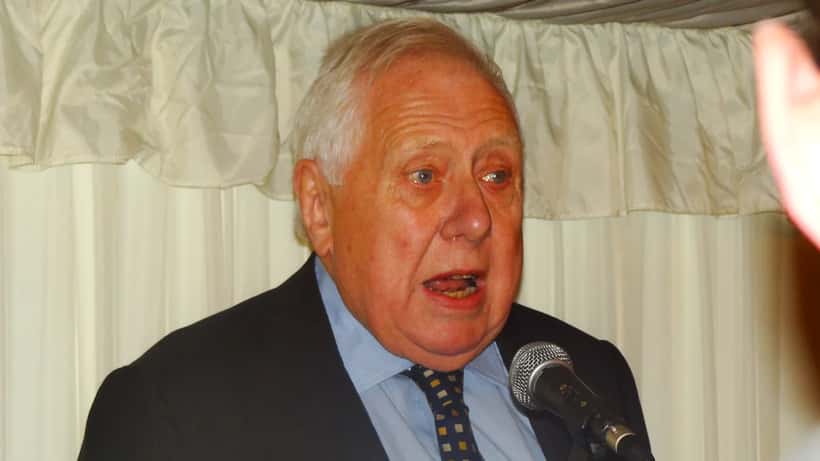
Roy Hattersley, Baron Hattersley of Sparkbrook, has died aged 93. The former deputy leader of the Labour Party — one of the most formidable political operators of the 1980s — leaves behind a remarkable public legacy. But under UK law, there is one thing he cannot leave his family: his title.
A Title That Dies With Its Holder
When a life peer dies, the peerage dies with them. This is the defining legal feature of a life peerage under the Life Peerages Act 1958. Unlike hereditary peerages — which pass down through bloodlines — a life peerage is created for one person and one person alone. Lord Hattersley's title, Baron Hattersley of Sparkbrook, ceases to exist from the moment of his death. His children or grandchildren cannot inherit it, use it, or claim any parliamentary privilege through it.
This distinction has become even more significant following the House of Lords (Hereditary Peers) Act 2026, which received Royal assent on 18 March 2026 and came into full force on 29 April 2026. The Act completed the removal of hereditary peers from the Lords, meaning that today, only life peers — all of whom hold non-inheritable titles — sit in the upper chamber. Lord Hattersley's peerage was always of the life variety, appointed by the Crown in 1997 when he retired from the House of Commons after 33 years as MP for Birmingham Sparkbrook.
What Actually Passes to Heirs: The Estate
The title may dissolve, but Lord Hattersley's estate — his financial assets, property, intellectual property rights, and personal effects — is governed by an entirely separate body of law. England and Wales have one of the most permissive inheritance regimes in the world. According to the UK Inheritance Act 1975 and subsequent guidance from GOV.UK, there is no system of forced heirship in England or Wales. A testator has almost complete freedom to dispose of their estate as they wish.
However, that freedom is not absolute. Lord Hattersley married twice — his first marriage to Molly Loughran was dissolved in 2013 after 57 years, and he subsequently married his literary agent Maggie Pearlstine. Under the Inheritance (Provision for Family and Dependants) Act 1975, certain people — including a surviving spouse or civil partner — are entitled to make a claim against an estate if the deceased's will (or intestacy rules) fails to make "reasonable financial provision" for them. Maggie Pearlstine, as Lord Hattersley's widow, would have strong standing under this provision.
The Complexity of an Author's Estate
Lord Hattersley was not only a politician. He was a prolific author, publishing more than 20 books — including histories, biographies, political memoirs, and novels. He also contributed journalism for decades, most notably for The Guardian. These activities generate intellectual property rights: copyright in his written works, which under UK law lasts for 70 years after the author's death.
An author's estate — the copyright royalties, licensing rights, and ongoing income from published works — is a significant asset class that many families underestimate. Unlike a bank account or a house, intellectual property rights require active management. A solicitor specialising in probate and estate law can help executors understand how to value, transfer, and manage these rights. Failure to do so properly can mean royalties go uncollected, licenses are granted on unfavourable terms, or valuable rights lapse through inaction.
Inheritance Tax: The Peer Who Paid Like Everyone Else
Being a lord provides no exemption from inheritance tax (IHT). In 2026, the IHT threshold for a single individual remains at £325,000 (the nil-rate band), with an additional £175,000 residence nil-rate band potentially available where a home is passed to direct descendants. Above those thresholds, 40% tax applies. For a person of Lord Hattersley's professional standing and decades-long career, the taxable estate could be substantial.
There are, however, legitimate ways to reduce IHT liability. Charitable giving is one: estates that leave at least 10% to charity benefit from a reduced 36% rate rather than 40%. Lord Hattersley was known for his social democratic values; his family and estate executors will need to assess whether charitable bequests affect the overall tax position.
Agricultural property relief (APR) and business property relief (BPR) are unlikely to apply here, as his estate does not appear to include qualifying agricultural or business assets. However, the intellectual property rights in his books could be classified as business property in certain circumstances, and a specialist solicitor should review this carefully.
When Politics and Personal Affairs Collide
Lord Hattersley was vocal and uncompromising in his public views throughout his life. He remained a prominent commentator even in his eighties, writing newspaper columns and making media appearances. For public figures whose profile extends into their later years, estate planning often requires legal advice that goes beyond a standard will. Defamation, archival rights, the management of personal correspondence, and the question of posthumous publication all become relevant.
These issues are not unique to peers or politicians. Anyone with a public-facing career — a business owner, an academic, a journalist — may face similar challenges when their estate enters probate. The difference is scale and visibility.
What Lord Hattersley's Death Teaches Ordinary Families
The passing of a prominent life peer is a reminder that even the most legally sophisticated individuals — those who spent decades making the law — require careful estate planning. Lord Hattersley sat in the House of Lords. He knew the legislation. Yet the same questions that apply to his estate apply to millions of UK families every year.
If you have not reviewed your will recently, if you are uncertain about IHT planning, or if you have complex assets such as copyright, intellectual property, or overseas property, now is the time to seek advice. A solicitor with expertise in wills, trusts, and estate planning can ensure that what you have built over a lifetime reaches the people and causes you care about — in full, and without unnecessary tax loss.
Lord Hattersley served the public for over three decades. The legal lessons his death raises are ones that the rest of us can act on today. Consulting a solicitor through Expert Zoom takes minutes — and can protect years of accumulated wealth.
This article is for informational purposes only and does not constitute legal or financial advice. Please consult a qualified solicitor or financial adviser before making decisions about your estate.
