 Charlotte Hughes
Roger Cook and The Cook Report: How a TV Legend's Legacy Still Protects Your Consumer Rights
Roger Cook, the pioneering ITV journalist behind The Cook Report, died on Sunday 15 June 2026 aged 83 following a short illness. His family confirmed the news on Sunday morning, prompting an immediate wave of tributes from former colleagues, politicians, and the viewers whose lives were transformed by his fearless investigative work.
For more than a decade, Cook's confrontational brand of journalism exposed fraudsters, criminal gangs, rogue traders, and exploitative businesses to audiences of up to 10 million — making The Cook Report the most-watched current affairs programme on British television in its era.
"He worked tirelessly to expose criminal wrongdoing and injustice," his family said in a statement on 15 June, "helping to drive important and lasting changes in the law."
The Man Behind Britain's Most Feared Microphone
Born to New Zealand parents and raised in Australia, Roger Cook began his broadcasting career with the Australian Broadcasting Corporation before moving to the UK in 1968. He joined BBC Radio 4's The World at One and subsequently contributed to Panorama, Nationwide, and Newsnight before making his defining move to ITV.
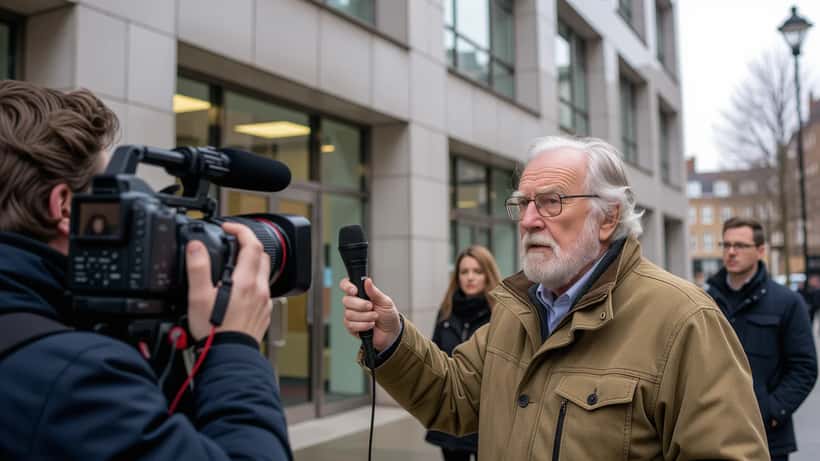
It was at ITV's Central Independent Television in Nottingham that Cook became a household name. The Cook Report ran from 1987 to 1997 across 16 series and more than 120 episodes, and its format — placing Cook physically in front of criminals, fraudsters, and wrongdoers with a camera crew in tow — was unlike anything British television had seen before.
Cook was not simply an interviewer. He was a confronter. And what he confronted had real consequences.
How The Cook Report Shaped UK Consumer Law
Cook's investigations were not merely compelling television — they were a catalyst for legal and regulatory change. Several Cook Report exposés contributed directly to shifts in consumer protection:
- Rogue traders and bogus builders: His sustained coverage of fraudulent contractors and property scammers informed Trading Standards enforcement guidance that remains active under the Consumer Rights Act 2015.
- Advance-fee and investment fraud: Long before the internet made such scams ubiquitous, Cook exposed the mechanics of financial deception, helping build public and political pressure for stronger oversight — a push that contributed to the creation of the Financial Services Authority.
- Child exploitation and trafficking: Early Cook Report investigations brought these issues to mainstream British media attention, generating public demand for legislative action that played out in subsequent Parliaments.
According to Citizens Advice, more than 3 million people in the UK fall victim to scams, rogue traders, or consumer fraud each year — exactly the categories of wrongdoing Cook spent his career exposing.
The Problem Has Not Gone Away
Fraud and consumer exploitation did not end when The Cook Report went off air in 1997. Action Fraud, the UK's national fraud reporting centre, received more than 640,000 reports in the 2024-25 financial year. Online scams, rogue investment platforms, and fraudulent tradespeople remain among the most reported forms of crime in Britain.
What has changed is the legal infrastructure available to victims. The frameworks Cook's journalism helped push into existence — including the Consumer Rights Act 2015, the Fraud Act 2006, and the Consumer Protection from Unfair Trading Regulations 2008 — are more robust than anything available during the years The Cook Report was broadcast. The challenge is that most people do not know how to use them.
What Are Your Legal Rights When You Have Been Wronged?
If you have been the victim of a scam, rogue trader, professional negligence, or consumer fraud, you have legal remedies available under UK law. The appropriate route depends on the nature of your dispute:
Consumer goods and services: Under the Consumer Rights Act 2015, goods must be of satisfactory quality, fit for purpose, and as described. Services must be performed with reasonable care and skill. If they are not, you are entitled to a repair, replacement, or refund.
Fraud and deception: If you have been deliberately deceived — through false representations, dishonest accounting, or fraudulent misrepresentation — this may constitute an offence under the Fraud Act 2006, which is a matter for the police and potentially the Crown Prosecution Service.
Rogue traders: Local Trading Standards offices can investigate and prosecute businesses engaged in unfair commercial practices under the Consumer Protection from Unfair Trading Regulations 2008.
Investment scams: The Financial Conduct Authority regulates UK financial services firms. Victims of unauthorised investment activity can seek redress through the Financial Ombudsman Service.
The UK government provides clear guidance on your consumer rights through GOV.UK, which explains the protections available and the steps you can take to enforce them.
When to Consult a Solicitor
Many people underestimate how much early legal advice can improve the outcome of a dispute. A qualified solicitor can assess:
- Whether you have grounds for a civil or criminal complaint
- What evidence to gather and how to preserve it
- Which regulatory body or dispute resolution scheme applies to your case
- Whether a small claims application or formal litigation is the most appropriate path forward
The issues Roger Cook spent his career exposing — exploitation, fraud, and the abuse of trust — remain as relevant in 2026 as they were in 1987. The difference is that the legal tools to fight back have never been more accessible.
A Legacy Written Into the Statute Books
Roger Cook was a journalist who believed that ordinary people deserved protection from those who sought to exploit them, and that the media had a responsibility to stand between the powerful and the vulnerable. His confrontational approach made him controversial. But it also made him effective.
The legal landscape he helped shape is the best memorial he could have. More than three decades after The Cook Report began, the rights Cook fought to establish are available to every person in the UK — for those who know how to use them.
If you have been affected by consumer fraud, professional wrongdoing, or a legal dispute, connecting with a qualified solicitor early can make a decisive difference to your outcome.
This article is for informational purposes only and does not constitute legal advice. For guidance specific to your circumstances, consult a qualified solicitor or legal expert.
