 Charlotte Hughes
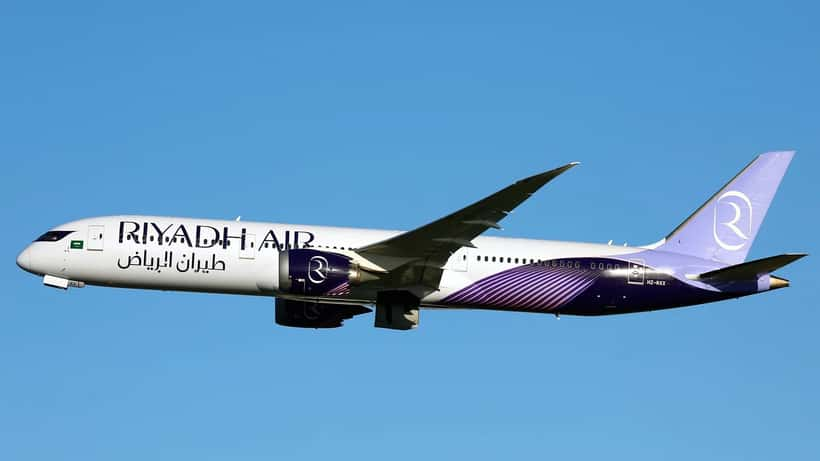
When Riyadh Air's Boeing 787-9 Dreamliner touched down at London Heathrow on 10 June 2026 — three weeks ahead of schedule — it marked a turning point for direct UK access to the Saudi capital. The new carrier now operates daily from Heathrow and three times weekly from Manchester, putting Riyadh within reach of millions of British travellers for the first time without a layover. But the ease of booking a £320 return ticket masks a legal reality that even experienced business travellers overlook: Saudi Arabia operates under a legal code so different from English law that actions entirely normal at home can result in arrest, detention, or deportation at King Khalid International Airport.
What Changed When Riyadh Air Launched UK Flights in 2026?
Riyadh Air, the new Saudi national carrier, launched its inaugural commercial service to London on 10 June 2026. Flight RX401 departs Riyadh at 2:35 AM and arrives at Heathrow at 7:30 AM; the return, RX402, departs Heathrow at 9:35 AM. The airline brought forward its launch date by three weeks after early delivery of its brand-new Boeing 787-9 Dreamliners — the first of 72 aircraft on order.
Manchester followed on 23 July 2026, operating three weekly rotations. Together, these routes place Riyadh within direct reach of the largest UK population centres.
The launch coincides with Saudi Arabia hosting Routes World 2026 in Riyadh from 18 to 20 October — an international aviation conference that is expected to accelerate further route expansion into the UK and Europe. Passenger growth between the UK and Saudi Arabia is forecast to rise significantly over the next 12 months.
What that growth means, practically, is that tens of thousands of British travellers — tourists, business visitors, and those visiting family — will land at Riyadh's King Khalid International Airport for the first time with little understanding of how Saudi law operates. The consequences of that knowledge gap can be severe.
What Questions Are UK Travellers Actually Asking About Riyadh in 2026?
Do UK citizens need a visa to enter Saudi Arabia?
Yes. British nationals must obtain a tourist e-Visa before departure. As of 2026, the Saudi e-Visa is available online through the official Saudi visa platform, costs approximately £115 (SAR 535), is valid for one year from the date of issue, allows multiple entries, and permits a stay of up to 90 days per visit. Travellers should apply at least two weeks before travel, as processing times can extend to 10 business days.
UK-Saudi dual nationals should note that Saudi authorities may require them to enter on their Saudi passport and may not recognise UK consular protection during any legal proceedings.
What is legal in the UK but a criminal offence in Saudi Arabia?
The list is longer than most British travellers anticipate:
- Alcohol: Importing, consuming, or possessing alcohol is a criminal offence. This includes small quantities in checked luggage, duty-free purchases from connecting airports, and alcohol in your system on arrival. Offences are punishable by confiscation, fines, imprisonment of up to six months, and deportation.
- Illegal drugs: Saudi Arabia applies some of the world's strictest narcotics laws. Possession of even trace quantities of controlled substances — including cannabis, which is legal in some UK contexts — can carry the death penalty. There is no minimum threshold. Prescription medications that contain controlled substances must be accompanied by a doctor's letter and official translation.
- LGBTQ+ relationships: Same-sex relationships are criminal under Saudi law and can result in imprisonment, corporal punishment, and deportation. The UK Foreign, Commonwealth & Development Office advises LGBTQ+ travellers to "be discreet." Saudi authorities have been known to review social media profiles and messaging history of foreign nationals.
- Gambling: Illegal in all forms, including online gambling accessed via a Saudi IP address.
- Criticism of the state: Publishing or sharing content that criticises the Saudi government, royal family, or Islam — including retrospective social media posts — can lead to arrest under the Anti-Cybercrime Law (Royal Decree M/17, 2007). This applies to UK nationals for content posted in the UK before their arrival.
If You Land at Riyadh Airport: A Concrete Case
Consider James, a 47-year-old sales director from Leeds who books a Riyadh Air flight from Manchester to attend a three-day technology conference in Riyadh. He packs a bottle of 12-year-old Scotch whisky in his checked luggage — a common business gift in the UK — and his LinkedIn profile, which is publicly visible, notes that he has a same-sex partner.
At King Khalid International Airport, customs X-ray scanning flags his luggage. Saudi customs officers locate the whisky. Under Saudi customs regulations, importation of alcohol is a criminal offence regardless of quantity.
Without pre-travel legal advice: James faces immediate confiscation of the whisky, potential detention for 24 to 72 hours while his background is reviewed, a fine of up to SAR 5,000 (approximately £1,050), and possible deportation with a re-entry ban. Saudi immigration may also review his LinkedIn profile during the detention period. The company's Saudi contract, which James flew to negotiate and which is valued at £85,000, collapses. His employer's legal team faces additional costs of £4,000–8,000 to manage the fallout.
With a one-hour pre-travel legal consultation (typically £120–200 with a UK specialist in international travel law): James would have been advised to leave alcohol at home, set his LinkedIn profile to restricted, and carry a signed letter from his GP translating and confirming his only prescription medication. The risk of detention: eliminated. The risk to the £85,000 contract: eliminated. The total cost of professional advice: under £200.
The if/then logic is direct: if you travel to Saudi Arabia carrying alcohol, controlled substances, or with publicly visible personal content that could be interpreted as violating Saudi law → you risk detention of 24–72 hours, fines starting at £1,050, deportation, and a permanent re-entry ban. A single consultation with a legal specialist before boarding converts that open-ended liability into a fixed, manageable cost.
What Does the FCDO Say About Travelling to Saudi Arabia in 2026?
The Foreign, Commonwealth & Development Office travel advisory for Saudi Arabia contains guidance that is more specific than many travellers realise. Key points as of 2026:
- The FCDO confirms that same-sex relationships "can be considered a criminal offence under Saudi law, leading to fines, imprisonment, corporal punishment or deportation."
- Women travelling alone may now do so without a male guardian following Saudi social reforms, but dress requirements in public spaces remain in force. Failure to comply can attract unwanted attention from local authorities.
- Dual UK-Saudi nationals face the most significant risk: Saudi authorities may not accept a British passport as primary identification and may refuse UK consular access.
- The FCDO advises carrying a certified English-Arabic translation of any prescription medication documents. Customs officers at Riyadh airport will not accept an untranslated UK prescription as evidence of legal medical use.
- Photography near government buildings, military installations, or royal palaces is prohibited and can lead to immediate arrest.
The FCDO travel advice page for Saudi Arabia is updated regularly and is the authoritative starting point for any UK national planning travel: https://www.gov.uk/foreign-travel-advice/saudi-arabia
What to Do if You Are Detained at Riyadh Airport
Speed matters in any Saudi detention scenario. UK nationals who are detained at King Khalid International Airport should follow these steps:
- Request consular access immediately. The British Embassy in Riyadh is located in the Diplomatic Quarter and can be reached at +966 11 488 0077. Ask the detaining officer to notify the embassy. Under the Vienna Convention on Consular Relations, Saudi authorities are obliged to inform the relevant consulate of any foreign national detained.
- Do not sign any document without legal advice. Documents presented at Saudi airports may be in Arabic. Signing without understanding the content — or without legal representation — can constitute an admission of guilt.
- Contact an international law specialist in the UK. Many UK firms offering international criminal or travel law services provide urgent telephone consultations. A specialist can advise on the Saudi legal process in real time while consular staff attend on the ground.
- Do not pay informal fees. Confiscation receipts and fines must be issued by official Saudi government entities. Paying unofficial "fees" to individual officers can be treated as attempted bribery — a separate offence.
- Preserve your travel insurance documentation. Most comprehensive UK travel insurance policies include legal assistance coverage for detention abroad. Check whether your policy includes Saudi Arabia specifically before departure.
Before You Board Riyadh Air: The Expert Step Most Travellers Skip
Riyadh Air's arrival on UK routes is genuinely positive news — competitive fares, direct access to a rapidly modernising Gulf city, and a quality product on new-generation aircraft. Routes World 2026 signals that further UK destinations and frequencies are likely to follow in 2027.
But "accessible" does not mean "legally familiar." Saudi Arabia's legal code is not a stricter version of English law — it is a categorically different system, with different sources, different penalties, and different protections for foreign nationals. The travellers most at risk are not those who know they are doing something borderline: they are experienced professionals who assume that normal behaviour in the UK is normal everywhere.
A one-hour consultation with an ExpertZoom legal specialist — particularly one with experience in Gulf or international law — addresses that assumption directly. It costs less than the airport parking for a week-long trip to Riyadh. The alternative, for James or anyone in his position, is a £1,050 fine, a deportation stamp, and an £85,000 contract that never closes.
This article provides general information only and does not constitute legal advice. Travellers with specific concerns about Saudi Arabia should consult a qualified legal professional before departure.
