 Alistair Finch
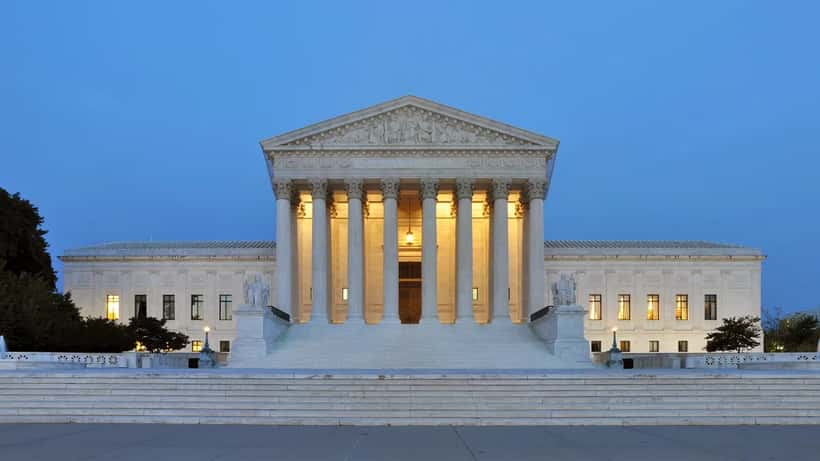
The United States Supreme Court struck down President Trump's use of the International Emergency Economic Powers Act (IEEPA) to impose tariffs on 20 February 2026. Within days, the administration imposed a new 10% global tariff under Section 122 of the Trade Act of 1974, valid for up to 150 days. For UK businesses exporting to or importing from the United States, the legal ground has shifted — again.
What the Supreme Court Ruling Actually Changed
The IEEPA gave the President broad emergency powers to impose tariffs without Congressional approval. The Supreme Court ruled that use of the IEEPA for this purpose exceeded the statute's intended scope. The ruling did not end US tariffs — it ended one specific legal mechanism for imposing them.
The replacement framework, Section 122 of the Trade Act of 1974, maintains a 10% tariff on most UK goods entering the United States, according to the UK Government's guidance for businesses exporting to the US. The UK Government is negotiating exemptions, with tailored relief already confirmed for automotive, steel, and aerospace sectors — but no sector-wide exemption applies to the majority of UK exporters.
The political context compounds the uncertainty. With Republican Party lawmakers facing pressure ahead of the 2026 US midterm elections and public approval of the tariff policy at just 38%, there is real political flux over whether the 150-day tariff will be extended, modified, or replaced by another instrument entirely. UK businesses cannot afford to plan on the assumption that the current framework is stable.
Question 1: Are Your US Supply Contracts Still Binding as Written?
Many UK businesses renegotiated or entered new supply contracts in 2025 and early 2026 that included IEEPA-specific provisions — price escalation clauses, tariff pass-through arrangements, or termination rights tied to named regulatory changes. Now that the IEEPA basis has been struck down, some of those provisions may no longer operate as intended.
A commercial solicitor should review any US-facing contracts that contain:
- Price escalation clauses referencing specific tariff authority, such as the IEEPA
- Force majeure definitions tied to named emergency regulations
- Termination rights triggered by "material change in applicable law or regulation"
- Dispute resolution clauses specifying US jurisdiction for tariff disputes
The shift from IEEPA to Section 122 authority may or may not constitute a triggering event under these clauses — and the answer depends entirely on the specific wording of each agreement. Do not assume that contracts negotiated in 2025 still operate as intended without a legal review.
Question 2: Does Your Force Majeure Clause Cover This?
Force majeure clauses excuse non-performance in circumstances beyond a contracting party's control. English courts apply a narrow test: the event must be unforeseen, beyond the parties' control, and must make performance impossible — not merely more expensive or commercially inconvenient.
The Supreme Court's ruling on IEEPA is a legal development, not a natural disaster or physical disruption. Whether it qualifies as a force majeure event under a specific commercial contract will depend on how that contract defines the clause and whether any carve-outs apply to "government action" or "regulatory change."
UK businesses are already seeing counterparties on both sides of the Atlantic invoking force majeure in response to tariff developments. If you have received such a notice — or if you are considering invoking one yourself — legal advice is essential before you act. Accepting a force majeure claim from a US counterparty without legal review may waive remedies you could otherwise pursue.
Question 3: What Compliance Obligations Apply Under the New Framework?
Under Section 122, the 10% tariff applies for up to 150 days from the date of imposition, with Congress able to extend, modify, or terminate it before the deadline. UK businesses need to understand three specific obligations:
Classification accuracy. Tariff liability depends on the Harmonised System (HS) code applied to your goods. If your goods were classified under a particular rate during the IEEPA period, a reclassification triggered by the new framework could increase or decrease your exposure. Incorrect classification also carries compliance risk.
Duty drawback. If you import US-origin components into the UK for processing before re-export to the United States, you may be eligible for duty drawback — a refund of duties paid on those inputs. This mechanism exists under UK customs law and is significantly underused by UK businesses in mixed-supply chains.
Contract pricing. If your prices to US customers or from US suppliers are fixed in agreements that pre-date the new framework, those contracts may need to be renegotiated or formally varied. Waiting until the 150-day period closes to act is a high-risk approach. Learn more about how UK businesses are structuring their legal response to US trade policy shifts.
The Cost of Inaction
UK goods exports to the United States amount to tens of billions of pounds annually. For the businesses behind that trade, a change in the legal basis for tariffs — even one that maintains a broadly similar rate — creates real exposure in contracts, compliance, and commercial planning.
The businesses that move quickly to review their legal position, renegotiate where necessary, and understand their classification exposure are the ones best placed when the 150-day window closes. Those that do not risk being caught by provisions they assumed were settled.
How a Commercial Solicitor Can Help
Whether you need a US-facing contract reviewed for IEEPA-specific provisions, your force majeure position assessed, or practical guidance on tariff classification and duty drawback, a UK commercial solicitor with international trade experience can provide clear, actionable advice.
ExpertZoom connects UK businesses with regulated commercial lawyers — without the need for a retainer or lengthy onboarding process. Ask a question, get an expert answer, and understand your legal position before the next change arrives.
This article provides general legal information only and does not constitute legal advice. For advice specific to your business situation, consult a qualified and regulated commercial solicitor.
