 Daniel Davies
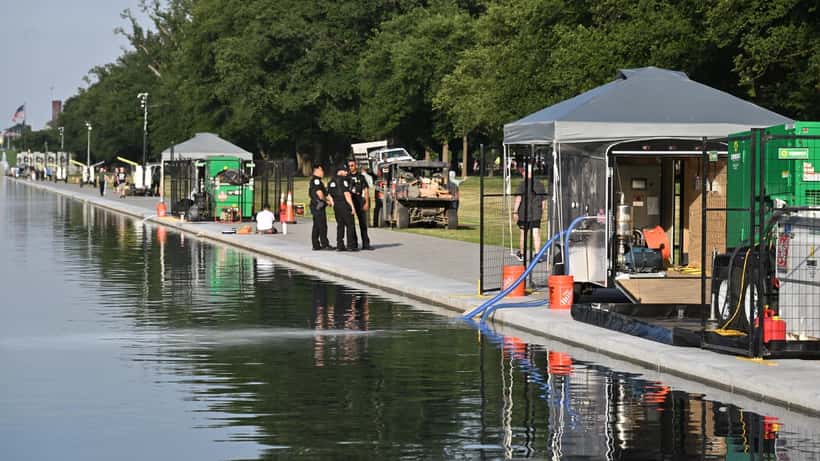
America's most famous reflecting pool just turned an embarrassing shade of green — two weeks before the nation's biggest ever celebration. The Lincoln Memorial Reflecting Pool in Washington DC received a $14.7 million (approximately £11.6 million) renovation ahead of the United States' 250th anniversary on 4 July 2026, yet the result has been a thick algae bloom and visibly peeling sealant. For UK homeowners considering a garden water feature, the fiasco offers five lessons that could save thousands of pounds.
What Went Wrong at the Lincoln Memorial?
The US National Park Service awarded two no-bid contracts to fast-track the renovation before Independence Day. A Virginia firm received $14.7 million for the repainting and refurbishment of the 618-metre-long pool, while a second company was paid $1.74 million to install a "nano bubble" filtration system designed to eliminate algae. Both contracts bypassed competitive tender, justified under government rules allowing awards in cases of "unusual and compelling urgency," according to CBS News.
Within weeks of completion, photographs circulating online showed the pool carpeted in green algae and sealant peeling from the walls. The money came from National Park visitor entrance fees, adding political controversy to a project already drawing scrutiny over the contractor connections. The situation has become a global cautionary tale about what happens when water feature work is rushed and specification corners are cut.
Why Water Features Fail — Regardless of Budget
The Lincoln Memorial episode illustrates something that home improvement specialists across the UK see regularly: water features at any scale are demanding environments where the basics cannot be skipped. Whether the pool is 618 metres long or 6 metres wide, the same physics and biology apply.
Algae growth is driven by three conditions: sunlight, dissolved nutrients (from dust, debris, and bird droppings), and warm water temperatures. In the UK, June and July 2026 have brought extended warm spells — precisely the conditions that produce rapid algae blooms. A filtration system that sounds impressive on paper, such as the "nano bubble" technology chosen for Washington, will underperform if the pool's depth, water chemistry, or circulation rate is wrong from the outset.
Sealants and coatings face similar risks. Applied to an inadequately prepared substrate, or chosen without regard for permanent water immersion, even expensive products will fail fast — as the peeling at the Lincoln Memorial demonstrates.
5 Things UK Homeowners Must Know Before Installing a Reflecting Pool
1. Planning Permission May Be Required
Most garden ponds and water features below 0.5 hectares do not require planning permission in England and Wales under permitted development rights. However, if your property is in a conservation area, an Area of Outstanding Natural Beauty, or is a listed building, stricter rules apply. Before instructing any contractor, check the requirements for your specific address via the Planning Portal or speak with a home improvement professional who knows local planning regulations. Getting this wrong can mean costly enforcement action after installation.
2. Shallow Pools Are the Hardest to Maintain
A true reflecting pool — shallow, still, designed to mirror the sky — is far more susceptible to algae than a deeper ornamental pond. Shallow water heats up faster, holds less dissolved oxygen, and provides poor circulation. The Lincoln Memorial pool runs to less than 0.5 metres in depth across much of its length, which is one reason its algae problems have persisted despite repeated expensive interventions over the years.
For a UK garden reflecting pool, experts typically recommend incorporating a UV sterilisation unit alongside standard filtration from the beginning. Budget at least £800 to £2,500 for filtration alone, depending on surface area, and factor this into your initial project cost — not as an afterthought.
3. Always Get Three Written Quotes
The US controversy centred partly on no-bid contracts awarded without competitive tender. UK homeowners face no such procurement rules, but the principle stands: always obtain at least three written quotes before committing to a contractor. Verbal estimates are not sufficient. Insist on written specifications that detail the liner or coating material, filtration type, pump capacity in litres per hour, and any warranty on both materials and labour. Look for landscapers registered with TrustMark or members of the Association of Professional Landscapers (APL) for additional assurance.
As reported in our guide to Diarmuid Gavin's return to Garden Rescue in 2026, professional garden design fees and contractor rates vary significantly by region and project scope — which makes comparison quotes essential.
4. Annual Maintenance Costs Add Up
The total cost of a garden water feature is not the installation price. Annual maintenance for a UK reflecting pool or ornamental pond ranges from approximately £300 to £1,500 depending on size, filtration complexity, and whether you hire professional upkeep. Algae treatments alone — UV clarifier bulb replacements, barley straw extract, or specialist water treatments — can run to £100–£300 per year.
In the UK's warmer summers, neglecting maintenance even briefly can result in a feature turning visibly green within a fortnight. The Lincoln Memorial's £11 million lesson is that ongoing maintenance is not optional: it is the difference between an asset and an embarrassment.
5. Liners and Sealants Must Match Your Specific Pool Type
Peeling sealant is a symptom of the wrong product applied to an unprepared surface. For UK homeowners, a specialist will typically recommend one of three approaches: a butyl rubber liner (flexible, long-lasting, suits most garden shapes), a GRP (glass-reinforced plastic) shell (rigid, low-maintenance once installed), or poured concrete with a specialist waterproof render (most durable long-term, highest initial cost). Each has different longevity, aesthetic qualities, and maintenance implications.
As Monty Don's series on British gardens has shown this year, the most successful garden water features combine expert design with quality materials chosen for the specific site — not the cheapest option available on a compressed timeline.
When to Consult a Home Improvement Expert
If you are planning a reflecting pool or significant water feature, an initial consultation with a qualified landscape contractor or garden designer is money well spent before any ground is broken. A professional can:
- Assess your garden's drainage and water table to identify installation risks
- Specify the correct filtration and UV system for your pool's size and position
- Recommend appropriate liners or coatings based on your soil conditions and aesthetic brief
- Provide a realistic maintenance schedule that prevents the algae problems now costing Washington millions to address — unsuccessfully
If your existing water feature is already struggling with algae or structural issues, a specialist can diagnose the root cause efficiently: filtration failure, chemical imbalance, or a liner problem — and advise the most cost-effective remedy before the situation compounds.
The Verdict
A well-planned reflecting pool adds genuine character to a UK garden. But as the Lincoln Memorial's ongoing £11 million lesson makes clear, rushing specification, skipping competitive quotes, or underestimating maintenance transforms a striking feature into a costly problem. Before breaking ground, speak to a home improvement expert who can help you plan a water feature that stays clear — not one that ends up on the front pages for the wrong reasons.
