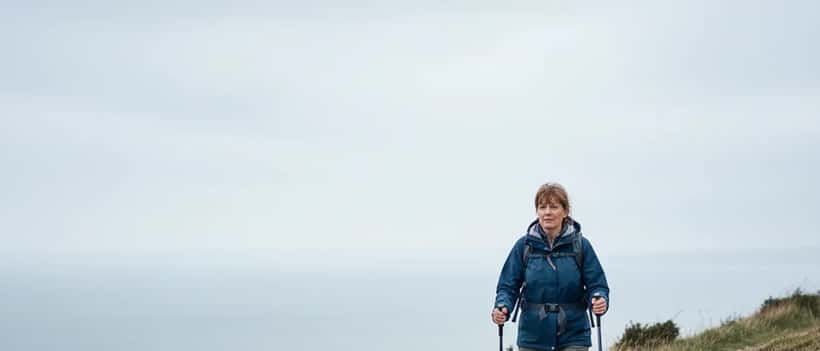
Raynor Winn is trending across the UK this week as a new BBC Sounds podcast scrutinises the story behind her bestselling memoir The Salt Path — the account of how she and her husband Moth walked 630 miles along the South West Coast Path while homeless and facing his terminal diagnosis. As the story re-enters public debate, it raises an important question: when does walking and nature genuinely help chronic illness, and when does someone need professional medical care?
The Salt Path story and why it resonates
Published in 2018, The Salt Path became a cultural phenomenon, selling millions of copies and inspiring a 2024 film adaptation. Winn describes how she and Moth, after losing their home and learning he had corticobasal degeneration (CBD) — a rare, progressive neurodegenerative disease — chose to walk the South West Coast Path instead of seeking conventional treatment.
The narrative is compelling: Moth, initially given months to live, appeared to stabilise during the walk. The book presents nature, movement, and purpose as powerful forces against serious illness.
A new eight-part BBC Sounds podcast, launched in March 2026, revisits the claims behind the memoir, including questions about the couple's circumstances and the framing of Moth's prognosis. The renewed scrutiny has driven a fresh wave of public discussion about the book's health claims and their implications.
What the science says about nature and chronic illness
There is genuine evidence supporting the therapeutic benefits of walking and nature exposure for people living with chronic illness:
- A 2023 meta-analysis in The Lancet Regional Health found that regular moderate walking reduced depression scores by up to 37% in patients with chronic pain conditions
- Exposure to green and coastal environments has been shown to lower cortisol levels, reduce blood pressure, and improve sleep quality in people with autoimmune and neurological conditions
- For conditions such as Ehlers-Danlos syndrome (EDS) — which Winn herself has — low-impact movement can help maintain joint stability and reduce fatigue flares
However, it is critical to understand the difference between complementary benefit and substitution for medical care.
When walking is not enough — and a specialist is essential
Corticobasal degeneration, the condition Moth Winn was diagnosed with, has no cure and no established disease-modifying treatment. CBD is characterised by movement difficulties, cognitive changes, and speech problems. The trajectory varies widely between patients. Walking does not treat the underlying neurological damage, but it may support quality of life and functional independence for a period.
There are several situations where relying solely on lifestyle approaches without professional medical oversight creates serious risk:
Progressive neurological symptoms — Any worsening of movement, speech, swallowing, balance, or cognitive function in a known neurological condition requires prompt reassessment by a neurologist. The window for certain interventions can be narrow.
Chronic pain conditions with unclear diagnosis — Living with undiagnosed or undertreated pain, whether from EDS, fibromyalgia, or another condition, is not a situation to manage alone. Specialist diagnosis opens access to targeted physiotherapy, pain clinics, and medication protocols that can transform quality of life.
Mental health impact of serious illness — Facing a terminal diagnosis as a caregiver is an enormous psychological burden. The UK's NHS long-term conditions services and charity organisations such as Carers UK provide structured support that goes beyond what a long walk can offer.
Red Nose Day, Greg James, and the power of resilience narratives
The renewed interest in Raynor Winn's story coincides with a week of inspiring endurance in the UK. BBC Radio 1's Greg James has been cycling 1,000km from Weymouth to Edinburgh for Comic Relief, completing the challenge on 20 March 2026 having raised over £2.5 million. His father suffered a stroke during heart surgery just days before the ride began, yet Greg continued — another powerful story of resilience in the face of health crisis.
These narratives matter. They challenge defeatism and show what the human body and spirit can do. But they work best alongside, not instead of, good medical care.
Practical guidance: how to find the right specialist
If you or someone you care for is living with a chronic or progressive illness and you are not sure whether current treatment is sufficient, a good starting point is to:
- Ask your GP for a referral to a specialist — for neurological conditions, this means a consultant neurologist; for connective tissue disorders like EDS, a rheumatologist or geneticist
- Contact a specialist charity — the CBD Solutions charity (cbdsolutions.org.uk) and Ehlers-Danlos Support UK (ehlers-danlos.com) offer expert information and can help you navigate the system
- Consider a second opinion — if you were diagnosed some time ago and treatment has not been reviewed, it is entirely reasonable to request updated specialist assessment
- Explore integrated approaches — many NHS trusts and private clinics offer programmes that combine medical oversight with supported physical activity and psychological support
The message of The Salt Path — that hope, movement, and connection to the natural world matter — is a valid and important one. The full picture includes ensuring that the extraordinary capacity of human resilience is supported, not burdened, by untreated illness.
Medical disclaimer: This article is for informational purposes only and does not constitute medical advice. If you are experiencing symptoms of a neurological or chronic condition, please consult a qualified healthcare professional promptly.
