 Amelia Davies
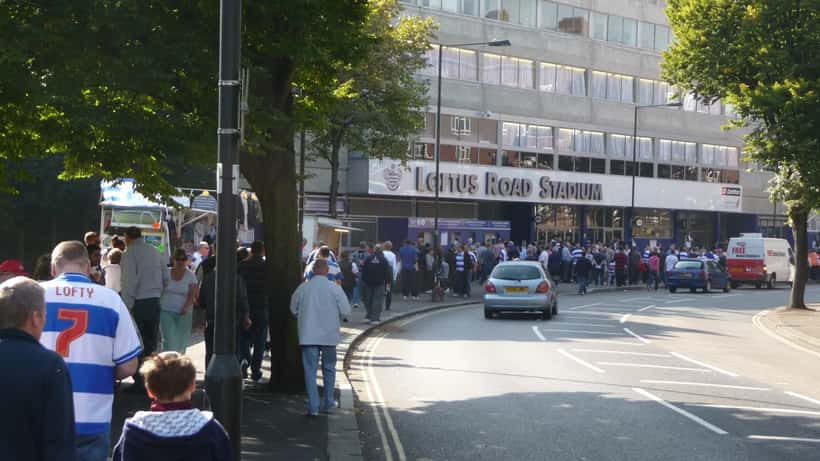
Queens Park Rangers are suffering at Loftus Road on 19 September 2026, trailing Preston North End 0-2 at half-time in what is shaping up to be one of their most dispiriting home performances of the young Championship campaign. The travelling Preston support are in full voice; the home crowd is restless. It is exactly the kind of afternoon that makes fans furious — and raises a question few supporters ever think to ask when results go wrong: what can a manager actually do about poor player performances, and what does employment law say about holding professional footballers accountable?
The short answer is: less than most people think. But the mechanisms that do exist are precise, legally binding, and far more interesting than a public dressing-down from the dugout.
A Difficult Start to September at Loftus Road
QPR's 2026-27 Championship campaign has been mixed since the opening whistle. A 2-1 win over Coventry City at Loftus Road raised hopes in August, followed by a respectable 1-1 draw away at West Brom on 12 September 2026. But the performance against Preston has exposed the squad's vulnerabilities, with both Preston goals arriving from set-piece situations — the kind of defensive error that suggests training-ground problems as much as individual lapses.
Manager frustration in those circumstances is entirely natural. But in professional football, a coach cannot simply fire a poorly performing midfielder or issue a formal warning with the ease available to managers in most other industries. Footballers are employees — and their contracts are among the most heavily regulated employment agreements in British sport, according to guidance published by the Employment Lawyers Association.
The EFL's standard playing contract, overseen jointly by the Professional Footballers' Association (PFA) and the league itself, sets strict limits on what clubs can and cannot do when a player fails to meet performance expectations.
What the Standard EFL Contract Actually Allows
Professional footballers employed in the Championship are bound by EFL Regulation 53 and the accompanying Standard Footballer's Contract. Under this framework, clubs retain several formal tools for managing underperformance — but none of them are quick or straightforward.
Fines for misconduct, not poor performance. The first distinction a legal expert will draw is critical: the EFL disciplinary process allows clubs to fine players for misconduct (persistent late arrival, failure to attend training, breach of club rules), but not for poor match performances per se. According to the PFA's published guidance, a club cannot dock wages simply because a player has three poor games in a row. Performance-related clauses in a footballer's contract must be agreed in advance and made explicit — they cannot be imposed retrospectively.
Wage reductions via mutual agreement. If a club wants to reduce a player's salary during a difficult period, both parties must agree in writing. The club cannot unilaterally cut pay, even when the player's performances have been well below the standard expected. This is a core protection of the Employment Rights Act 1996, which applies to professional footballers in England just as it does to an office worker in Shepherd's Bush.
Termination for gross misconduct. A club can terminate a player's contract without notice only in cases of gross misconduct — a deliberate and serious breach, such as refusing to play, assaulting a staff member, or being found guilty of a criminal offence. Losing 0-2 at home to Preston does not come close to that threshold.
Training restrictions and squad exile. Clubs do retain the right to exclude players from first-team training and place them in the reserves or a separate training group. This is legal under the standard contract — provided it does not amount to a fundamental breach of the employment relationship that would entitle the player to claim constructive dismissal. According to legal commentary on the Barry Bannan case at Aston Villa (2013), the line between legitimate management decisions and constructive dismissal is blurry, and clubs regularly expose themselves to tribunal risk.
A Concrete Case: The QPR Midfielder on £12,000 a Week
Here is where the employment law rubber truly meets the road. Imagine a QPR central midfielder — call him Player X — earning £12,000 per week under a three-year EFL standard contract signed in July 2025. He has been part of the defensive midfield unit that has shipped two goals from set pieces in the Preston match.
What can QPR legally do?
Under the EFL Standard Contract (Clause 12), QPR can issue a formal written warning for failure to meet "reasonable performance standards" — but only if those standards were previously defined in writing and communicated to the player. If no written performance benchmarks exist (and most Championship clubs do not maintain them with any legal rigour), this route is compromised from the outset.
If QPR wants to fine Player X, they must follow the EFL Disciplinary Procedure. The maximum fine for a single disciplinary offence under EFL Regulation 54 is two weeks' wages — in this case, £24,000. However, this applies to conduct (failure to attend, breach of club rules) rather than to below-par performances in a League fixture. A fine on performance grounds alone would likely be overturned at tribunal.
If, after the Preston defeat, QPR's manager decides to exile Player X to train with the under-21 squad, this is permissible — but only if the club can show it is a genuine management decision rather than an attempt to force the player to resign and terminate the contract without a pay-off. If Player X can demonstrate that the exile was designed to pressure him out, he can resign and claim constructive dismissal under Section 95 of the Employment Rights Act 1996. A successful claim at the Employment Tribunal could see QPR liable for up to £115,115 in compensation (the statutory cap for 2026, as published by the government's employment tribunal service).
The if/then logic in plain English:
- If QPR tries to fine Player X for poor performance without pre-agreed performance benchmarks in his contract → the fine will not survive a PFA challenge, and QPR face arbitration costs
- If QPR moves Player X to the reserves and he claims constructive dismissal → QPR face an Employment Tribunal claim with a ceiling of £115,115 plus legal costs
- If QPR and Player X agree in writing to a six-month loan move to reduce QPR's wage liability → this is the cleanest legal route, and the most common one used by Championship clubs during mid-season squad reshuffles
Why This Matters Beyond the Dressing Room
QPR's difficulties against Preston are not an isolated story. Championship clubs across England manage player performance disputes regularly, and the legal complexity surrounding those disputes is poorly understood by supporters — and sometimes, remarkably, by club boards themselves.
In 2024, a Championship club (not QPR) was awarded £210,000 in damages after successfully arguing at the EFL Arbitration Panel that a player had breached his contract by refusing a loan move. The case — reported in the Law Society Gazette — turned on a single clause in the player's standard EFL contract that the player's agents had not read carefully at signing. The club's legal team argued the clause permitted the club to mandate a loan move in the interests of player development. The panel agreed.
This is the kind of detail that makes the difference between a clean outcome and a six-figure dispute. And it is the reason why both clubs and players — at every level of the professional game — increasingly turn to specialist sports employment lawyers before signing any contract, agreeing to any loan arrangement, or initiating any disciplinary process.
Sports employment disputes in English football have risen by approximately 34% in the last three years, driven by higher financial stakes in the Championship and growing player awareness of legal rights.
What Fans and Players Should Know
For QPR supporters watching today's second half in grim silence, the practical takeaway from the employment law landscape is not entirely bleak. While clubs have limited tools to sanction underperforming players in the short term, they retain significant leverage over contract renewals, loan decisions, and squad selection.
For players at any level — from QPR's first team down to the academy — the key protection is to understand exactly what your contract says before you sign it. The PFA offers free legal advice to all its members, including players from League One to the Premier League. According to the PFA's official resources, over 65% of player-club disputes in 2025 could have been avoided or significantly shortened if players had sought legal advice before signing their initial contract.
For fans interested in the governance of the clubs they follow, the relevant official framework is the EFL's Regulations document, available on the EFL official website, which sets out the full disciplinary and contractual framework that governs every player at QPR and every other club in the division.
What to Do If You Are Involved in a Sports Employment Dispute
Whether you are a professional footballer, an academy player, a coach, or a club administrator, the first step is to take legal advice from a solicitor who specialises in sports employment law — not a generalist employment lawyer who may lack knowledge of PFA procedures and EFL arbitration rules.
Key questions to ask in any initial consultation:
- Does my contract contain pre-agreed performance benchmarks that could be used in a disciplinary process?
- What does my contract say about mandatory loan moves?
- Have I received any written warnings that could form part of a formal disciplinary record?
- If I have been placed in a separate training group, does this constitute a fundamental breach of my contract?
A specialist sports employment solicitor can review your EFL Standard Contract, advise on the strength of any disciplinary action, represent you at EFL Arbitration, and advise on Employment Tribunal options if a dispute escalates beyond the football authorities' internal processes.
QPR's second half at Loftus Road will tell us whether the afternoon gets worse. But whatever happens on the pitch, the legal framework governing what the club can do next — and what its players are entitled to — is a great deal more complex than the post-match inquest on Saturday morning radio will suggest.
For related reading on how employment law intersects with football, see our analysis of Rangers' US takeover and the legal questions it raised and our piece on what the Bouanani loan saga revealed about transfer rights.
This article provides general information only and does not constitute legal advice. If you are involved in a sports employment dispute, consult a qualified solicitor specialising in sports law. Expert Zoom can connect you with experienced employment solicitors familiar with EFL procedures.
