 Isobel Fraser
Qatar Has Quietly Invested £40bn in the UK — Here's What It Means for British Savers
Qatar is one of the UK's most significant foreign investors, with holdings that touch everyday British life in ways most people don't realise — from the supermarket where you shop to the airport where you travel. As geopolitical tensions in the Gulf escalate in March 2026, now is the right moment to understand what Qatar's investment footprint means for British investors and savers.
The Numbers: Qatar's Stake in Britain
According to a UK government trade factsheet published on 2 February 2026, Qatari investments in the UK now exceed £40 billion. A separate report by the Centre for Economics and Business Research (CEBR) puts Qatar's annual economic contribution to the UK at £120 billion.
The Qatar Investment Authority (QIA), which manages an estimated $557 billion in assets (as of August 2025), has long favoured the UK as a primary destination for its sovereign wealth:
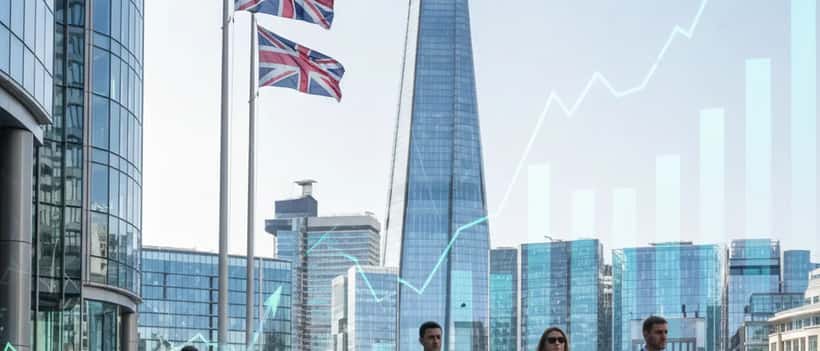
- The Shard — the iconic London skyscraper
- Harrods — the luxury department store
- Sainsbury's — a 14% stake in the supermarket giant
- Heathrow Airport — an equity stake in one of the world's busiest airports
- Canary Wharf Group — major commercial real estate holdings
Beyond bricks and mortar, the two countries have signed a £10 billion five-year strategic investment covering fintech, zero-emission vehicles, life sciences, and cybersecurity.
Why Qatar Is in the News Right Now
The UK Ministry of Defence confirmed in early March 2026 that Britain is deploying four additional Eurofighter Typhoon fighter jets to Qatar amid escalating regional tensions linked to Iran. A new Enhanced Defence Assurance Arrangement was signed, deepening UK-Qatar cooperation on land, air, and sea.
Simultaneously, QatarEnergy's temporary LNG production shutdown in early March caused a surge in global gas prices — an event directly linked to UK household energy bills, as reported by ITV News on 2 March 2026.
Qatar Airways has also announced reductions to London Heathrow and Gatwick services for spring 2026, adding to the sense that Gulf disruptions are being felt in Britain.
What This Means for British Investors
1. Indirect exposure through index funds
If you hold a FTSE 100 tracker or a UK equity fund, you likely have indirect exposure to companies in which Qatar holds stakes. Sainsbury's, for example, is a FTSE 100 constituent. This is not necessarily a risk — Qatar's sovereign wealth funds are long-term, stability-focused investors — but it's worth knowing.
2. Commercial property and real estate
Qatar's activity in London's commercial real estate market tends to underpin valuations at the high end. For investors in UK property funds with London weighting, Qatari activity acts as a price floor in trophy assets.
3. Energy price sensitivity
As a major LNG supplier to Europe, disruptions to Qatari gas production have a direct knock-on effect on UK energy costs. If you are reviewing your investment portfolio's exposure to energy price volatility — or your household budget — now is a good time to assess fixed versus variable energy contracts.
4. The geopolitical risk factor
Increased UK military commitment to Qatar signals that the Gulf relationship is deepening — but also that geopolitical risk in the region is elevated. Wealth managers will be factoring Gulf stability into emerging market allocations.
When Should You Speak to a Wealth Manager?
If you hold more than £50,000 in savings or investments and have not reviewed your portfolio's geographic exposure recently, this is a prompt to do so. Questions worth asking:
- What is my portfolio's exposure to Gulf-linked assets or energy price volatility?
- Are my fixed income holdings sensitive to oil and gas price shocks?
- Is my cash in a high-interest account keeping pace with inflation?
A qualified wealth manager or independent financial adviser can map your holdings against these macro trends and recommend adjustments suited to your risk profile.
Expert Zoom connects you with FCA-regulated wealth management experts via video consultation — no branch visit required.
Financial disclaimer: This article is for informational purposes only and does not constitute financial advice. Past investment performance is not a guide to future results. Always consult a regulated financial adviser before making investment decisions.
Sources: UK Government Qatar Trade & Investment Factsheet (2 February 2026), CEBR Report on Qatar's UK contribution (2026), ITV News (2 March 2026), UK Defence Journal (March 2026), QIA.qa
The Bottom Line
Qatar's relationship with the UK is deeper than most people realise — and the current period of Gulf tension makes it more relevant than ever for savers and investors to understand their indirect exposure. Whether through index funds, property, or energy costs, the ripple effects of Qatar's decisions reach British households directly. Staying informed — and getting professional advice when the picture becomes complex — is the smartest move you can make.
Ready to review your portfolio? Find a regulated wealth manager on Expert Zoom today.
