 Daniel Davies
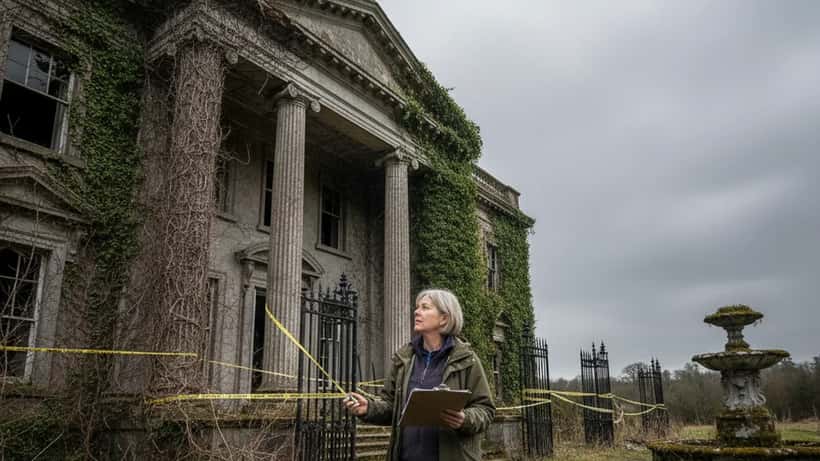
On 7 April 2026, North Wales Police executed a Misuse of Drugs Act warrant at Plas Glynllifon, the iconic Grade I listed mansion near Caernarfon in Gwynedd, Wales. Officers remained on site for several days as investigations continued. The raid has once again drawn public attention to this extraordinary 102-room neoclassical estate, which has been struggling through decades of deterioration — and where restoration efforts have repeatedly stalled. For anyone considering taking on a heritage property or a large renovation project, the story of Plas Glynllifon is a masterclass in what can go wrong.
A mansion with a storied past
Plas Glynllifon was built between 1836 and 1848 to designs by Shrewsbury architect Edward Haycock for Lord Newborough, and it remained an aristocratic residence for generations. Its most famous recent moment came in 1969, when it hosted the Prince of Wales Investiture Ball, tied to the investiture of Prince Charles at nearby Caernarfon Castle. The estate comprises a three-storey stone manor with rendered elevations and a slate roof, set within Grade I listed grounds that still attract visitors today.
But since the 1970s, the mansion's fabric has deteriorated considerably. Multiple ownership changes, stalled renovation plans, and complex listing restrictions have left the main house in a precarious state.
Sold — and stalled again
The property was listed by Sidney Phillips at £2 million before eventually being reduced to £1.35 million and relisted with Dafydd Hardy. As of early 2026, restoration efforts remained frozen. The building's Grade I status — awarded by Cadw, the Welsh Government's historic environment service — means that any structural changes require listed building consent. This protects the estate's historic significance but adds considerable complexity and cost to any renovation.
Earlier plans had envisaged transforming Plas Glynllifon into a multi-million-pound luxury hotel, a common ambition for estates of this scale. The project never materialised. This pattern — ambitious plans, planning complexity, funding gaps — is one that any buyer of a heritage property can face.
What buyers of historic properties need to know
The Plas Glynllifon situation illustrates several challenges that any home buyer or developer considering a listed building or period property in the UK should be aware of before proceeding.
Listed building consent is not optional. Any works that affect the character of a listed building — from replacing windows to altering internal walls — require consent from the local planning authority. Carrying out works without consent is a criminal offence and can result in prosecution, regardless of whether the owner owns or leases the building.
Structural surveys are non-negotiable. Heritage buildings often present hidden problems: wet rot behind panelling, dry rot in roof timbers, defective lead flashings, and failing lime mortar pointing. A standard homebuyer's survey is insufficient. You need a Level 3 Building Survey carried out by a chartered surveyor with specific expertise in historic buildings.
According to Historic England, there are over 400,000 listed buildings in England and Wales. Roughly 5.8% of these are Grade I or Grade II*, representing the most at-risk structures requiring specialist care.
Specialist contractors are required by law. Listed building consent conditions typically mandate the use of traditional materials — lime mortars, natural slate, heritage-appropriate glazing — and often require contractors approved or recognised by bodies such as the Institute of Historic Building Conservation (IHBC).
The costs nobody tells you about
A typical Victorian estate or country house renovation in the UK can cost anywhere from £150 to £500 per square foot, depending on the extent of the work, the specification, and the region. For a 102-room property like Plas Glynllifon, a full restoration could easily run into tens of millions of pounds — before furnishings, utilities upgrades, or commercial fit-out.
The ongoing ownership costs are equally significant: specialist insurance for listed buildings, periodic structural surveys, specialist maintenance of historic fabric, and heating systems designed for high-ceilinged period spaces.
When to call in a specialist
If you're considering purchasing or inheriting a heritage property — whether a listed townhouse, a period country home, or a converted barn with complex planning history — the first call should always be to a specialist architect or surveyor. They can assess:
- The current condition of the structure and fabric
- Planning constraints and listed building restrictions
- Realistic cost estimates for the required works
- Grant funding opportunities (from Historic England, Cadw, or local heritage trusts)
Many buyers fall in love with the aesthetic of a period property without fully understanding the obligations that come with it. A professional consultation before exchange of contracts can save thousands — or prevent a catastrophic purchase entirely.
On ExpertZoom, you can find verified home improvement specialists and chartered surveyors with experience in listed buildings and heritage renovations in your area. The story of Plas Glynllifon is a reminder that extraordinary buildings require extraordinary care — and that care should start before you sign on the dotted line.
Note: This article is intended for general information purposes. Always seek professional advice before purchasing or undertaking works on a listed or heritage building.
