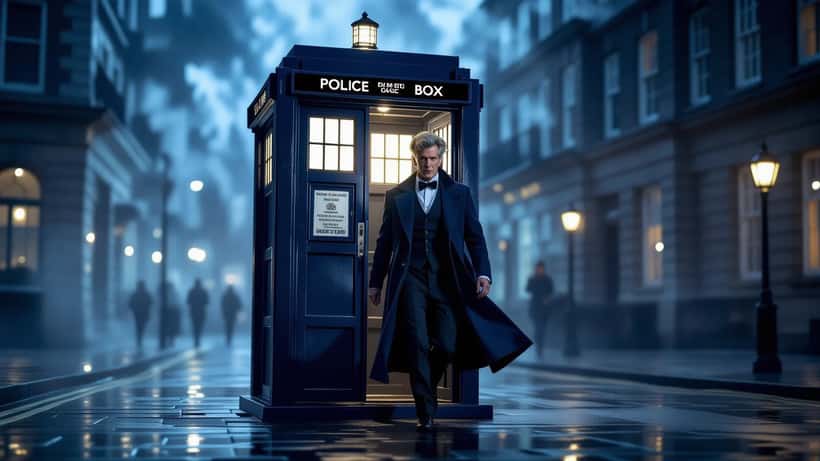
Peter Capaldi’s Doctor Who Exit: Why the 2026 Conversation About His Reasons Still Resonates
In 2017, Peter Capaldi announced he would step down as the Twelfth Doctor after three seasons. By the time his final episode aired at Christmas that year, fans already knew the show would regenerate once again. Nearly a decade later, in 2026, searches for “Capaldi leaving Doctor Who reasons” are climbing. The reason says as much about modern careers as it does about a science-fiction franchise.
Capaldi’s departure was not forced by scandal, poor ratings or public pressure. He left by choice. In interviews he explained that Doctor Who was “a bit of a television factory,” producing twelve episodes a year plus a Christmas special. He worried that the workload would eventually stop him from doing his best work. That honest assessment is now being re-read by career coaches, psychologists and anyone who has faced the question: when is the right time to walk away from a successful job?
What Capaldi actually said
During an appearance on The Graham Norton Show, Capaldi confirmed he had been asked to stay beyond his existing contract. He declined. His explanation was direct:
“Doctor Who is a great job but it’s a bit of a television factory. You do twelve episodes a year and I just worry that I wouldn’t be able to continue doing my best work. Because I like to be able to learn the lines and do some preparation and come in and give it the vigour and fun. And not hate it. So I just thought, leave.”
The sentence that matters most is the last one: “And not hate it.” Capaldi was not burned out in a dramatic sense. He was protecting the work, the audience and himself from a slower, more predictable decline.
Why the topic is trending again in 2026
Several factors explain the renewed interest. The show has continued to evolve, and Capaldi’s era is now viewed as a distinctive, darker chapter. Streaming has made his episodes easy to revisit. At the same time, workplace wellbeing has become a mainstream conversation. Phrases such as “quiet quitting,” “burnout” and “career clarity” are now part of everyday language.
Capaldi’s reasoning maps neatly onto current advice from organisational psychologists: leave while you can still contribute value, before resentment sets in. He did not wait until he was failing. He left at a point where the role was still creatively alive, which is exactly why his departure felt surprising.
The expert angle: knowing when to move on
Career coaches often see clients who have stayed in roles too long. The reasons are familiar: financial security, status, fear of the unknown, or a sense of loyalty to a team. Capaldi’s decision is a useful counter-example. He had job security, critical acclaim and a devoted fanbase. He still chose to leave because he could see the trajectory ahead.
Experts who advise high-performers on career transitions typically ask three questions:
- Are you still growing? If the challenge has flattened and the learning curve is gone, motivation usually follows.
- Is the cost sustainable? Long hours, travel and creative pressure are fine in short bursts. Over years they can erode health and relationships.
- Can you leave cleanly? Capaldi gave the production team enough notice to plan a regeneration story. A managed exit protects reputation and relationships.
Capaldi’s answers were, in order: not enough, probably not, and yes.
Creative work and the risk of repetition
One reason Capaldi’s explanation still feels fresh is that creative professions are especially vulnerable to repetition. An actor playing the same character across dozens of episodes faces a subtle hazard: the performance can become automatic. Fans notice when a Doctor feels tired. Capaldi recognised that the audience deserved more than a routine version of a character he loved.
This lesson extends beyond acting. Writers, designers, musicians, teachers and even doctors can reach a point where skill outstrips challenge. The work is still competent, but it is no longer alive. Identifying that moment before it becomes visible to clients or audiences is a professional skill in itself.
What Capaldi did next
After leaving the TARDIS, Capaldi continued to act in film and television, but on his own terms. He took roles that interested him, recorded music with his band, and avoided the frantic schedule of a weekly series. In other words, he did not retire. He rebalanced.
That distinction matters for anyone considering a career change. Leaving a demanding role does not have to mean leaving work altogether. It can mean choosing projects that match your energy and values. For some people, that means freelancing. For others, it means moving into teaching, consulting or mentoring.
Practical lessons for 2026
If you are weighing a major career decision, Capaldi’s experience offers a checklist:
- Separate identity from role. He loved being the Doctor, but he did not confuse himself with the character.
- Watch for early warning signs. Irritability, procrastination and a sense of dread on Sunday evening are data points, not character flaws.
- Talk to people outside the organisation. Capaldi’s decision became clearer once he stepped back and assessed the job objectively.
- Plan the exit before you need it. Financial and emotional preparation makes a voluntary departure possible.
- Preserve the relationship. A graceful exit keeps doors open. Capaldi has remained a respected voice in the Doctor Who community.
When to ask for expert help
Major career transitions are rarely purely logical. They involve identity, family, money and fear of regret. That is why coaches, therapists and financial advisers often work together when someone is considering a high-stakes move. A coach can clarify values, a therapist can explore anxiety, and a financial planner can quantify the runway.
Capaldi made his decision public, but the private work behind it — reflection, conversation and planning — is what made it successful. In 2026, with labour markets shifting and people rethinking what they want from work, his example is a reminder that leaving well can be just as important as arriving well.
Final thought
Peter Capaldi left Doctor Who because he cared about it. He chose quality over tenure, and long-term wellbeing over short-term security. As the show continues into new eras, his reasoning remains one of the most honest explanations a star has given for walking away from a dream job.
