 Abigail Clarke
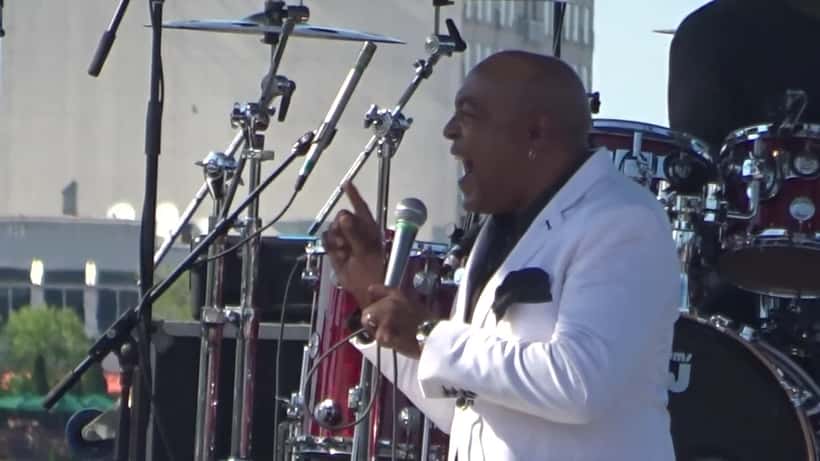
Peabo Bryson, the Grammy Award-winning R&B singer best known for his soaring ballads "Beauty and the Beast" with Céline Dion and "A Whole New World" with Regina Belle, died on 2 June 2026 at the age of 75. His passing, which followed a stroke suffered days earlier, has reignited urgent conversations about stroke prevention, recognition, and response — conditions that affect more than 100,000 people in the UK every year. For a generation who grew up with his voice on Disney soundtracks and late-night radio, the news has been a profound shock.
A Voice That Defined an Era
Born Robert Peapo Bryson in Blackville, South Carolina, the singer built a career spanning six decades. He rose to international fame through his collaborations on Disney animated films, winning Grammy Awards for both "Beauty and the Beast" (1993, with Céline Dion) and "A Whole New World" (1993, with Regina Belle). Both songs also received Academy Awards for Best Original Song — a rare double. In 2019, Bryson suffered a heart attack, a health event that his family confirmed at the time had affected him significantly. He is survived by his wife Tanya Bonaface Bryson, his children Robert and Linda, and three grandchildren.
His death, just days after reports emerged that he had suffered a serious stroke, underscores a reality that too many people still underestimate: strokes are medical emergencies that demand immediate action. Understanding the warning signs is not a matter of background knowledge — it is potentially the difference between life and permanent disability.
What Is a Stroke and Why Does Speed Matter?
A stroke occurs when the blood supply to part of the brain is cut off. Without blood, brain cells begin to die within minutes. There are two main types: ischaemic strokes, caused by a blood clot blocking an artery (accounting for around 85 per cent of all cases), and haemorrhagic strokes, caused by a burst blood vessel.
According to the NHS, around 100,000 people in the UK have a stroke every year — roughly one every five minutes. Stroke is the fourth largest cause of death in the UK and a leading cause of long-term disability. Yet research consistently shows that public awareness of stroke warning signs remains dangerously low, with many people waiting hours before calling for emergency help.
Speed is everything. The window for administering clot-busting medication, known as thrombolysis, is typically four and a half hours after symptoms first appear. For mechanical thrombectomy — a procedure to physically remove a clot from a blocked artery — the timeframe is even shorter. Medical data shows that every minute without treatment, approximately 1.9 million neurons die. The guiding principle in emergency stroke medicine is often phrased simply: "time is brain."
The FAST Warning Signs You Must Know
The NHS promotes the FAST acronym as the most accessible way for the public to identify a stroke and respond quickly:
- F — Face: Has one side of the face drooped or become numb? Ask the person to smile — is their smile uneven?
- A — Arms: Can the person raise both arms and hold them level, or does one drift downward involuntarily?
- S — Speech: Is the speech slurred, garbled, or impossible to understand? Can the person repeat a simple sentence clearly?
- T — Time: If you observe ANY of these signs, call 999 immediately. Do not wait to see whether symptoms improve on their own.
Additional symptoms that may accompany or precede a stroke include a sudden, severe headache with no apparent cause, sudden vision problems in one or both eyes, and sudden numbness or weakness in the face, arm, or leg — particularly on one side of the body. Sudden confusion, dizziness, or loss of balance may also be warning signs.
Who Is Most at Risk?
Stroke risk increases with age, but strokes are not exclusively a condition of later life. Several underlying health factors significantly raise the risk:
- High blood pressure (hypertension) — the single largest modifiable risk factor; sustained high blood pressure damages arterial walls over time
- Atrial fibrillation — an irregular heart rhythm that allows blood clots to form in the heart and travel to the brain
- High cholesterol — contributes to the build-up of fatty plaques in arteries, narrowing blood flow
- Diabetes — raises the risk of vascular damage throughout the body, including in the brain
- Smoking — narrows arteries, raises blood pressure, and accelerates arterial hardening
- Obesity and physical inactivity — both independently increase the risk of stroke through multiple mechanisms
- Previous stroke or transient ischaemic attack (TIA) — a TIA, sometimes called a mini-stroke, is a strong warning signal that a full stroke may follow within days
Peabo Bryson's reported heart attack in 2019 placed him in a higher-risk category. The relationship between heart disease and stroke is well-established: both conditions share underlying causes, including arterial disease, blood pressure dysregulation, and atrial fibrillation. People who have experienced a significant cardiac event are advised to undergo ongoing cardiovascular monitoring.
What to Do If You Suspect a Stroke
If you are with someone showing FAST symptoms — or any of the additional warning signs listed above — act immediately:
- Call 999 — do not drive the person to hospital; an ambulance with trained paramedics is faster and safer
- Note the exact time symptoms began — this information is critical for medical teams calculating the treatment window
- Do not give food, drink, or medication — stroke may impair the swallowing reflex, creating a risk of choking
- Keep the person calm and still — do not encourage them to walk around or lie flat
- If they lose consciousness, monitor their breathing and place them in the recovery position
Do not wait to see whether symptoms resolve. Even if a TIA resolves within minutes, it must be treated as a medical emergency. A TIA is a major warning that a full stroke may follow within 48 to 72 hours.
When to Speak to a Healthcare Professional
If you or someone you care for has known risk factors — high blood pressure, irregular heartbeat, diabetes, high cholesterol, or a history of cardiovascular events — speaking to a qualified healthcare professional is one of the most valuable steps you can take. Regular monitoring of blood pressure, cholesterol, and heart rhythm can identify problems early, before they become life-threatening emergencies.
A health expert can review your cardiovascular risk profile, advise on lifestyle changes, and ensure you are accessing appropriate screening and medication where needed. ExpertZoom connects UK residents with experienced healthcare professionals who can provide personalised, evidence-based guidance tailored to your specific risk factors.
This article is for informational purposes only and does not constitute medical advice. In an emergency, always call 999 immediately. For persistent health concerns, consult a qualified medical professional.
