 Eleanor Vaughan
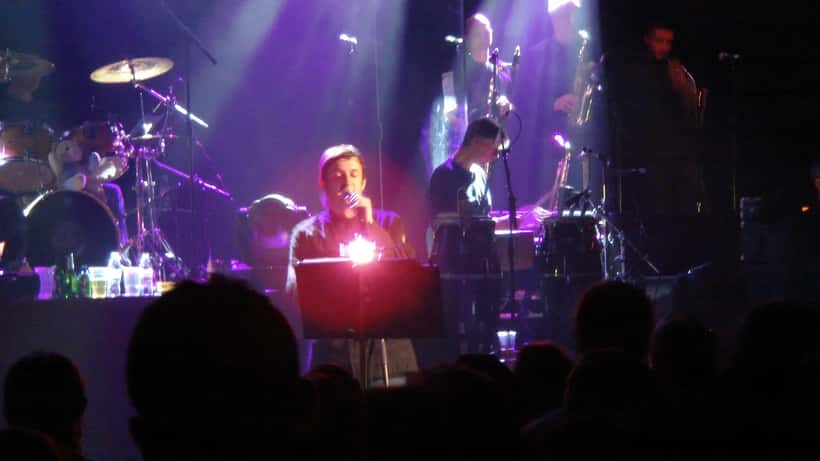
Tonight, BBC Two airs Paul Heaton: Live at Bramall Lane at 10:10pm — a concert film recorded at Sheffield United's ground on 25 May 2025, where the former Beautiful South and Housemartins frontman performed to tens of thousands of hometown fans. The broadcast is the centrepiece of a dedicated BBC Two evening celebrating four decades of Paul Heaton's songwriting, drawing on over 15 million records sold and five number-one albums. But while audiences prepare to watch Shed Seven, the Lightning Seeds, and Paul Heaton himself light up Bramall Lane on screen, a parallel legal story unfolds for every musician who stepped onto that stage. Broadcasting a stadium concert to several million viewers activates a distinct and frequently misunderstood set of performer rights under UK law — rights that many session musicians, backing vocalists, and touring band members do not know they hold.
What changes legally when a concert is broadcast on television?
A live performance and its broadcast are treated as separate legal events under the Copyright, Designs and Patents Act 1988. Performing on stage at Bramall Lane on 25 May 2025 gave each musician certain rights in that performance. The BBC Two transmission on 8 August 2026 constitutes an entirely separate act: a broadcast of a recording or live capture of that performance, which triggers a fresh set of statutory entitlements.
Two separate licensing systems operate in parallel. PRS for Music — which holds a blanket licence with the BBC — manages the songwriting side. Whenever a BBC programme features a registered composition, PRS collects a licensing fee from the broadcaster and distributes it to the songwriter and publisher. In 2024, PRS for Music distributed over £1 billion in royalties to its members, its first year exceeding that milestone, according to its annual report.
PPL (Phonographic Performance Limited) handles the other side: the rights of performers in the recording or live capture itself. Under Section 182D of the Copyright, Designs and Patents Act 1988, performers have a statutory right to equitable remuneration when a qualifying broadcast includes their performance. This applies to the headline act, featured artists, and non-featured session musicians alike — subject to registration requirements.
How are PPL royalties calculated for a BBC broadcast?
The foundational rule at PPL is a 50/50 split. When a broadcaster pays a licence fee for permission to include a live performance capture, PPL divides the collected income in two: 50% is allocated to the recording rights holder — typically a record label, or an artist who self-funded the project — and the remaining 50% is distributed among the performers who contributed to that performance.
Within the performers' 50%, allocation is weighted by role. Featured artists, those whose name is commercially associated with the performance, generally receive a larger proportional share than non-featured performers such as session musicians, orchestral players, or backing vocalists. The specific tariff applied depends on the broadcast reach and context. A primetime national broadcast on BBC Two, airing to a potential audience of several million, sits at a materially different point on PPL's tariff schedule than regional radio use or a streaming clip.
Performers who are not registered with PPL cannot receive their share of these distributions. This is not automatic: registration is free, can be completed online in under 20 minutes, and is required before royalties can be traced and paid. PPL pays distributions quarterly.
The Bramall Lane session musician — what are they actually owed?
Take the case of a session guitarist hired to play across a full two-hour set at Bramall Lane on 25 May 2025. They were paid a flat session fee, delivered their performance, and departed. When BBC Two broadcasts that performance tonight to an audience of potentially three to four million viewers, their contribution appears on national television without any further action on their part.
Under Section 182D of the Copyright, Designs and Patents Act 1988, their entitlement to equitable remuneration from this broadcast exists by statute — provided they are registered with PPL. Assume the BBC Two licence fee for the performers' share of a 90-minute primetime concert special falls between £6,000 and £12,000, a realistic range for a national broadcast of this type. PPL's 50% allocation for performers would therefore be between £3,000 and £6,000, distributed among all contributing musicians.
If the session guitarist is PPL-registered and the set included 18 musicians, their individual non-featured share from this single transmission could range from approximately £100 to £220. That figure compounds across repeat airings on BBC Two, availability on BBC iPlayer, potential international licensing, and any future clip uses — each triggering a separate PPL distribution event.
If, however, the session guitarist is not registered with PPL, their share is not paid to them — it remains unclaimed or is redistributed. A session musician who played in 10 televised concerts over the past five years and was unregistered for that entire period could be sitting on several hundred to several thousand pounds in uncollected broadcast royalties.
The concrete question a legal specialist helps answer: does your session contract include a buy-out clause, and if so, what does it actually cover? That distinction is what most musicians get wrong.
Does a buy-out contract extinguish your broadcast rights?
Some session agreements include a clause purporting to waive the performer's rights to future royalties in exchange for an upfront fee. The scope and enforceability of these clauses under UK law is not straightforward. Section 182D rights are statutory: Parliament granted them directly to performers, and they cannot be contractually excluded in ways that undermine the purpose of the legislation. Courts have taken a restrictive view of broad buy-out clauses when applied to broadcast royalties as distinct from commercial recording rights.
In practical terms: a buy-out clause in a session agreement for a live performance may validly cover the commercial release of a studio recording of that performance. It does not automatically follow that it covers equitable remuneration arising from a BBC broadcast of the live event. Whether it does in any particular contract depends on its precise wording — and that assessment requires a qualified solicitor with experience in entertainment or intellectual property law.
Audience members, crew, and incidental appearances
A stadium concert broadcast inevitably captures audience members and crew. Performer rights under the Copyright, Designs and Patents Act 1988 attach to performing artists, not to individuals who are incidentally filmed in a crowd. However, UK GDPR — the retained domestic version of GDPR — applies to identifiable individuals in broadcast footage. Event entry terms at concerts filmed for broadcast typically include a consent notice; if you attended Bramall Lane in May 2025 and the ticketing terms covered BBC filming, that consent almost certainly satisfies the legal threshold.
Where a named professional — a support act's manager captured on camera, a venue technician whose face is clearly visible, a journalist on a media pass — believes they are identifiable in broadcast footage without having consented to that specific use, the legal position is more nuanced. These are exactly the edge cases where a short consultation with an entertainment solicitor clarifies the position efficiently.
What performers and musicians should do now
For any musician who has appeared in a televised concert — whether tonight's BBC Two special or any past broadcast — the steps are clear.
Register with PPL immediately if you have not already done so. Registration is free, and PPL allows retrospective claims within a defined window, meaning you can still submit claims for broadcasts that have already occurred. Do not assume your agent or label has registered you: check directly.
Review your session agreements. Locate any contract you signed in connection with Bramall Lane or other televised performances and identify whether a buy-out clause exists and what its stated scope covers. If the language is ambiguous, do not assume it extinguishes broadcast rights.
Register compositions with PRS for Music. If you co-wrote any material that was performed on stage, PRS registration is the mechanism by which songwriting royalties from BBC broadcasts reach you.
Seek specialist legal advice if anything is unclear. UK performer rights intersect with contract law in ways that consistently disadvantage musicians who are unaware of the full scope of their statutory entitlements. An entertainment law solicitor can assess whether a buy-out clause in your agreement is enforceable against broadcast royalty claims, advise on retrospective PPL claims, and help you understand what you are owed from past and future television appearances.
This article provides general legal information for educational purposes only and does not constitute legal advice. Readers with questions about their specific rights should consult a qualified solicitor.
