 Phoebe Wilson
Pakistan and Sri Lanka open the ODI tri-series in Rawalpindi on 18 October 2026, with a 9:30am UK start, and the build-up has been dominated by who is missing. According to Wisden, England's Jos Buttler had hamstring surgery, Jacob Bethell is out with a knee injury and Sam Curran is only now back after a groin problem.
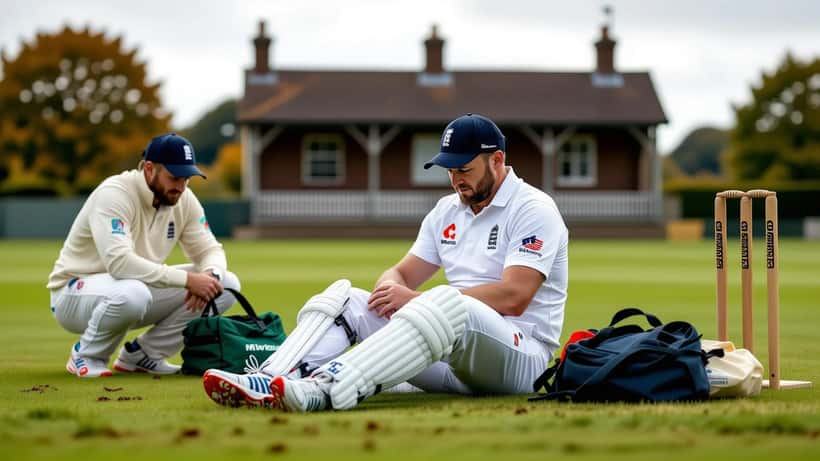
For anyone who plays club or park cricket in Britain, those names are a useful warning. The same muscles that sideline international players break down every weekend on village outfields.
Why the tri-series is a reminder for club cricketers
The tri-series runs from 18 to 31 October 2026, with Pakistan, Sri Lanka and England playing a double round robin in Rawalpindi and Lahore before a final on 31 October, according to Wisden's schedule. Pakistan and Sri Lanka meet again in Lahore on 27 October.
Every match starts at 1:30pm local time. That is 9:30am in the UK while British Summer Time lasts. After the clocks go back on 25 October it becomes 8:30am, so the Lahore fixtures land in the middle of many people's Sunday morning routine.
That timing matters for health. Watching a morning game and then heading straight out for a casual indoor net or a winter fitness session with cold muscles is exactly how many strains happen.
What the injuries in the squads actually mean
The three problems named in the squad news are all common among amateur players.
Hamstring strains happen when the muscle at the back of the thigh is overstretched or tears, usually during a sprint or a quick stop. Fast bowlers, and batters running a quick second run, are the classic cases.
Groin strains come from sudden sideways or twisting movements, such as diving in the field or changing direction mid-run.
Knee problems build up from repeated landing, twisting and, for bowlers, the heavy load of the delivery stride.
Professionals get immediate scans, physios and structured return-to-play plans. Most club players get none of that. They manage by feel, play on too soon and turn a short setback into a season-long problem.
What the NHS says about strains
The NHS describes sprains and strains as injuries to muscles or ligaments, often caused by overstretching or twisting, and says not warming up and tired muscles are common causes. For the first two to three days it recommends PRICE therapy: protect, rest, ice, compression and elevation.
It says most strains feel better after about two weeks. It also warns that you may need to avoid strenuous exercise such as running for up to eight weeks because of the risk of further damage, and that severe strains can take months.
The NHS advises seeing a GP if an injury is getting worse or is not improving with self-care. It advises calling NHS 111 if the pain is severe or worsening, there is large swelling or bruising, or you cannot put weight on the leg. For persistent problems, physiotherapy may help, and in many areas you can refer yourself to NHS community musculoskeletal services without seeing a GP first. You can read the full guidance on the NHS sprains and strains page.
The expert angle: why a specialist beats guesswork
A hamstring injury is not a single thing. A mild strain and a partial tear can feel similar on day one but need very different recovery plans. A sports physiotherapist or musculoskeletal specialist can examine the leg, check strength and flexibility against the uninjured side, and set a staged return that fits the sport you actually play.
Specialists also look at why it happened. Poor hip mobility, a weak core, a sudden jump in bowling workload or a training gap over the winter are all common causes, and fixing the cause is what stops a repeat.
This is the gap between professional and amateur cricket. Elite squads treat the cause. Most amateurs treat only the pain.
A concrete case: a Saturday league bowler after the 27 October match
Take a 42-year-old medium-pace bowler in a Sunday league side. He watches Pakistan v Sri Lanka in Lahore at 8:30am on Tuesday 27 October, then joins an indoor winter net session that evening, having not bowled at full pace since September.
Suppose he feels a sharp pull at the back of his thigh on his fifth ball and keeps going for another ten minutes. The next morning there is bruising and he walks with a limp.
If he follows the NHS pattern, the first two to three days are rest and PRICE. If the pain is easing by day 14, around 10 November, he is in the group the NHS says usually feels better after two weeks. Even then, the same guidance suggests holding off strenuous exercise for up to eight weeks, which means a safe full return could be as late as 22 December.
If instead he still cannot walk comfortably after a few days, or the bruising and swelling are growing, that is the signal to call 111 or see a GP rather than wait. If he rushes back for the first pre-season net in March and it recurs, he has lost a second month and possibly the season.
The numbers are the point: two weeks to feel better, up to eight weeks before hard running, and months for a severe tear. A specialist's value is deciding which of those three timelines he is actually on.
Why returning too early costs more than waiting
The most common mistake after a muscle strain is judging recovery by pain alone. Pain fades well before the muscle regains its strength, so a player can feel fine walking and still be at risk the moment they sprint or bowl flat out. That is why the NHS warns about the risk of further damage when strenuous exercise restarts too soon.
A good assessment tests more than comfort. It checks how much force the leg can produce, whether the two sides match, and whether the player can move at game speed without hesitating. We have also looked at how injuries shape the wider cricket season, and the pattern is consistent: the players who return on a plan lose less time overall than those who return on instinct.
Age and workload change the picture too. A 20-year-old who plays three times a week recovers differently from a 45-year-old who plays once a fortnight, and a physiotherapist adjusts the plan to match, rather than handing everyone the same generic eight-week rule.
What to do now
If you play this winter, a few habits matter more than any equipment.
- Warm up properly before every net, game or run, including dynamic hamstring and hip work, and do not go straight from the sofa to full pace.
- Build bowling and sprint loads gradually after the off-season rather than all at once.
- Stop as soon as you feel a sharp pull. Playing on is the most common reason a mild strain becomes a serious one.
- If pain lingers beyond a couple of weeks, or you have had the same injury before, book an assessment with a physiotherapist or sports medicine specialist.
Expert Zoom lists health specialists who can assess muscle and joint injuries and advise on a safe return to sport. If you are unsure whether a niggle is a two-week problem or an eight-week one, a short consultation is cheaper than a lost season.
This article is for general information and is not medical advice. If you have a sports injury, speak to a GP, pharmacist or physiotherapist, and call NHS 111 or 999 if symptoms are severe.
