 Eleanor Stone
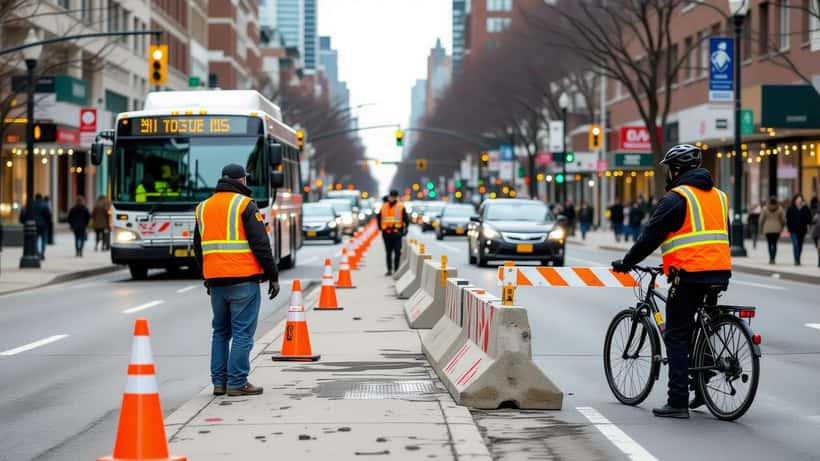
Crews began pulling up protected bike lanes on Toronto's Bloor Street West on 14 October 2026, and protesters tried to block the work for a second day, with one person arrested, according to CTV News. The Ontario government says up to 19 kilometres of the city's lanes will go, starting in Etobicoke.
The dispute is Canadian, but the questions it raises travel well. If a road is redesigned and you are hurt on it, who is responsible, and how long do you have to act?
What has happened in Ontario
Premier Doug Ford's government is pressing ahead with removing protected cycle lanes from major Toronto roads. Reporting from CP24 and CTV News says transport minister Prabmeet Sarkaria promised the lanes are "coming out" after demonstrators halted work on the first day.
The legal groundwork was laid by Bill 212, introduced in late 2024, which lets the province override municipalities on bike lanes along major roads. Cycle Toronto challenged it under the Canadian Charter of Rights and Freedoms.
A lower court sided with the challengers. On 14 August 2026, however, the Court of Appeal for Ontario cleared the way for removals along Bloor Street, Yonge Street and University Avenue, according to Toronto media coverage.
Mayor Olivia Chow has called the plan a waste of money and an attack on local democracy. The city has proposed returning a car lane to some roads while keeping a bike lane. The province says it is open to that where both can fit, provided the city funds its share.
Why this matters beyond Toronto
Cycling infrastructure is contested everywhere. In England, central government, county highway authorities and local councils share responsibility for roads, and decisions on cycle lanes regularly change after elections or consultations.
When a protected lane is removed or a junction is reworked, the road itself can become more hazardous for a period. Markings fade, temporary barriers appear, and surfaces are patched. Riders who used the old layout every day are suddenly on a different road.
Since January 2022 the Highway Code has set out a hierarchy of road users, placing those who can do the greatest harm, such as drivers of large vehicles, under the greatest responsibility to protect others. That framework applies regardless of what cycle infrastructure exists.
The legal expert's view: who is liable when a road changes
For a personal injury solicitor, the key question after a cycling accident is usually one of two things. Either another road user was at fault, or the road itself was defective.
Under section 41 of the Highways Act 1980, a highway authority has a duty to maintain the roads it is responsible for. Section 58 gives the authority a defence if it can show it took reasonable care to make sure the road was safe, including inspection and repair regimes.
That defence is why evidence matters. Photographs of the surface, the date of any works, the council's inspection records and any prior complaints can all decide whether a claim succeeds.
Claims against a driver work differently. They rest on negligence and are normally paid through the driver's insurer, or through the Motor Insurers' Bureau if the driver is uninsured or untraced.
Contributory negligence can reduce compensation. A cyclist who was not wearing a helmet, or who was riding without lights at night, may still recover damages, but the award can be reduced by a percentage.
A worked example: the commuter and the half-finished roadworks
Consider a hypothetical commuter in Leeds who rides 6 miles to work every weekday. In March 2026 the council removes a short stretch of segregated lane and replaces it with a shared carriageway, but leaves a 4 cm drop between the new surface and the old kerb line.
On 12 May 2026 the rider's front wheel catches the edge, and they fall and fracture a wrist. The injury keeps them off work for 7 weeks, with lost earnings of around £3,500 and physiotherapy costs of £600.
If the rider can show the council knew about the drop, for example through three complaints logged on its website in April, the section 58 defence becomes much harder to run. A drop of that depth is a type of defect that many authorities treat as an intervention level for repair.
If there were no earlier reports, the council may argue its fortnightly inspection regime was reasonable. In that case the claim could turn on whether the inspection records show the new surface was ever checked after the works.
The deadline matters too. Under section 11 of the Limitation Act 1980, most personal injury claims must be started within three years of the accident. For this rider, that means by 12 May 2029, though evidence such as photographs and witness details is far easier to gather in the first weeks.
Because the injury element of the claim is worth more than £1,000 and total losses reach £4,100 before any award for pain and suffering, the claim would not fall in the small claims track. That means legal costs may be recoverable from the other side if the claim succeeds, and instructing a solicitor would be sensible.
If the council admits the drop was a defect but argues the rider was going too fast, a reduction for contributory negligence of, say, 20 per cent would cut a £10,000 award to £8,000. The numbers show why precise evidence on speed, lighting and surface matters.
What the Toronto row tells us about evidence
One lesson from the Ontario dispute is that infrastructure decisions are political and can change quickly. The legal position of the person injured on the road does not change with them.
Whether a lane is protected by a kerb, painted on the surface or absent altogether, the same questions arise after a collision. What was the road's condition, who was responsible for it, and what did they know?
Cycling groups in Ontario argue that removing protected lanes increases risk. Whatever the merits of that argument, which the courts there have left to the government, riders in any country benefit from recording road hazards as they find them.
What to do if you are hurt on a changed road
Take photographs of the exact location, including a coin or ruler for scale if there is a surface defect. Note the date, time, weather and lighting.
Report the hazard to the highway authority through its online reporting tool and keep the reference number. Ask any witnesses for contact details before they leave.
Seek medical attention even if the injury seems minor, because a record from the day helps link the accident to the symptoms. Keep receipts for repairs, replacement kit, travel and treatment.
Do not accept an early settlement from an insurer before you know the full extent of your recovery. Fractures and soft-tissue injuries can take months to settle.
Next steps
This article is general information, not legal advice, and the law differs between England, Wales, Scotland and Northern Ireland. If you have been injured in a cycling accident, speak to a qualified solicitor who handles personal injury claims.
On Expert Zoom you can ask a legal expert whether your accident, road conditions and timeline support a claim, and what evidence to gather before the three-year deadline arrives.
