 Amelia Ward
When The Sun runs a headline about a 33% surge in a deadly hospital bug, most readers feel a spike of anxiety — and then scroll on. But for the approximately 13 million patients admitted to NHS hospitals in England each year, the latest norovirus data deserves more than a scroll. In September 2026, NHS England figures show the average number of hospital patients with diarrhoea, vomiting, or norovirus-like symptoms hit 1,012 per day, up nearly 9% week-on-week — and around 30% higher than the same period last year, according to NHS monitoring data. What does that actually mean for your health, and when should you be calling a doctor?
What The Sun's NHS Bug Alert Is Really Telling You
The bug at the centre of the latest tabloid alarm is norovirus — commonly called the "winter vomiting bug," though it circulates year-round and causes particular disruption in NHS settings during the autumn months. In its most recent weekly surveillance data, NHS England recorded a sustained uptick in hospital patients presenting with norovirus-like symptoms, with the sharpest rises concentrated in acute medical wards and elderly care settings rather than in emergency departments.
Norovirus is extraordinarily contagious. A single infected person sheds billions of viral particles, and it takes as few as 18 particles to cause infection in another person, according to data from the UK Health Security Agency (UKHSA). In an enclosed NHS ward, that means transmission can spread to dozens of patients within 48 hours if infection control measures are not activated immediately.
The Sun's surge figure is consistent with separate data published by health monitoring services reporting a 30–45% rise in norovirus hospital admissions across 2026. By September, a secondary autumnal wave before the main winter peak is well-documented in NHS epidemiological records. What the headline does not explain, however, is that a significant proportion of these cases are not patients who walked in with the bug — they are people admitted for entirely unrelated reasons, who contracted norovirus on the ward.
Why Hospital-Acquired Norovirus Is a Different Threat
For most healthy adults who catch norovirus at home, recovery takes 48 to 72 hours without medical intervention. The symptoms — projectile vomiting, severe diarrhoea, stomach cramps, and low-grade fever — are deeply unpleasant but rarely dangerous for people with intact immune systems.
Hospital-acquired norovirus is a different clinical picture. Patients who are post-operative, elderly, immunocompromised, or already weakened by an existing condition face substantially elevated risk. Severe dehydration can escalate rapidly in these groups, and hospital-acquired norovirus infections have been associated with extended inpatient stays of three to five additional days on average, per NHS operational data.
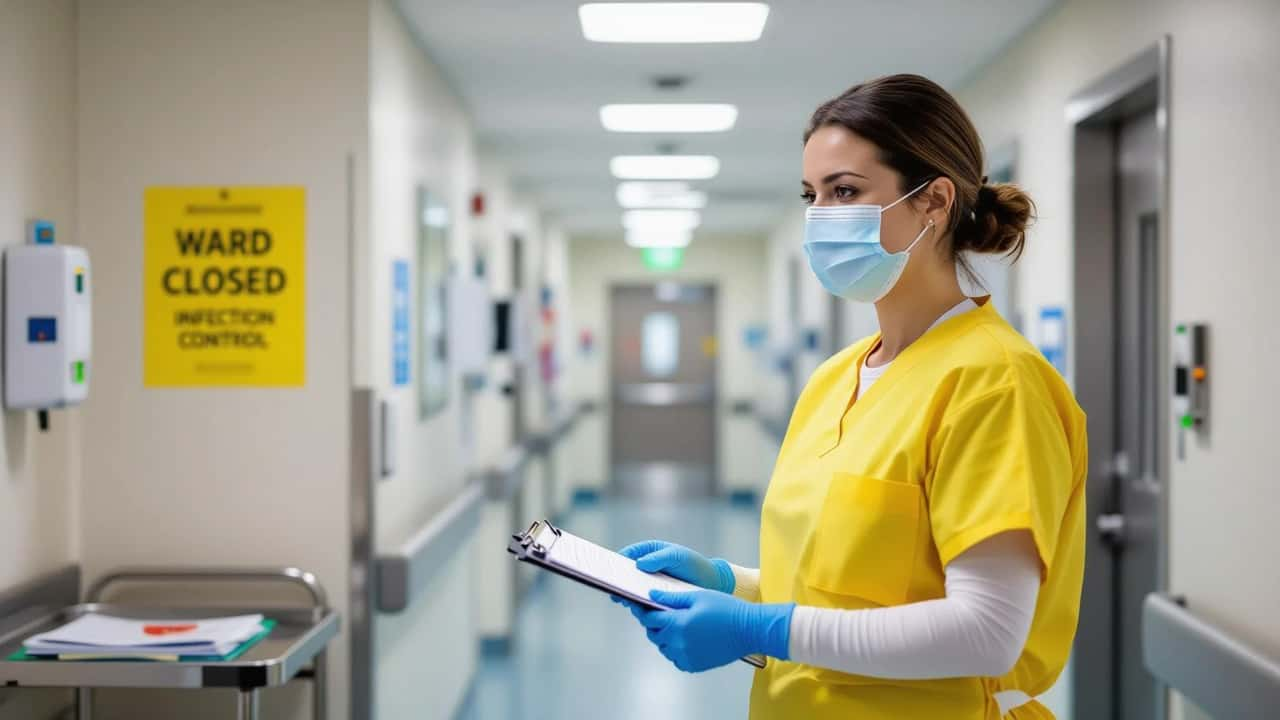
The ward-level impact compounds the problem. Outbreak control protocols — triggered when two or more confirmed cases appear in the same clinical area within 48 hours — require isolating symptomatic patients and deep-cleaning the ward. This can reduce available beds by 10–20% on an affected unit within hours. During periods of high NHS occupancy, as hospitals are experiencing in September 2026, the knock-on pressure ripples across elective and emergency pathways, affecting patients with no connection to the original outbreak at all.
If You Have a Hospital Appointment This Month: A Concrete Scenario
Here is a specific situation that thousands of UK patients are navigating right now. You are scheduled for a knee replacement at an NHS trust on Friday, 26 September 2026 — a procedure that has sat on your waiting list for nine months. On the Tuesday before, you receive no call from the hospital. On Wednesday, nothing. On Thursday morning, you ring the ward to confirm, and a nurse tells you the unit has been placed under a norovirus outbreak protocol.
Under NHS Infection Prevention and Control (IPC) guidelines, an outbreak protocol is declared when two or more norovirus-like illness cases are confirmed in the same clinical area within 48 hours. When that threshold is crossed, elective procedures on the affected ward are typically suspended for a minimum of 72 hours after the last symptomatic case — and often significantly longer in a busy acute trust.
If the protocol is active on Thursday: your Friday procedure will almost certainly be cancelled with less than 24 hours' notice. NHS trusts are required to offer a rebooking, with the timeframe dependent on the clinical urgency of your condition. For orthopaedic elective surgery in autumn 2026, rebooking typically takes 4–8 weeks in well-resourced trusts, but can stretch to 10–12 weeks in areas already operating under capacity pressure.
If you develop diarrhoea and vomiting yourself in the 48 hours before an admission: you must inform the hospital before attending. Arriving at a ward while actively infected puts immunocompromised patients at serious risk. Most trusts will ask you to postpone, and attending despite symptoms could constitute a breach of NHS patient responsibilities.
If you are a carer for an elderly or vulnerable inpatient during a surge period: ward visitor restrictions during an outbreak can be imposed at very short notice, sometimes with no advance communication to families. Ask the ward sister directly about outbreak status before every visit. This is especially important for patients with dementia, for whom unexplained ward closures and absent familiar faces can trigger acute distress and rapid functional decline.
On the financial and legal side: if you take unpaid leave to attend a procedure that is subsequently cancelled due to a hospital-acquired outbreak, there is no automatic right to compensation. However, if your underlying condition measurably deteriorated during the enforced delay — and that deterioration is demonstrably linked to the cancellation rather than natural disease progression — a health law solicitor can advise on whether a clinical negligence or breach of duty of care claim is viable. This is a fact-specific assessment that requires professional input, not a judgment you should make alone.
How to Read Your Symptoms: Self-Care vs. When to Act
For the majority of adults without pre-existing vulnerabilities, NHS self-care guidance for norovirus remains the right first response:
- Stay home for at least 48 hours after all symptoms stop to prevent spreading the virus to vulnerable community contacts
- Drink small sips of water frequently rather than large amounts at once; oral rehydration sachets — available at any pharmacy without a prescription — are significantly more effective at replacing lost electrolytes than plain water
- Do not take anti-diarrhoeal medication for the first 24 hours unless directed by a clinician; doing so can prolong the course of infection by preventing the body from expelling the virus naturally
Call NHS 111 — not your GP surgery directly — if any of the following apply:
- Symptoms persisting beyond three days without improvement
- Signs of significant dehydration: no urination for 8 hours or more, dark concentrated urine, sunken eyes, or sustained dizziness when standing
- Blood in vomit or stools at any stage
- High fever above 38.5°C that persists for more than 24 hours
- Symptoms in a child under one year, an adult over 75, a pregnant woman, or anyone taking immunosuppressant medication
Go directly to A&E if a person cannot retain any fluids for more than 12 hours, becomes confused or unresponsive, or has a pre-existing kidney condition that makes rapid dehydration acutely dangerous.
For authoritative clinical guidance on managing norovirus at home, the NHS norovirus page provides a comprehensive overview of treatment and when to escalate care.
The Groups Who Need to Act Before They Feel Unwell
There is a subset of UK adults for whom waiting for symptoms to appear before seeking advice is the wrong approach. If you fall into any of the following categories, consider speaking to a health professional proactively — before a surge reaches your household or ward:
- Adults over 65 with reduced kidney reserve or on blood pressure medications that amplify dehydration risk
- People with inflammatory bowel disease, Crohn's disease, or ulcerative colitis, for whom a norovirus episode can trigger a serious underlying flare
- Diabetics on insulin or sulphonylureas, where vomiting and reduced food intake can cause dangerous blood sugar instability within hours
- Cancer patients on active chemotherapy, whose suppressed white cell counts make a gut infection dramatically harder to clear
- Carers of any of the above, who need to know when their own infection becomes a safeguarding concern for the person in their care
For each of these groups, the central question is not "do I have norovirus?" but "given my specific situation, what level of symptom requires what level of response?" That is precisely the kind of nuanced, personalised guidance that a GP or specialist nurse is best placed to provide — and where a direct expert consultation, rather than a generic web search or tabloid headline, can make a material difference to outcomes.
When NHS 111 lines are under surge pressure — as they reliably are during norovirus peaks — waiting on hold for reassurance you could get in minutes through a direct expert consultation is rarely the best use of your time or energy.
Important notice: This article provides general health information only and does not constitute medical advice. If you or someone in your care is experiencing symptoms of norovirus or severe dehydration, contact NHS 111. In an emergency, call 999.
format_used: Expert reaction
