 Stephen Hall
Newcastle United's £30 million summer overhaul of St James' Park has done more than excite the Gallowgate End — it has sent thousands of Magpies fans searching for ways to recreate the match-day buzz at home. The club confirmed a complete rebuild of the playing surface this summer, including roughly £10 million on a new drainage system, alongside a returning Gallowgate scoreboard for the first time since 1993 and upgraded hospitality areas. Supporters get their first look when two friendlies are staged on 15 and 16 August 2026.
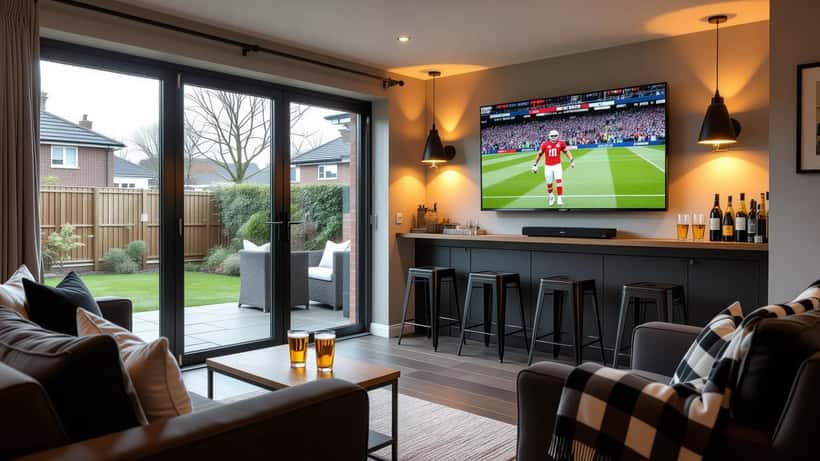
With the stadium being readied to host four UEFA Euro 2028 matches, the appetite for a proper viewing set-up has never been higher. Garden rooms, converted outbuildings and dedicated "home bars" are the fastest-growing home-improvement request of the summer. But before you order a flat-pack cabin and a 75-inch screen, there is a planning catch that trips up thousands of homeowners every year.
Why a garden match-day bar is booming
The logic is simple. A season ticket at St James' Park is increasingly hard to secure, and away-day travel costs keep climbing. A garden room lets fans host friends, control the volume and avoid pub prices — while adding usable floor space to the property. Estate agents routinely cite a well-built garden room as a feature that supports resale value, provided it was built legally.
That last point is where problems start. Many buyers assume a garden building is a "no questions asked" project. In most cases you are covered by permitted development rights, but the moment you cross certain lines, you need formal permission — and getting it wrong can mean an enforcement notice ordering you to tear the whole thing down.
The rules most fans get wrong
Under permitted development rights in England, most garden rooms can be built without planning permission if they meet a set of conditions. According to UK planning guidance, the structure must be single storey, sit behind the principal elevation of the house, and cover no more than 50% of the total land around the original property.
Height is where the biggest mistakes happen. If any part of the building sits within two metres of a boundary, the whole structure must be no more than 2.5 metres tall. Move it more than two metres from every boundary and you can go up to four metres with a dual-pitched roof, or three metres with a flat roof. Fans dreaming of a mezzanine or a raised viewing deck almost always exceed these limits.
Restrictions tighten further for listed buildings, conservation areas, Areas of Outstanding Natural Beauty and National Parks, where full planning permission is typically required. Homeowners in parts of Newcastle's older terraced conservation zones should assume they need to check before building anything.
There is another trap: use. A garden room used purely for leisure is fine, but the second it becomes a self-contained space with sleeping facilities — or a commercial venture such as a rentable "fan zone" — it can lose permitted development status and even trigger a council tax reassessment.
Building regulations are a separate hurdle
Planning permission and building regulations are two different systems, and passing one does not exempt you from the other. Most garden rooms under 15 square metres of internal floor area are exempt from building regulations. Between 15 and 30 square metres, they can remain exempt if built substantially from non-combustible materials or positioned at least a metre from any boundary. Anything over 30 square metres needs full building control approval.
Electrics are the detail even careful homeowners miss. Any new electrical circuit run to an outbuilding falls under Part P of the building regulations, regardless of the room's size. Your electrician should be registered with a competent-person scheme and must issue an Electrical Installation Certificate. Powering a fridge, sound system and a large screen off an unregistered supply is both a safety risk and a future conveyancing headache.
What to check before you build
If you want a St James'-inspired viewing room without the demolition risk, work through a short checklist. Confirm your property is not listed or in a conservation area. Measure boundary distances before choosing a roof height. Keep the footprint under 15 square metres if you want to sidestep building control, or budget for approval if you go bigger. And insist on certified electrical work with paperwork you can hand to a future buyer.
You can confirm the current thresholds for your address using the official government planning guidance at GOV.UK, which sets out permitted development rules for England. Because conservation designations and boundary details vary street by street, homeowners should treat online rules as a starting point and confirm specifics with their local planning authority before committing to a design.
When to bring in an expert
A garden room is a deceptively technical project. Get the height, boundary distance, materials or wiring wrong and you can face enforcement action, failed building control, or a sale that stalls when a solicitor asks for certificates you do not have. A home-improvement specialist or building surveyor can tell you in a single visit whether your plan sits inside permitted development, whether the 30 square metre threshold applies, and how to document the electrics correctly.
For fans who plan to install a large screen and sound system, our guide to home cinema building regulations covers the acoustic and fire-safety points that overlap with a garden bar build. Do the homework Newcastle's contractors are doing at St James' Park — plan first, build once — and your match-day room will add value rather than a demolition bill.
