 Andrew Wright
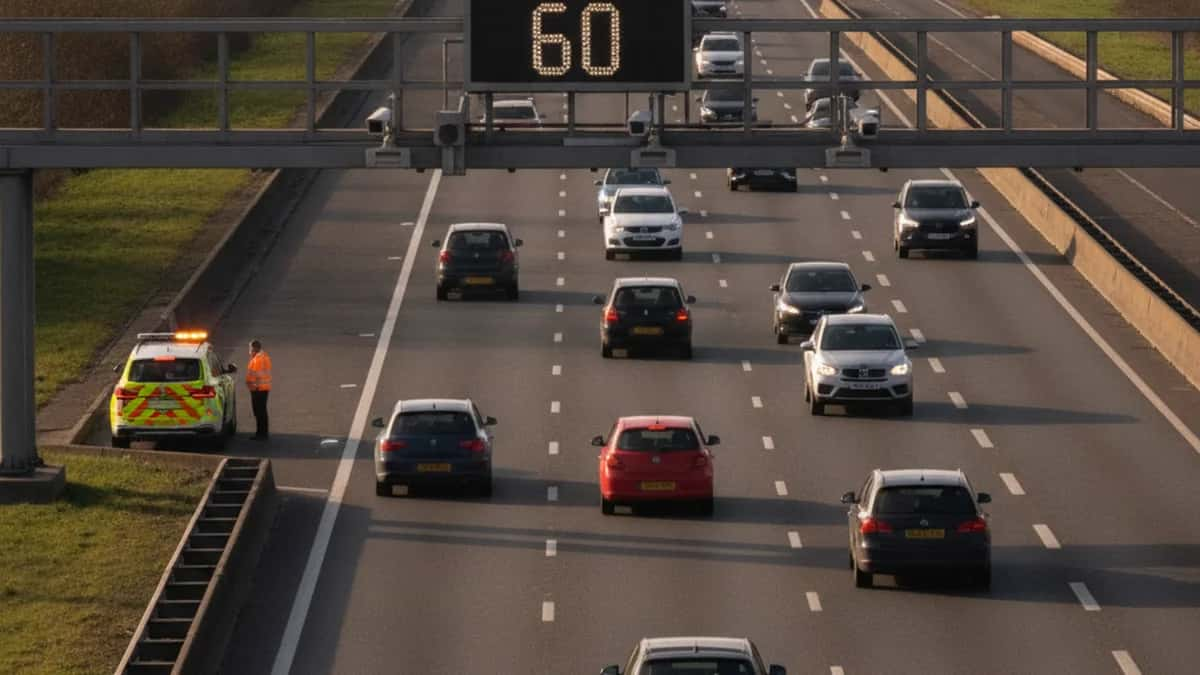
The Department for Transport and National Highways said on 17 November 2026 that a second possible fault has been found in the variable speed camera system used on England's motorways and major A roads. The problem traces back to a 2019 upgrade, the Home Office has withdrawn the system's type approval, and National Highways is ending its contract with the supplier, Verra Mobility. For anyone who has paid a speeding penalty on a managed road, the practical question is what this means for a fine already settled.
What the statement says
Justin Madders MP set out the position in a written statement to Parliament on 17 November 2026, published alongside the Westall Review report. The first anomaly, the statement explains, came from the 2019 upgrade to the camera system. It affected how some variable speed cameras interact with overhead signage. On very rare occasions, drivers were not given enough time to respond to a change in the speed limit, or were detected speeding when the limit had already changed.
The cameras affected by that first anomaly cover around 0.2% of all roads in England, according to the statement. Redress has been offered to everyone who was identified and contacted.
The new finding concerns cameras that may activate in specific circumstances, again linked to the 2019 upgrade. National Highways modelling puts the probability of those circumstances at no more than 0.1%, and the statement says there is no real-world evidence that the issue has affected enforcement.
The story did not start this month. Press reports, including the DVLA penalties coverage we published earlier, show how quickly a motoring error can turn into a fine, and the camera fault has followed the same pattern: a driver challenged a ticket on the M5 in September 2025, and a written ministerial statement followed on 16 December 2025. An independent review, with terms of reference published on 19 January 2026, led to the Westall Review now released.
Are the cameras still enforcing?
Yes. The statement says enforcement continues on all motorways and A roads through other methods. National Highways has added traffic officer patrols at relevant locations and is using existing CCTV and ANPR cameras. Variable speed signage stays in use, and the statement says drivers will see no difference in how they use the roads. It also states: "if you break the law you should expect to be subject to enforcement action."
So the message to motorists is not that limits have stopped mattering. The message is that a specific class of camera reading may be unreliable, and that the equipment is being replaced.
Who can ask for a fine to be looked at again?
The statement says redress has been offered to everyone identified and contacted. It does not set out a new application route for people who were not contacted, and it does not set new requirements for drivers. That leaves a gap that a driver cannot close alone: whether a particular penalty came from an affected camera at an affected time.
A solicitor who handles motoring offences can read the notice, the location, the date and the time against the published findings. A mechanic or vehicle technician is useful for a different question. If you disputed your speed because the vehicle's own speedometer or a data logger told another story, a garage can test and certify the instrument, and that evidence is only worth anything if it is gathered quickly.
A worked example: one driver, one motorway, one penalty
Take a driver who was caught on a managed motorway section in 2024 and accepted a £100 fixed penalty with 3 points on the licence. At the time, the overhead sign had just dropped from 70 mph to 60 mph and the driver's recorded speed was 64 mph.
If the camera and the sign were out of step at that moment, the driver may have been recorded as speeding when the limit had only just changed, which is the first anomaly described in the statement. In that case the penalty could be among those that National Highways has already offered to put right, and the driver should have received a letter.
If no letter has arrived, the driver is in the position of most readers. The sensible steps, in order, are these:
- Find the original notice and write down the exact road, direction, date and time.
- Check whether the location is one that has been reported as affected in the published review material.
- Keep the licence record, the payment receipt and any insurance quote that mentioned the endorsement, because a corrected record can change the price of cover.
- Ask a motoring solicitor whether the facts match the anomaly before contacting anyone, since what you write in a first message can be quoted back to you.
If the driver instead drove at 85 mph in a steady 70 mph zone, the camera issue changes nothing, because the statement says the faults relate to timing around limit changes and a limited set of circumstances. The number on the notice matters: a small margin over a limit that had just changed is a very different case from a large margin over a fixed limit.
Why the vehicle itself matters
Few drivers think of the car as evidence, but it can be. Modern vehicles often log speed through the engine control unit, the telematics box or a dash camera. A fault such as a wheel size change or a miscalibrated speedometer can also explain why a driver believed they were within the limit.
A specialist can tell you what a vehicle's data store actually holds, and for how long. Because that data can be overwritten, a driver who suspects a wrongly issued penalty should ask early rather than wait for a letter.
What happens next on the roads
Three things are now fixed. The Home Office has revoked the system's type approval, which ends its formal approval as a speed measuring device. National Highways is ending the contract with Verra Mobility. And the Westall Review is public, so the findings can be read in full.
What is not fixed is the timetable for replacement equipment, which the statement does not give. Until then, expect more patrol officers and ANPR checks on the affected sections rather than a gap in enforcement.
Questions drivers are asking
Does a fixed limit change the picture? The statement ties both issues to variable limits and specific circumstances, so a steady limit with a large excess speed is not obviously affected.
Is a clean licence guaranteed if my case is reviewed? No. The statement offers redress to people identified and contacted, and it makes no wider promise. Each case turns on its own date, place and recorded speed.
Should I stop paying notices? No. Ignoring a notice creates its own offence. Respond within the stated time and take advice on the substance.
What to do now
If you have paid a penalty on a managed motorway or major A road since 2019 and think the timing looks wrong, gather the notice and your vehicle data, and speak to a motoring solicitor before you reply to anyone. If you are unsure whether your car recorded what you think it did, a qualified technician can read the data. Expert Zoom lists specialists in both fields.
This article is general information, not legal advice. Whether a particular penalty can be reviewed depends on its facts.
Source: Department for Transport written statement, 17 November 2026.
