 Grace Davies
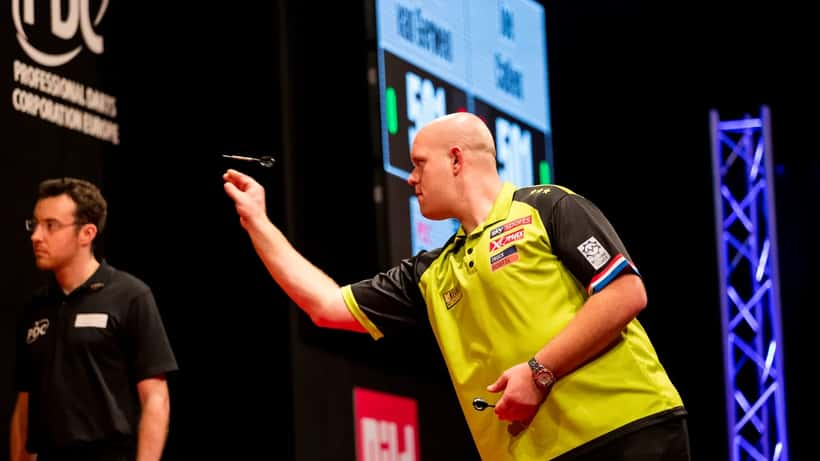
Michael van Gerwen's home event in Maastricht ended early on Saturday 17 October 2026, when the three-time world champion lost 6-5 to William O'Connor in round two of the Dutch Darts Championship, according to Sky Sports. It was another early exit in a season that has left fans asking a simple question: when does a slump stop being about form and start being about something physical or psychological?
What happened, and why fans are searching for answers
The defeat came less than three weeks after van Gerwen lost 2-1 to Ryan Joyce in the first round of the World Grand Prix in Leicester on Monday 28 September, a night on which defending champion Luke Littler also went out, per Darts News. The Dutch Darts Championship was the last regular European Tour event of the season, and the top 32 on the European Tour rankings reach the European Championship in Dortmund the following week.
Sky Sports described his poor form as continuing, and commentators have debated whether it is technical, mental or both. Nobody outside his camp can diagnose a player from television. What we can do is explain what doctors and psychologists look at when a precision athlete's results fall away.
The question readers actually ask: is it the yips?
In darts the problem has a name: dartitis. Players describe being unable to release the dart on time, a hand that freezes or jerks at the moment of throw, even though the action has been repeated hundreds of thousands of times. Sports medicine specialists generally treat it as a task-specific movement problem, with anxiety often making it worse, rather than a simple loss of talent.
There is no public evidence that van Gerwen has dartitis, and this article does not claim he does. But the same checklist applies to any amateur whose throw suddenly feels wrong:
- Does the problem appear only under pressure? That points towards anxiety and a psychologist or sports therapist.
- Is there numbness, tingling or pain in the hand, wrist or neck? That points towards a physical cause and a GP or physiotherapist.
- Has sleep, alcohol intake or workload changed? Fatigue and stress alone can cost a player several points of accuracy.
- Did the problem begin after a change of equipment or stance? A coach can often fix this quickly.
Why does this matter for a sport that looks so relaxed? Because darts demands millimetre accuracy at 2.37 metres, and the margin between a treble 20 and a single 5 is a few millimetres of release timing. A tiny disruption to the nervous system, whether from stress, fatigue or an overused tendon, shows up immediately on the scoreboard. Elite players rarely lose their ability overnight. More often a small, fixable problem is left alone until it grows into a loss of confidence, and confidence is far harder to rebuild than technique.
How experts separate mind from body
A sports doctor will usually start with the body: neck and shoulder mobility, grip strength, nerve irritation, and eyesight, since a small change in vision can alter how a player aims. Only when physical causes are ruled out does the focus shift to the head.
Sports psychologists then look at pre-throw routines, breathing, and the habit of watching your own hand. Techniques such as a fixed routine, a shorter pre-throw pause and deliberate attention on the target are common treatments. The NHS Every Mind Matters service offers free guidance on anxiety, sleep and stress that applies equally to a pub player and a professional.
A case you can map onto your own situation
Take a league darts player, 42, who throws in a Thursday-night pub team. Through the summer he averages 62 per three darts. After a tense final in September he starts hesitating at the oche, and over the next six matches his average slides to 54, roughly a 13% drop.
If the drop appears only in tight legs and his hand feels normal in practice, the likeliest route is a sports psychologist, with typically four to six sessions to build a routine. If instead his practice average has also fallen and his fingers go numb after 20 minutes at the board, he should see a GP within two weeks, because nerve compression in the neck or wrist needs checking before anything else is blamed.
The mistake is to practise harder in both cases. Doubling practice from five hours to ten a week when the cause is anxiety usually deepens the fixation, and when the cause is nerve irritation it can aggravate the injury.
Why this matters beyond darts
The pattern applies to golfers, snooker players, surgeons, musicians and anyone whose job rests on a fine, repeated movement. Performance slumps are common, rarely mysterious, and usually treatable once the right specialist looks at them. Waiting months in the hope that form returns is the one approach experts consistently advise against.
Our earlier coverage looks at related stories, including the hidden injuries that darts players face and how Luke Woodhouse's World Grand Prix run highlights physical demands.
What the schedule does to the body
The professional darts calendar is relentless. Players travel across Europe for weekly Players Championship and European Tour events, then fly to televised majors, often sleeping in different beds four or five nights a month. The Grand Slam of Darts follows in Wolverhampton in November, so there is little recovery time between pressure events.
Doctors who work with precision athletes point to three recurring problems. The first is sleep debt, which slows reaction time and weakens fine motor control. The second is repetitive strain in the throwing shoulder, elbow and fingers. The third is the cumulative mental load of losing close matches, since a 6-5 defeat is decided by a handful of darts and can feel like a personal failing rather than variance.
None of these is exotic. All of them respond to early attention, which is why specialists ask patients to report changes within weeks rather than seasons.
Signs that a slump needs a professional
Not every poor run needs a clinic. A reasonable rule of thumb is to seek advice if any of the following lasts more than three or four weeks:
- Your throw feels different even when you are relaxed.
- You feel dread before stepping up to play, or avoid matches you used to enjoy.
- Pain, numbness or weakness appears in the hand, forearm, shoulder or neck.
- Your sleep is disrupted before events, or you rely on alcohol to settle your nerves.
- Friends or teammates notice a change in your routine that you cannot explain.
Any one of these is reason enough to book a GP appointment, and several together make it urgent. If you ever feel overwhelmed or unsafe, contact your GP or NHS 111 straight away.
What to do now
If your own performance has dipped and you cannot explain it, write down when it happens, what it feels like and whether there is any pain or numbness. Take that note to a GP or sports medicine specialist. If the pattern points to pressure, a sports psychologist can work on routines that hold up when it matters.
You can speak to a verified health expert on Expert Zoom to talk through symptoms, get a referral recommendation and decide the right next step. This article is general information, not medical advice, and does not diagnose any named individual.
