 Amelia Davies
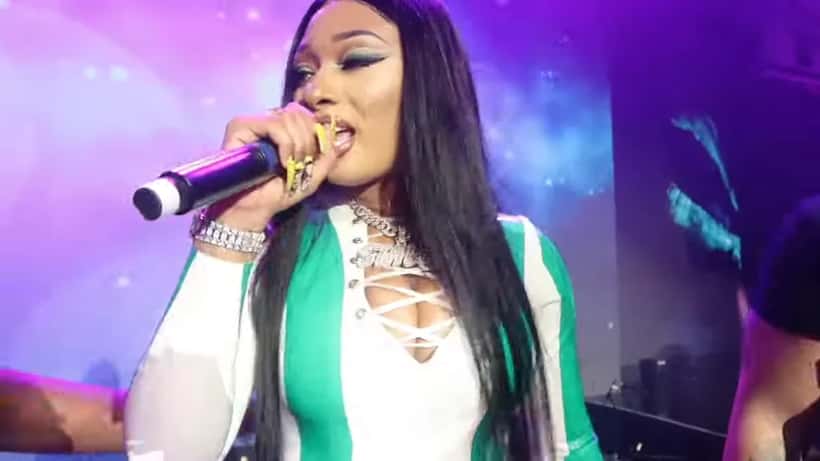
A US federal judge denied rapper Megan Thee Stallion a permanent injunction on 20 April 2026, despite a jury finding that blogger Milagro Cooper had spread a deepfake pornographic video of her. The ruling — and its reasoning — highlights a striking gap between American and British law, and raises urgent questions for UK victims of intimate image abuse.
What the US Court Decided
The case against Milagro Cooper, also known online as "Milagro Gramz," produced a jury verdict in Megan's favour. The jury found Cooper liable for defamation, intentional infliction of emotional distress, and promoting a non-consensual intimate deepfake. Damages of $75,000 (approximately £59,000) were awarded.
Yet the judge refused the permanent injunction Megan had sought — the order that would have legally prevented Cooper from continuing to spread the content. The ruling cited two obstacles. First, Florida's cyberstalking statute requires conduct to be "willful, malicious, and repeated with no legitimate purpose" — a definition the judge found Cooper's actions did not fully meet. Second, the judge invoked the First Amendment, noting that US courts are deeply reluctant to issue prior restraint orders that restrict future speech, even when that speech is harmful.
The ruling left Megan with a financial award but no binding order to stop the harm.
Why UK Law Would Produce a Different Outcome
The United Kingdom has moved decisively in the opposite direction. The Online Safety Act 2023 — which received Royal Assent on 26 October 2023 — placed new obligations on platforms to remove illegal content, including intimate images shared without consent, within strict timeframes. The Act, available in full on legislation.gov.uk, created a new category of "priority illegal content" specifically targeting non-consensual intimate images and deepfakes.
Critically, the Criminal Justice Bill 2024 went further still. It created a standalone offence of sharing intimate deepfake images without consent, punishable by up to two years' imprisonment. That means the conduct at the centre of Megan's US case — generating and distributing a deepfake pornographic video of a real person — is not merely a civil wrong in the UK. It is a criminal offence.
Unlike the First Amendment doctrine that constrained the US judge, English courts can and do grant injunctions in harassment and intimate image abuse cases. The Protection from Harassment Act 1997 already provides a framework for civil injunctions, and the new legislative framework adds criminal routes. Victims have two parallel paths: a civil claim for damages and an injunction, and a criminal complaint to police.
What UK Victims Can Do Right Now
If you are a victim of deepfake intimate image abuse in England and Wales, several remedies are available.
Report to police: Sharing intimate deepfakes without consent is a criminal offence under the 2024 legislation. A report to your local force, or via the National Crime Agency's online portal, triggers a criminal investigation. Police can apply for court orders compelling platforms to remove content.
Apply for a civil injunction: Through the civil courts, you can apply for an injunction ordering the person creating or sharing the content to stop immediately. This does not depend on a criminal conviction. Courts have shown willingness to act quickly in such cases, particularly where reputational or psychological harm is ongoing.
Approach the platform directly: Under the Online Safety Act 2023, major platforms are legally required to have mechanisms for reporting non-consensual intimate imagery and to remove it swiftly. If a platform fails to act, Ofcom is the regulator with enforcement powers.
Use specialist support organisations: the Revenge Porn Helpline (revengepornhelpline.org.uk) offers free advice and can liaise directly with platforms on your behalf. The helpline has a legal team experienced in rapid takedowns.
Document everything: Before any takedown, preserve evidence. Screenshot URLs, note dates and times, save any messages related to the content. This documentation is essential for both criminal reports and civil proceedings.
The Psychological Toll — and Why Professional Advice Matters
Intimate image abuse causes severe psychological harm. Studies cited by the government in its consultation preceding the Online Safety Act found that victims experience depression, anxiety, and in the most serious cases, suicidal ideation. The harm does not end when content is taken down; the fear of redistribution can persist for years.
Megan Thee Stallion said publicly on 2 April 2026 that her health "finally said enough" after months of pushing through extreme pressure, having been hospitalised on 1 April during a Broadway performance. While her hospitalisation was linked to exhaustion from performing, the broader pattern of ongoing harassment and legal battles illustrates how the psychological weight of these cases compounds.
Navigating deepfake abuse alone — particularly across jurisdictions — is extraordinarily stressful. A solicitor specialising in harassment or media law can advise on the fastest available remedies, help gather evidence in a legally admissible format, and represent you in both civil and criminal proceedings. The financial cost of legal action need not be a barrier: many solicitors in this field offer initial consultations to assess the merits of a case, and no-win, no-fee arrangements exist for civil claims.
The Bigger Picture: A Legal Arms Race
The gap between US and UK law in this area is significant but the UK framework is not yet complete. Critics note that while the 2024 legislation criminalises the sharing of intimate deepfakes, the act of generating one — even without distributing it — sits in a grey area. Legislation is likely to evolve further.
For now, UK law offers meaningfully stronger protections than those available to Megan Thee Stallion in Florida. If you or someone you know is a victim of intimate image abuse, the most important first step is to seek advice immediately — the faster you act, the greater your options.
This article is for general information only and does not constitute legal advice. If you are affected by intimate image abuse, consult a qualified solicitor or contact the Revenge Porn Helpline for specialist support.
