 Sophie Robinson
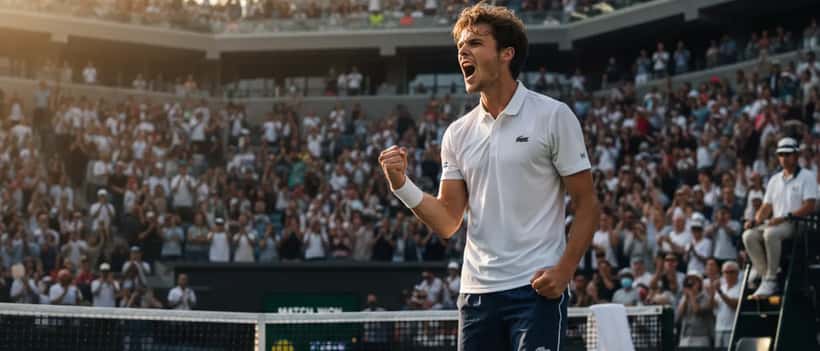
Martín Landaluce, 20, reached his first Masters 1000 Round of 16 at the Miami Open on 23 March 2026, defeating world No. 151 Karen Khachanov 6-3, 7-6(2) — a performance that has tennis fans and sports agents alike paying very close attention.
A Star Is Born: Landaluce's Miami Breakthrough
The Spanish player, born 8 January 2006, entered the Miami Open through qualifying and has steadily dismantled his way through the draw. His win over Khachanov lasted just 1 hour 20 minutes, with 25 winners to his opponent's 12. He has now advanced further into Miami 2026 than Carlos Alcaraz — a fact circulating widely in UK tennis coverage this week.
His ATP ranking jumped 13 places overnight to No. 123, surpassing his previous career-high of No. 110 set in October 2025. If he beats Sebastian Korda in the Round of 16 on 24 March, he will break into the world's top 110 for the first time.
Landaluce won the US Open boys' title in 2022 and holds two ATP Challenger singles titles. This Miami run marks his clearest signal yet that he is ready for the main tour.
When Talent Meets Money: The Legal Minefield for Rising Athletes
Breakout performances like Landaluce's are exactly the moments when the legal and financial landscape around a young athlete changes dramatically — and when being poorly represented can cost a career.
The moment a player starts winning prize money at ATP Masters level, sponsors begin making calls. Miami prize money for a Round of 16 appearance currently sits at $149,000 (approx. £117,000) at the ATP 1000 level — a life-changing sum for a 20-year-old still early in his professional journey. According to the ATP Tour official prize money structure, players receive guaranteed prize money from the Round of 32 onwards.
Sports lawyers and agents warn that this is precisely the stage where young athletes make costly mistakes. The most common errors include:
- Signing sponsorship contracts without understanding exclusivity clauses
- Agreeing to multi-year representation agreements with unfavourable exit terms
- Failing to register intellectual property rights to their name and image before it has commercial value
- Not understanding the tax implications of prize money paid across multiple jurisdictions
What a Sports Lawyer Actually Does for You
Many young athletes assume a sports agent handles everything. In reality, an agent negotiates commercial deals — but a sports lawyer is the one who protects your interests in those contracts.
A specialist lawyer will review every clause in a representation agreement, including the all-important commission rates (industry standard is 10–20% of gross earnings), the duration of the contract (typically 2–3 years), and the grounds for termination. For an athlete earning prize money across different countries, a lawyer also ensures that tax treaties are applied correctly — something that can save tens of thousands of pounds over a career.
The UK has specific legislation governing sports contracts, particularly around restraint of trade. Courts have previously ruled in favour of athletes who were locked into unfair long-term agreements, but legal disputes are expensive and disruptive. Prevention is always cheaper than cure.
Image Rights: The Asset Most Athletes Ignore
One area where young athletes consistently miss out is image rights. When Landaluce's face appears in tournament promotion, on ATP digital channels, or in a sponsor's campaign, that is commercial use of his likeness. If no image rights agreement is in place — or if those rights are buried inside a standard player agreement — the athlete may be giving them away for free.
Setting up a proper image rights structure, sometimes via a personal service company, can significantly reduce the tax burden on commercial income while protecting long-term interests. This is standard practice for established players, but younger athletes often overlook it until it is too late.
What to Do If You're Advising a Rising Athlete
If you are a parent, coach, or manager of a young athlete showing professional potential, the checklist is straightforward:
- Consult a sports lawyer before signing any representation agreement — not after
- Register name and image rights early — before commercial interest materialises
- Understand prize money tax obligations in each country where competitions are held
- Review any sponsorship exclusivity clauses against expected tournament schedules
- Seek independent legal advice separate from the agent's recommendation
The UK's Law Society publishes a directory of solicitors specialising in sports law. Alternatively, a sports law expert through a platform like Expert Zoom can provide rapid, qualified guidance tailored to your athlete's specific situation.
The Bigger Picture: Protecting Young Talent
Landaluce's story is not just about one player. Across every sport, the talent pipeline is increasingly global and the commercial ecosystem increasingly complex. Athletes reach career-defining moments earlier than ever — and the legal and financial decisions made at 20 can define the shape of a 15-year career.
Disclaimer: This article provides general information only and does not constitute legal advice. Consult a qualified sports law specialist for advice specific to your situation.
The sporting world will be watching whether Landaluce can beat Sebastian Korda in the Round of 16. His legal team should be watching the contract terms just as closely.
