 John Green
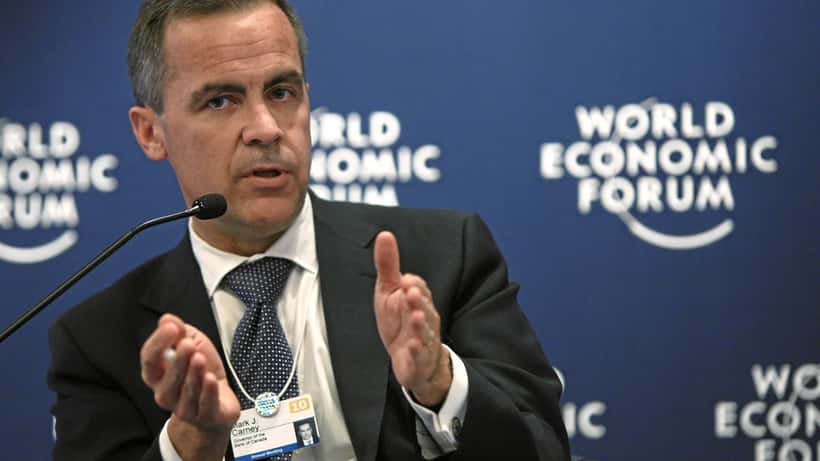
Canadian Prime Minister Mark Carney — the former Governor of the Bank of England who managed the UK's monetary policy from 2013 to 2020 — met European Parliament President Roberta Metsola in Yerevan, Armenia on 3 May 2026, continuing a diplomatic push that has already resulted in a new UK-Canada trade and economic co-operation working group agreed with Prime Minister Keir Starmer in March 2026. For British investors and businesses, Carney's return to the headlines is more than nostalgia — it is a signal that the global economic order is shifting in ways that have direct implications for UK portfolios and financial planning.
Why Mark Carney Is Trending in the UK
British audiences know Carney well. As Bank of England Governor, he guided the UK through the uncertainty of the 2015-2016 referendum period, warning presciently about the risks of a vote to leave the European Union. He left for Canada in 2020 and ultimately became Prime Minister after Justin Trudeau's resignation in early 2025.
In 2026, Carney is pursuing what he described at Davos as a "new world order" for middle powers — countries like Canada, the UK, and European nations that are rethinking their overdependence on a single economic partner, particularly the United States. His Davos speech and subsequent diplomatic activity signal a shift in the global trade landscape that investors should not ignore.
The UK-Canada working group is particularly notable. Both countries face similar economic vulnerabilities: significant exposure to US trade relationships that have become strained under the current American administration's tariff and protectionist posture. Carney has stated publicly that Canada's close ties with the US have become a "weakness," and the UK faces analogous pressures despite its post-Brexit trade agreements.
What Carney's Economics Mean for UK Investors
Carney's long-standing intellectual framework — shaped by his years at the Bank of England and the Bank for International Settlements — has always emphasised systemic risk and diversification at the macro level. The same principles apply to personal finance.
For UK investors, the Carney moment in 2026 poses a specific question: how exposed are your assets to US market dominance, and how resilient is your portfolio to the reordering of global trade alliances?
Since 2020, UK retail investors have increasingly held US equities through index trackers and ISAs. The S&P 500 has been a dominant component of many balanced portfolios. But as US domestic policy diverges from its traditional allies, currency risk, tariff impacts, and geopolitical shifts create new sources of volatility that standard index tracking does not address.
Portfolio Diversification in 2026: What a Wealth Manager Would Recommend
Independent financial advisers in the UK typically assess portfolio concentration risk along several dimensions:
Geographic concentration: If more than 40-50% of your equity holdings are US-focused, a sustained period of dollar weakness or US market underperformance could disproportionately affect your overall returns. Canada, the EU, and emerging market indices all offer meaningful diversification alternatives.
Currency exposure: UK-based investors holding unhedged US assets are exposed to GBP/USD movements. With Carney actively encouraging transatlantic economic rebalancing, the long-term direction of the dollar relative to sterling and the euro warrants attention.
Sector concentration: US index dominance means many UK investors are heavily exposed to the American tech sector. Reviewing sector allocation and adding exposure to UK infrastructure, healthcare, and defence — all sectors benefiting from the current policy environment — can reduce concentration.
Fixed income: Rising interest rates globally, and the prospect of trade-driven inflation, make government bond allocation more complex than it appeared in the 2010s. Shorter-duration bonds and inflation-linked instruments have become more relevant.
The GOV.UK guidance on investment risk provides a baseline framework, but individual circumstances require personalised advice from a qualified wealth manager.
The UK-Canada Opportunity
The new UK-Canada working group points toward deeper trade and investment links. Concretely, this could mean:
- New trade categories: Enhanced services trade, particularly in financial services, law, technology, and education
- Tax treaty adjustments: Bilateral investment treated more favourably through double-taxation agreements that may be updated as the working group progresses
- Immigration and talent mobility: Easier movement of skilled workers between the two countries, with implications for UK employers and employees with Canadian interests
For individuals with business interests that span both countries — or who are considering expanding into the Canadian market — understanding how the working group's output might affect tax residency, income attribution, and corporate structuring is relevant financial planning that a wealth manager with international expertise can help navigate.
Why the Former Bank of England Governor's Views Matter Now
Carney was not a typical central banker. He introduced forward guidance as a systematic tool at the Bank of England, and he was one of the first global central bank governors to formally integrate climate risk into financial stability assessments. His current political and diplomatic agenda follows the same pattern: identifying systemic structural risks and advocating for coordinated responses among like-minded nations.
For UK individuals and businesses, his message in 2026 is not abstract geopolitics. It is a practical warning that the post-war international economic architecture is undergoing its most significant reorganisation since Bretton Woods. Portfolios built on assumptions of US-centric globalisation may need to be revisited.
Disclaimer: This article provides general financial and economic information only and does not constitute investment or financial advice. Consult a qualified independent financial adviser before making investment decisions.
Take Stock of Your Exposure
Mark Carney does not pop back into UK headlines without cause. His meeting in Yerevan, his ongoing work with Keir Starmer's government, and his broader diplomatic effort to build a "new world order" of middle powers all signal that 2026 is a pivotal year for global trade realignment.
UK investors who have not reviewed their geographic and currency exposure in the past year have good reason to do so now. Through ExpertZoom, you can connect with independent financial advisers and wealth managers who can assess your current allocation and recommend adjustments aligned with the emerging global economic landscape.
