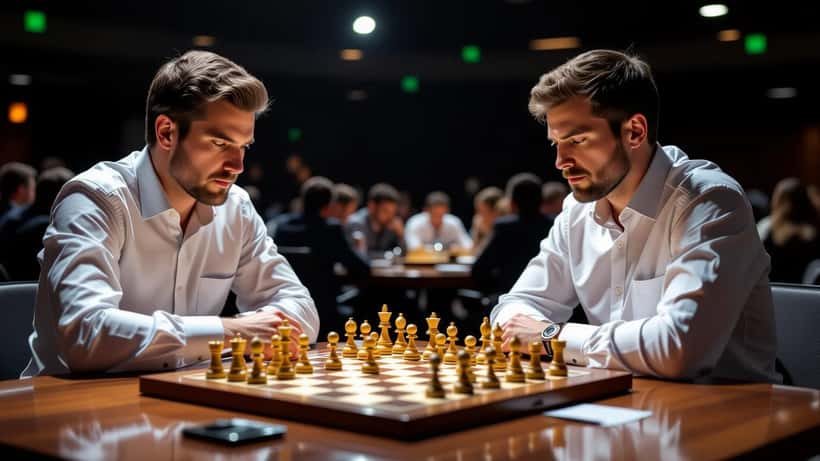
The 2026 chess calendar is shaping up to be one of the most closely watched in years, and Magnus Carlsen remains the name on every commentator’s lips. Even when he is not defending a classical world title, the Norwegian grandmaster’s tournament choices, training methods and public statements move markets, shape sponsorship deals and dominate search traffic. For a business built on expert consultation, the Carlsen phenomenon is more than sports entertainment: it is a live case study in how rare expertise creates asymmetric advantage.
Carlsen’s dominance has never been about a single opening or a photographic memory alone. Analysts consistently point to his ability to grind down positions that other elite players would happily agree are drawn. That skill—finding incremental value where rivals see only stalemate—is exactly what clients hire specialists to deliver. Whether the field is legal advice, veterinary diagnostics or wealth management, the premium experts command comes from seeing practical moves that non-experts miss.
Why the 2026 season feels different
After several years of tension between the classical World Championship cycle and the faster, more commercially driven Tour events, 2026 looks set to bring a partial reconciliation. New broadcast deals, shorter match formats and an expanding Asian audience have turned elite chess into a year-round media product. Carlsen, who once skipped the classical title defence to focus on rapid and blitz, now appears willing to compete across all formats provided the calendar respects player workload.
That calculated selectivity is a lesson in itself. Experts who accept every brief eventually dilute their edge. Carlsen’s camp has long been open about the fact that he skips events to protect recovery and preparation time. In the same way, a top consultant, lawyer or home-improvement specialist protects reputation by declining work that sits outside their core competence.
Pattern recognition under pressure
One of the most studied aspects of Carlsen’s play is his pattern recognition. He does not always calculate deeper than his opponents; he often calculates more relevantly. In complex middlegames he narrows the tree of possibilities by recognising structures he has seen thousands of times before, then allocates mental energy only to the branches that matter.
This is a direct analogue to professional judgment. A veterinarian diagnosing a rare symptom, an IT architect reviewing a security incident or a mechanic listening to an unfamiliar engine noise all rely on a library of patterns built over years. The difference between a competent practitioner and an outstanding one is rarely raw intelligence; it is the size and organisation of that mental library, plus the discipline to update it continuously.
Decision quality when the clock is running
Chess is unusual among intellectual sports because the clock is always ticking. Carlsen’s ability to make strong moves with seconds left has earned him the nickname “the Mozart of chess” and, more recently, praise as one of the most clutch competitors in any discipline. The pressure environment reveals how expertise holds up when there is no time to consult a textbook or run a full model.
Clients seeking expert help are often in their own time trouble: a legal deadline, a pet emergency, a failing server or a market moving against a position. They are not merely buying knowledge; they are buying reliable performance when uncertainty is highest. The 2026 season is a useful reminder that expertise is most valuable precisely when conditions are least forgiving.
The team behind the solo image
Despite the romantic image of the lone genius, Carlsen’s results depend on a network of seconds, analysts, physiotherapists and psychologists. His team prepares opening surprises, monitors physical conditioning and manages the psychological load of elite competition. The lesson for businesses is that even the most visible expert is usually the public face of a deeper support system.
When an individual chooses a consultant through a marketplace, they are effectively selecting that entire support system: the quality control, the research infrastructure and the peer review that sit behind the profile picture. A platform that verifies credentials, gathers reviews and matches specialisms can replicate some of the trust that Carlsen’s team has spent years building.
Translating chess discipline into everyday decisions
Carlsen’s training regime includes physical exercise, sleep discipline and deliberate review of losses. He treats chess as a high-performance profession rather than a hobby, which means optimising everything that supports the mind. The parallel for anyone hiring expertise is clear: the best outcomes come when the expert is supported by good process, clear briefs and honest feedback.
Before engaging a specialist, a client can improve results by defining the decision they need to make, the constraints they face and the evidence they already have. That preparation mirrors the way Carlsen’s seconds summarise an opponent’s history before a match. It respects the expert’s time and raises the quality of the advice in return.
What this means for Expert Zoom readers
You do not need to play chess to benefit from the Carlsen story. The themes are universal: specialise deeply, protect your decision-making energy, prepare before the crisis and work with people whose judgment has been tested under pressure. As the 2026 championship cycle unfolds, the moves on the board will be accompanied by endless commentary, but the underlying narrative will be the same one that defines every successful consultation: expertise, when properly applied, turns uncertainty into opportunity.
