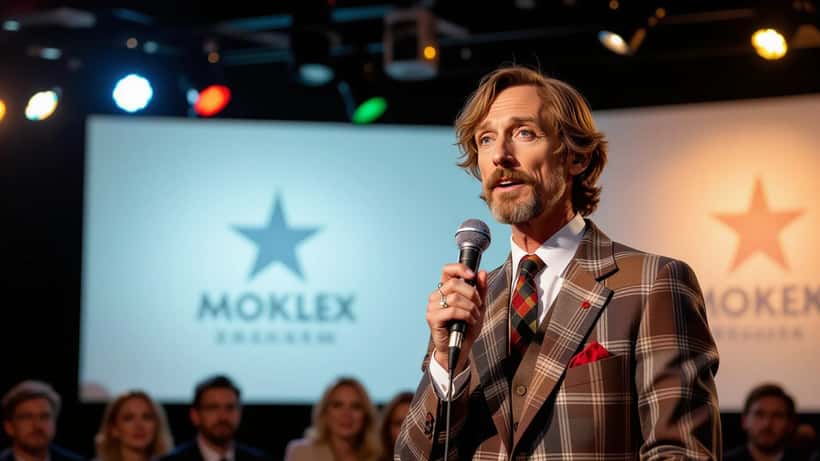
Mackenzie Crook’s 2026 Return to British Comedy: What Experts Say About Reinventing a Screen Career
British audiences first met Mackenzie Crook as the gawky, obsessive Gareth Keenan in The Office, and later as the unhinged pirate Ragetti in the Pirates of the Caribbean saga. After years of selective roles, whispers of a fresh British comedy project in 2026 have reignited interest in his career. For professionals watching from the sidelines, the Crook comeback is more than entertainment gossip—it is a case study in career reinvention, personal branding, and the strategic value of expert advice.
Why the Mackenzie Crook Comeback Matters Now
Crook has never followed the typical celebrity script. He stepped away from high-profile Hollywood roles to focus on smaller British projects, writing, and his family. That distance created scarcity, which in turn created demand. In 2026, with streaming platforms hungry for recognizable yet authentic voices, a return feels timely rather than desperate.
Industry observers note that British comedy is experiencing a renaissance. Shows like Slow Horses, What We Do in the Shadows, and The Detectorists—the latter co-created by Crook himself—prove that audiences want warmth, eccentricity, and sharp observation rather than loud spectacle. Crook fits that mood precisely. His return, if confirmed, would land in a market that is already primed for his style.
The Expert Angle: Career Reinvention Is a Skill
Whether you are an actor, a consultant, or a small-business owner, the principles behind a successful comeback are the same. You must assess your existing assets, identify where demand is shifting, and reintroduce yourself without looking like you are chasing relevance.
Career coaches and entertainment consultants often compare a returning performer’s situation to that of any professional re-entering a competitive field. The first step is reputation audit: What do people remember? What has changed in the industry? What new skills or perspectives have you developed while away? For Crook, the answers are unusually strong. He is remembered as both a physical comedian and a credible dramatic actor, and he spent his time away writing and directing, which deepens his creative authority.
Lessons From the Detectorists Blueprint
Crook co-created The Detectorists with Toby Jones, turning a quiet BBC Four comedy about metal-detector enthusiasts into one of the most beloved British series of the past decade. The show’s success was not accidental. It demonstrated Crook’s ability to identify an underserved niche—gentle, character-driven comedy—and deliver it with patience and craft.
That blueprint matters in 2026 because the entertainment landscape is fragmenting. Mass-appeal blockbusters still exist, but loyalty is increasingly built in smaller, passionate communities. A consultant advising a returning performer would likely recommend exactly this kind of niche-first strategy: find the audience that already misses you, give them something unmistakably yours, and let the broader attention follow.
Reputation Management in the Social Media Era
One challenge Crook did not face during his earlier fame was the speed of modern social media. In 2026, a single interview or public appearance can generate global commentary within minutes. For someone known as private and slightly awkward in interviews, that environment can be risky.
Public relations experts emphasize that authenticity remains the most durable strategy. Audiences are quick to detect when a celebrity is performing a version of themselves that does not match their history. Crook’s perceived reluctance to play the fame game may actually be his greatest advantage. In an era of overexposure, restraint reads as credibility.
What This Means for Expert Consultation Marketplaces
The Crook case also illustrates why professionals across industries seek outside expertise during transitions. A career revival involves too many moving parts—messaging, timing, contract negotiation, media training, platform selection—to navigate alone. The same is true for a lawyer expanding into a new jurisdiction, a mechanic launching a mobile repair service, or a veterinarian considering telehealth.
Expert consultation marketplaces exist precisely for these inflection points. They connect individuals and businesses with specialists who have seen similar transitions before. In Crook’s world, that might mean an entertainment lawyer, a PR strategist, or a script consultant. In yours, it might mean a tax advisor, a digital marketing expert, or an IT security specialist. The underlying need is identical: trusted guidance at the moment the path forward is unclear.
How to Apply the Comeback Mindset in 2026
If you are considering your own professional relaunch, the Crook trajectory offers a useful checklist:
- Audit your strengths honestly. What do people consistently ask you for? That is usually where your value lives.
- Study the current landscape. The rules may have changed while you were away. Platforms, customer expectations, and competitive dynamics all shift.
- Start with your core audience. You do not need everyone at once. Rebuild momentum with the people who already trust you.
- Bring something new. A comeback that simply repeats the past can feel stale. Show evidence of growth.
- Get expert help for the gaps. Whether it is legal, technical, creative, or strategic, specialist advice shortens the learning curve.
Looking Ahead
Mackenzie Crook’s potential return to British comedy in 2026 is still unfolding, and details remain scarce. Yet the pattern is already instructive. His career shows that stepping back can be a strategy, that quiet craft can outlast loud publicity, and that the right re-entry requires both patience and expert timing.
For anyone watching from outside the entertainment industry, the lesson is transferable. Comebacks are not about returning to who you were. They are about reintroducing who you have become—and doing it with the right help at the right moment.
