 Andrew Wright
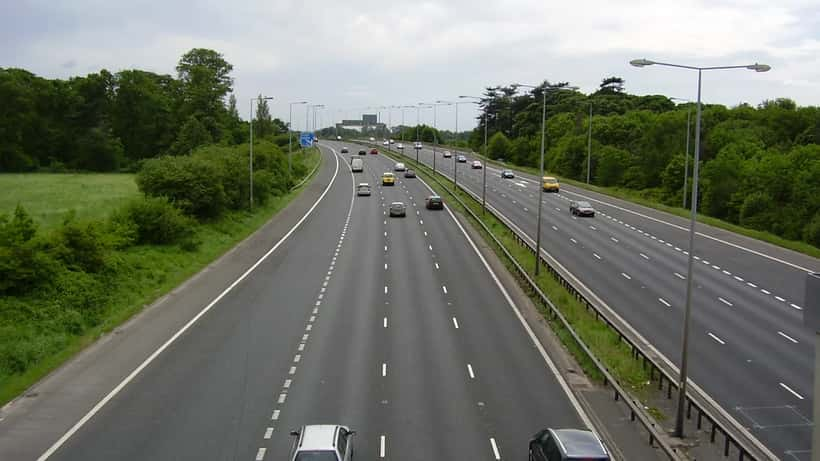
A crash on the M6 at Junction 31 on the morning of 7 August 2026 shut the motorway in both directions and left four-mile queues stretching back toward Leyland. A lorry and a car collided near the Tickled Trout, damaging the central reservation barrier. By mid-morning one lane in each direction was still closed for barrier repairs, with National Highways North West reporting delays of over 45 minutes. For drivers who were caught in the incident — or whose cars were involved — the chaos of the morning was just the beginning.
What the M6 J31 crash tells us about motorway collisions
Motorway barrier collisions are, statistically, some of the most costly crashes for ordinary car owners to navigate — not because of the medical consequences, which in this case were minimal (Lancashire Police confirmed no serious injuries at J31), but because of the financial and administrative minefield that follows. The central reservation barrier on a UK motorway costs approximately £1,000 per metre to replace, according to road infrastructure specialists, and this cost may ultimately be pursued through the insurance of the at-fault vehicle.
For the car driver involved, however, the more immediate concern is what happens to their vehicle — and who gets to decide how it is assessed and repaired.
Expert analysis: what a mechanic sees that insurance adjusters miss
When a car strikes a motorway barrier at speed, the visible damage — crumpled bodywork, damaged bumper assemblies, broken wheel arch liners — is only part of the story. The forces involved in a central barrier strike are transmitted through the chassis and suspension geometry in ways that may not be immediately visible to an insurance assessor carrying out a desk review or a brief visual inspection.
A qualified independent mechanic, particularly one with experience of structural vehicle assessment, will look for (and the M6 breakdown prevention guide covers the pre-emptive side of this in more detail):
- Subframe misalignment: A subframe shifted even a few millimetres can make a car unroadworthy and affect tyre wear, steering response and long-term structural integrity.
- ADAS sensor calibration: Modern vehicles — including the majority of cars on UK roads today — carry Advanced Driver Assistance Systems (ADAS) embedded in front bumpers, wing mirrors and windscreens. A barrier strike can knock cameras and radar units out of calibration. According to repairers working to BS10125 (the British Standard for vehicle body repair), recalibration after structural work is mandatory — but it adds significantly to the bill.
- Hidden corrosion pathways: Where impact cracking has opened up bodywork seams, moisture ingress can begin within weeks. A thorough inspection flags these before they become a Category B write-off three years later.
The distinction matters because your insurer's approved repairer — however competent — operates at a price agreed with the insurance company, not with you. Their incentive is to complete the repair quickly and within budget.
The approved repairer question: what UK law actually says
One of the most persistent myths in UK motor insurance is that you must use the insurer's approved repairer if you want your claim to be paid. You do not. Under UK consumer insurance law and Financial Conduct Authority guidelines, your insurer can recommend a repairer, but they cannot legally compel you to use one as a condition of settling a valid claim.
According to GOV.UK guidance on claiming on someone else's car insurance, drivers have the right to appoint their own repairer, though insurers may limit what they will pay to the equivalent cost at an approved shop. This is the critical caveat: if your chosen independent specialist charges more than the insurer's approved network rate, you may have to cover the difference — which is why getting a quote before authorising any work, and confirming in writing what your insurer will pay, is essential.
The practical implication: if your car was involved in a crash like the M6 J31 incident this morning, you are not obliged to accept the first garage your insurer names. You have the right to obtain an independent assessment.
When £1,700 turns on a single report: a concrete case
Consider a driver in a three-year-old Ford Focus worth approximately £14,000 at current market value — a reasonable proxy for many of the cars travelling the M6 near Preston on a Friday morning. In a motorway barrier collision at 60 mph, combined front and side impact damage — including bumper replacement, ADAS sensor recalibration, wheel arch and subframe inspection — typically generates a repair estimate of £8,000 to £9,500, according to bodyshop specialists.
If the insurer's approved repairer quotes £9,100 — which represents 65% of the car's £14,000 market value — the vehicle crosses the Category S write-off threshold (the point at which structural damage makes repair economically marginal under the insurer's internal rules). The insurer will then offer a cash settlement based on their valuation of the car's pre-accident market value.
Here is where the numbers diverge. The insurer's valuation tool may value the Focus at £13,200. An independent vehicle valuation specialist — or a mechanic working alongside an experienced claims consultant — may identify that the same car, factoring in its full service history, factory-fitted options and below-average mileage, has a true market value of £14,900. The difference: £1,700. On a write-off settlement, that £1,700 is recoverable — but only if someone with expertise challenges the insurer's initial figure.
If the car is not written off, the same logic applies to the scope of repairs. An independent mechanic's report that identifies ADAS recalibration costs the approved repairer omitted, or subframe work that was assessed as cosmetic rather than structural, can add hundreds to the repair scope — work that should have been covered from the outset.
Write-off categories: what Cat S and Cat N mean for you
The UK uses a four-category system for damaged vehicles, established by the Association of British Insurers (ABI) and applied by all major insurers:
- Category A: Crush only — the vehicle must be destroyed and cannot be resold in any form.
- Category B: Break for parts — the body shell must be crushed, but salvageable parts may be reused.
- Category S: Structural damage — the vehicle is repairable but has sustained structural damage. It can be sold and driven again after proper repair, but the Cat S marker follows the vehicle on its DVLA record permanently.
- Category N: Non-structural damage — mechanical or cosmetic damage without structural compromise.
For a car involved in a barrier strike on the M6, the likely outcomes are Cat S or Cat N, depending on whether the subframe and chassis rail were affected. The category has a direct impact on the car's residual value. A Cat S marker typically reduces resale value by 20-40%, even after a full and certified repair. This is why an independent assessment is not just about the immediate repair cost — it is about ensuring the correct category is applied in the first place.
What to do now if your car was involved
If your vehicle was part of the M6 J31 incident on 7 August 2026, or in any motorway collision:
If you are also facing rising insurance premiums after a claim, the same principle applies: an informed challenge supported by a specialist's report gives you far more leverage than accepting the insurer's first offer.
- Do not authorise any repair work before obtaining an independent quote. Once work begins, it becomes far harder to dispute the scope or cost.
- Request the insurer's valuation in writing, including the methodology they used to calculate the pre-accident market value.
- Commission an independent structural assessment from a mechanic certified under BS10125. This typically costs £150-£300 but can recover multiples of that in a contested settlement.
- If the vehicle is declared Cat S or Cat N, verify that the category is correct by cross-referencing the repair estimate against the ABI's categorisation criteria. Misclassification — particularly wrongly applying Cat N when structural work was involved — is a known problem in high-volume approved repair networks.
- Consult a specialist if the settlement figure seems low. Mechanics with expertise in insurance disputes can provide written technical opinions that carry real weight in negotiations.
Note: the specific repair costs and settlement figures cited in this article are indicative estimates based on industry data. Individual cases vary depending on the vehicle, insurer, and specific damage sustained. If you are unsure about your rights or the adequacy of a settlement offer, independent professional advice is recommended.
