 Grace Davies
The Lyrid meteor shower peaks on 22 April 2026, with up to 18 shooting stars per hour lighting up UK skies between 3am and 5am BST — but how does a late-night stargazing session actually affect your eyes, and when should you be concerned?
What Makes the Lyrids Special This Year
The Lyrids are one of the oldest recorded astronomical events in human history, first documented in 687 BCE. Each April, Earth passes through debris left by Comet Thatcher — a celestial body that last visited our solar system in 1861 and won't return until 2283. This year, conditions are particularly favourable: the peak falls two days before the First Quarter Moon, meaning minimal light pollution from moonlight.
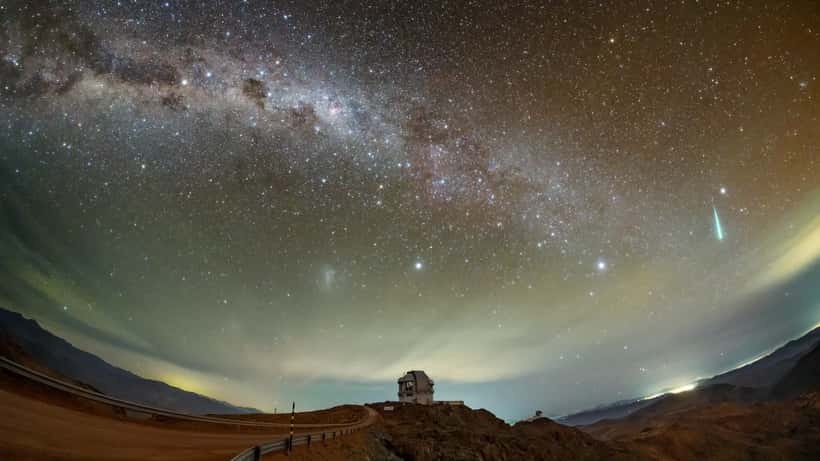
According to the Royal Museums Greenwich, viewers can expect around 15 to 20 meteors per hour at peak, with occasional bright "fireballs" — marble-sized meteoroids burning at temperatures of up to 1,600°C as they streak through the atmosphere at 50 km per second. You need no telescope or equipment. Just your eyes, a dark location, and patience.
What Happens to Your Eyes in the Dark
This is where the expert angle matters. Most people understand that you should avoid looking at the Sun. Meteor showers are different — the streaks are brief, low-intensity, and present no risk of retinal damage. What viewers often underestimate is the strain of dark adaptation, and what disrupts it.
Your eyes typically require 20 to 30 minutes to fully adapt to low-light conditions. During this process, the pupils dilate and rod cells in the retina — responsible for night vision — become progressively more sensitive. This is why astronomers insist you avoid your mobile phone screen during viewing: even a brief glance at a bright display resets the entire adaptation process.
For most healthy adults, a few hours of stargazing causes nothing worse than mild tiredness and temporary light sensitivity the following morning. However, certain groups should take care.
When Stargazing Becomes a Health Concern
For people with pre-existing eye conditions, the picture can be more complex. Conditions such as glaucoma, retinitis pigmentosa, or diabetic retinopathy can affect how the eye responds to rapid changes in light levels. Cold, dry night air — common in April in the UK — can also trigger or worsen dry eye symptoms, causing discomfort, grittiness, and blurred vision.
If you notice any of the following after a stargazing session — or more generally — it is worth booking an appointment with an eye health specialist:
- Persistent floaters or flashes of light in normal lighting conditions
- A sudden deterioration in night vision that does not resolve after a few minutes indoors
- Eye pain, redness, or prolonged sensitivity to light after returning indoors
- Blurred vision lasting more than a few hours
The NHS recommends adults have a full eye examination every two years. According to data from the College of Optometrists, around 50 per cent of UK adults have not had their eyes tested within the recommended timeframe — meaning many people are unaware of early-stage conditions that affect their vision.
The Science Behind Night Vision Decline
Human night vision deteriorates naturally with age. By the time someone reaches their 60s, the pupil's maximum dilation in darkness is significantly reduced compared to a 20-year-old's. The density of rod cells also decreases over time. This is why older adults may find it harder to spot faint meteors, and why they may feel more disoriented when transitioning back to lit environments.
Nutritional factors also play a role. Vitamin A deficiency — though rare in the UK — is directly linked to night blindness. More commonly, studies have linked poor dietary intake of lutein and zeaxanthin (found in leafy greens and eggs) with increased risk of macular degeneration, which affects central vision.
An optometrist or ophthalmologist can assess your current night vision capability, identify any underlying conditions, and advise on lifestyle adjustments. If you have been putting off an eye check, the Lyrids offer an unusual but practical prompt: plan a stargazing session, then book that appointment.
Viewing Tips for UK Observers
To get the most from the 2026 Lyrids safely:
- Choose a dark location — fields, beaches, or hilltops away from city lights
- Arrive by 2am BST — when the radiant point in the constellation Lyra begins to rise in the northeast sky
- Allow 20-30 minutes for dark adaptation — no phone screens during this time
- Lie flat to view the full sky rather than straining your neck
- Dress very warmly — April nights in the UK can drop close to freezing in rural areas
- Avoid bright lights on the drive home — your eyes will still be adapting for some time after you leave
The peak is on the night of Tuesday 22 April into the early hours of Wednesday 23 April 2026. Cloud cover permitting, this is one of the better annual meteor showers for UK viewers.
Should You Consult an Eye Specialist?
Stargazing itself is not harmful. But if the experience highlights something — difficulty adapting to darkness, unusual visual effects, or discomfort — that is useful information about your eye health. Eye conditions caught early are far more treatable than those identified late.
An eye health specialist via Expert Zoom can carry out a full assessment of your visual acuity, retinal health, and dark adaptation. You do not need a GP referral to consult a private optometrist or ophthalmologist, and many offer same-week appointments.
This article contains general health information and does not constitute medical advice. If you are experiencing sudden changes in vision, seek urgent medical attention.
