 Charlotte Hughes
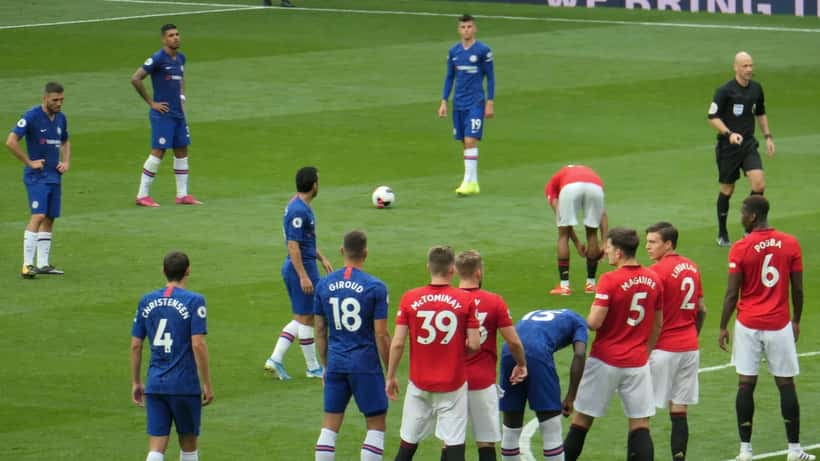
Luke Shaw is once again the subject of breathless transfer speculation. Manchester United are reportedly "optimistic" about agreeing a new deal with their injury-hit left-back, according to The Hard Tackle on 8 October 2026 — yet Football Insider reports he could be "immediately replaced" even if talks succeed. Behind the tabloid soap opera lies a legal question that affects far more than Premier League footballers: what happens when a worker with a history of serious recurring injuries reaches the end of their contract, and their employer starts looking for reasons not to renew?
A Career Defined by Injury — and a Contract Clock That Keeps Ticking
Luke Shaw joined Manchester United in 2014 and has spent much of the decade since managing a catalogue of serious physical setbacks: a double fracture of the right leg in 2015, torn ligaments, recurring hamstring and calf tears, and multiple spells on the sidelines that have collectively cost him hundreds of matches. His current deal runs until summer 2027, and the uncertainty around renewal — reported by Caught Offside as recently as 16 September 2026 — reflects a club weighing ongoing commercial value against a fitness record that remains the subject of intense scrutiny.
For the 1.8 million UK workers currently on long-term sick leave, according to 2025 data from the Office for National Statistics, Shaw's situation maps onto a very real legal dilemma. Can an employer legally decline to renew your contract — or offer a significantly reduced one — because you have been ill?
The short answer, under UK law, is: often no. But the protections only work if you know to invoke them.
What the Equality Act 2010 Actually Says
Under the Equality Act 2010, a physical or mental health condition qualifies as a disability if it has lasted — or is likely to last — 12 months or more, and has a substantial adverse effect on day-to-day activities. Critically, this definition extends beyond permanent conditions to recurring ones, including injuries that keep returning.
This matters enormously at the moment of contract renewal. Under Section 15 of the Act, if an employer declines to offer a new contract, reduces hours, or downgrades a role for reasons that are substantially connected to a disability, that constitutes discrimination arising from disability. The burden falls on the employer to demonstrate a legitimate, proportionate justification that is entirely unrelated to the health condition.
Section 20 adds a further obligation: employers must make reasonable adjustments for disabled employees. In practice, this could mean modified duties, flexible schedules, phased returns, or altered performance metrics during recovery periods. Failing to consider these adjustments — including at the point of contract renewal — is itself an actionable legal failure.
The Employment Rights Act 1996 provides separate protection for fixed-term workers: after four years of continuous employment on successive fixed-term contracts, an employee automatically acquires permanent status unless the employer can objectively justify maintaining the fixed-term arrangement.
Statutory Sick Pay, currently set at £116.75 per week for up to 28 weeks (maximum £3,269 under HMRC 2026 rates), is frequently misunderstood at this juncture. Many workers assume that once SSP is exhausted, their bargaining position disappears. It does not. The depletion of sick pay has no bearing on the Equality Act protections that continue to apply.
The Legal Trap — and Why Most Workers Walk Into It
According to Citizens Advice data from 2025, more than two-thirds of workers who face non-renewal after long-term sick leave do not seek legal advice at the time. Most assume the employer has an unqualified right to let a contract lapse without renewal. That assumption is frequently wrong — but it goes unchallenged because nobody asks the question.
The trap is subtle by design. Employers rarely state "we are not renewing because you have been ill." The reasons given are typically "operational changes," "restructuring," or, in the language of football management, "we are signing someone more reliable." Without challenge, these justifications go untested.
Employment tribunals awarded an average of £36,000 in disability discrimination cases in 2024, according to data compiled by the Chartered Institute of Personnel and Development (CIPD). The maximum compensatory award for unfair dismissal sat at £115,115 for 2025-26. But the most significant outcomes are often non-monetary: reinstatement to the original role, phased return agreements, and reasonable adjustment plans that allow a worker to remain in employment.
For context: an initial consultation with an employment solicitor in the UK costs between £150 and £350. Many offer a free 30-minute assessment.
What This Looks Like for an Ordinary UK Worker
Consider Rachel, a 38-year-old project coordinator at a logistics firm in Birmingham working on rolling one-year contracts. In early 2024, she was diagnosed with fibromyalgia — a condition that qualifies as a disability under the Equality Act given its duration and impact on daily function. She spent four months on sick leave, then returned to work with modified duties. In spring 2026, a six-week flare-up caused a second significant absence.
When her contract came up for renewal in September 2026, her manager cited "concerns about reliability and attendance" and offered only a three-month extension rather than the usual twelve months. The stated reason was not illness — it was framed as "operational risk." Rachel accepted the offer without seeking advice.
Here is what a solicitor's analysis would have looked like before she signed:
Equality Act threshold: fibromyalgia spanning two episodes across 28 months qualifies as a disability. Rachel is protected under Section 15 (discrimination arising from disability) and Section 20 (reasonable adjustments duty).
Evidence test: the manager's explicit reference to "reliability" and "attendance" directly connects the non-renewal to absences caused by her condition. That is a textbook Section 15 case unless the employer can demonstrate a proportionate, legitimate aim entirely unrelated to the illness — a high bar to clear.
Potential remedy: reinstatement to a standard 12-month contract with reasonable adjustments, or a tribunal award of £15,000–£40,000 for injury to feelings plus any lost earnings from the gap between the three-month end date and a new position. At a mid-range estimate, that is a £25,000 outcome Rachel forfeited by accepting the offer unadvised.
Cost of advice: one consultation at £200. Delta: £24,800 in Rachel's favour — if she had used it.
By accepting the three-month offer, Rachel waived any claim arising from the renewal decision. The contract lapsed in December 2026. She was not extended again.
For workers in similar circumstances — in industries far less well-resourced than Manchester United — the Acas early conciliation service offers a free first step before any formal tribunal claim. The process is mandatory before a claim can be submitted, and it adds a further procedural layer that advisers can help navigate.
When the Clock Starts — and Why Timing Is Everything
Employment tribunal claims under both the Equality Act and the Employment Rights Act must ordinarily be submitted within three months of the discriminatory act — typically the date of non-renewal or effective dismissal. The Acas early conciliation application must be filed first, which pauses the clock but requires prompt action.
This means that from the moment you receive a non-renewal notice, you have approximately three months to:
- Contact Acas to begin early conciliation (mandatory first step, and free)
- Instruct an employment solicitor or contact Citizens Advice
- Assess whether the non-renewal decision is substantially connected to a disability or qualifying health condition
Waiting to see "whether things improve" is the most common and costly mistake. By the time the situation has stabilised, the tribunal window may have closed entirely.
For more on how employment law applies when illness intersects with contract renewals, the employment law specialists at Expert Zoom have set out the legal framework in detail across a range of real-world cases.
What Shaw's Situation Actually Illustrates
Whatever happens at Old Trafford — a club that can absorb the legal and financial uncertainty that comes with high-profile contract negotiations — the parallels with ordinary employment are exact. A worker managing a serious recurring physical condition, whose employer is publicly weighing whether continued investment is commercially justified, and who faces the prospect of being replaced by someone with a cleaner fitness record: this is not a story about football. It is a story about what the law owes workers when illness meets contract expiry.
The Equality Act 2010 does not guarantee you a job. What it does guarantee is that decisions about your job cannot be substantially driven by a recognised disability — without that decision being open to challenge.
If your contract is approaching renewal and you have had significant periods of sick leave in the past two or three years, the time to seek advice is before the renewal conversation, not after it. An employment law specialist can assess whether your condition qualifies as a disability under the Act, and advise on the strength of any claim before you sign anything.
This article discusses legal frameworks in general terms. It does not constitute legal advice. Individual circumstances vary significantly — consult a qualified employment solicitor for advice specific to your situation.
format_used: Expert reaction
