 Phoebe Wilson
Loop Earplugs have become September 2026's most-talked-about consumer product in the UK, appearing in trend reports alongside luxury skincare and flying off Amazon shelves as concert season reaches its autumn peak. The Belgian brand — which reported €126.5 million in revenue in 2023 and has now sold more than eight million pairs worldwide — has captured a new audience: ordinary music fans who are, for the first time, taking their hearing seriously. But with a viral product comes a critical question audiologists have been raising all year: does wearing a fashionable earplug actually protect your long-term hearing, or are Loop's chic loops lulling people into a false sense of safety?
Why Loop Is September's Breakout Product
Loop was founded in Antwerp in 2016 by two engineers who both suffered from tinnitus after years of clubbing. What set the brand apart was not the technology alone — high-fidelity earplugs had existed for decades — but the design. Where older foam plugs looked clinical or conspicuous, Loop's ring-shaped silicone ear pieces look deliberate, even fashionable. Fast Company placed the company 18th on its World's Most Innovative Companies list in 2024 and awarded it first place in the Design category.
In 2026, the brand has expanded its range: the Loop Experience filters sound by 17dB (SNR), the Experience Plus by 20dB, and the newer Quiet model sits at around 27dB for those who need serious attenuation. UK searches and social sharing have spiked particularly around the Experience and Switch 2 models, which promise to let wearers toggle between filtered and open hearing mid-event.
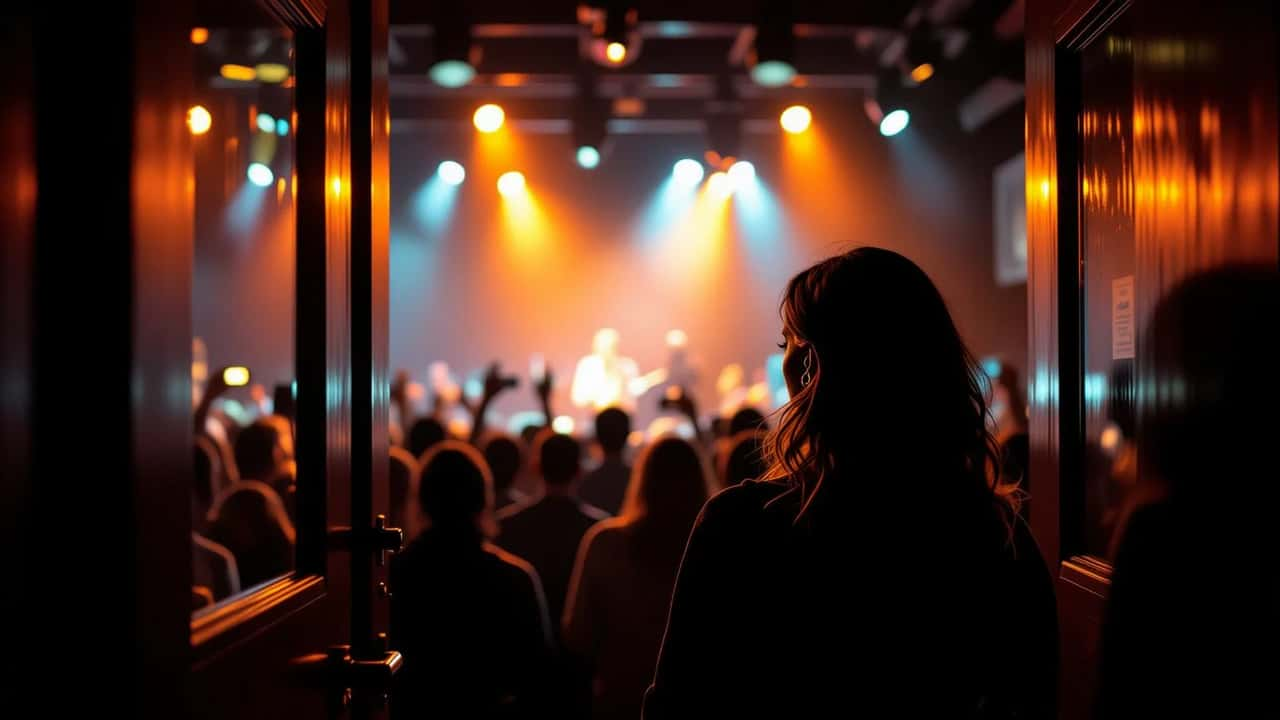
The timing matters. The autumn UK gig calendar — from stadium residencies to smaller club nights — draws millions of fans into environments regularly measured above 100dB. For context, the UK's Control of Noise at Work Regulations 2005 requires employers to provide hearing protection when workers are exposed to noise levels above 85dB. Audiences at concerts routinely exceed that threshold for two or three hours at a stretch.
What the UK's Hearing Data Actually Shows
A January 2026 report from Tinnitus UK, published to coincide with Tinnitus Awareness Week, delivered a stark set of numbers. According to the report, 92% of music fans have experienced tinnitus — the persistent ringing or buzzing in the ears — after attending a live music event. Among venue and touring staff, the figure was even higher: 93% reported hearing problems directly linked to their working environment.
Tinnitus currently affects around one in ten people in the UK persistently, and one in a hundred live with severe tinnitus that disrupts their daily life. The NHS estimates the condition costs the health service approximately £1.3 billion per year in GP appointments, audiology services, and therapy referrals. Yet the same Tinnitus UK report found that 62% of fans had never seen earplugs made available at a live music venue, and only 18% of venues surveyed had implemented any meaningful hearing protection measures.
This mismatch — between a well-documented public health risk and an almost total absence of prevention infrastructure at live events — is precisely why Loop's rise matters beyond the trend cycle. The product is filling a gap that venues, regulators, and public health campaigns have largely failed to close.
How Loop Earplugs Work — and What 17dB Actually Means
Standard foam earplugs work by creating a physical barrier that blocks sound across all frequencies, which is why music sounds muffled and distorted through them. Loop's patented acoustic channel and mesh filter sound by reducing the amplitude of soundwaves while preserving their frequency balance. The result, according to audiological reviews, is music that sounds quieter but not degraded — broadly equivalent to turning down the volume rather than wrapping your head in a pillow.
A reduction of 17dB (SNR) is meaningful in practical terms. A concert measured at 107dB at the mixing desk — a common level for mid-sized UK venues — would reach the wearer's eardrum at approximately 90dB with Loop Experience earplugs in place. That is still above the 85dB workplace action level, but it dramatically reduces the cumulative dose of noise over a two-hour set. The World Health Organisation advises that exposure to sound above 100dB should not exceed 15 minutes without protection; at 85dB, safe exposure extends to eight hours.
It is worth noting that the 17dB SNR figure is an average across frequencies. Loop's protection is not uniform — it tends to attenuate high frequencies more than low ones, which matters for people with existing high-frequency hearing loss. An audiologist assessing a specific individual's hearing profile might recommend a different attenuation level or earplug type.
When a Concert Becomes a Health Event: A Concrete Case
Consider a 29-year-old in Manchester who attends roughly one live music event per month — about twelve concerts a year, a mixture of 2,000-capacity clubs and occasional arena shows. Without hearing protection, their cumulative noise exposure across those twelve events is significant.
A typical club set runs for ninety minutes at an average of 103dB. Without earplugs, the safe daily noise dose at 103dB is approximately seven and a half minutes; ninety minutes of exposure represents a dose roughly twelve times the safe limit. Over twelve such events annually, this cumulative overexposure creates a measurable risk of noise-induced hearing loss — the kind that develops gradually and often goes unnoticed until a GP referral for audiometry reveals a notch in the hearing curve at 4,000Hz, the classic signature of noise damage.
With Loop Experience earplugs reducing exposure to approximately 86dB, the same ninety-minute set falls just above the eight-hour safe threshold — manageable rather than dangerous. The critical shift is that the person is no longer exposing themselves to dose levels that cause irreversible cochlear cell damage with each night out.
The if/then logic here is direct: if you attend more than four live music events per year in venues exceeding 100dB — a standard club, festival stage, or mid-size concert hall — then without hearing protection you are almost certainly accumulating noise-induced hearing damage, even if you feel no immediate symptoms. The damage is painless and cumulative; tinnitus and high-frequency hearing loss typically appear years after the exposure that caused them.
What this means in practice: a person who begins wearing Loop Experience earplugs from age 25 and attends the same twelve events per year will arrive at 45 with substantially better hearing than someone who did not. The £26 price point of a standard Loop set makes this one of the higher-return health investments available.
However, earplugs are not a substitute for a hearing assessment if symptoms are already present. Anyone who has experienced persistent tinnitus for more than 48 hours after an event, or who notices any difficulty with speech clarity or sudden reduction in hearing in one or both ears, should book an appointment with a GP or audiologist rather than purchasing a consumer product and hoping for the best. Our earlier coverage on how concert noise damages hearing over time sets out what to expect from a first audiology appointment.
When to Stop Googling and See an Audiologist
There are several situations where Loop Earplugs — or any over-the-counter earplug — are not the right answer, and where professional consultation is essential.
If tinnitus has been present for more than a week following a noise exposure event, this warrants medical review. Tinnitus can be a symptom of conditions beyond noise damage, including Ménière's disease, acoustic neuroma, and middle ear disorders. A GP can refer for audiology assessment on the NHS, and a qualified audiologist can carry out pure-tone audiometry to map current hearing thresholds and identify any existing damage.
If you work in a music venue, on a touring crew, or in any environment where you're regularly exposed to noise above 85dB, UK law entitles you to employer-provided hearing protection and regular hearing surveillance. Many workers in these roles are unaware of those rights. A solicitor familiar with occupational health law can advise on claims related to work-related noise-induced hearing loss — an established category of personal injury in UK courts.
For people with existing hearing loss or those fitted with hearing aids, Loop offers a model called the Switch 2 that allows movement between filtered and hearing-aid-compatible modes, but individual suitability should be discussed with an audiologist rather than assumed from product marketing.
Tinnitus UK also maintains a support helpline and directory of specialist tinnitus clinics across England, Wales, Scotland, and Northern Ireland for anyone needing more than a consumer product can offer.
What to Do Before Your Next Night Out
The simplest immediate action is to have a pair of high-fidelity earplugs — Loop or a comparable audiologist-grade alternative — ready before events rather than buying them reactively after a bad night. The Tinnitus UK guidance published in early 2026 is unambiguous: no level of acoustic exposure at a live music event should be treated as trivially harmless, and the risk is cumulative across a lifetime.
If you have any existing hearing concerns, a single appointment with an NHS audiologist or a private audiology practice is a far more reliable starting point than self-diagnosis. Audiologists can measure your specific hearing profile and advise on whether consumer earplugs are adequate, whether custom-moulded protection is worth the investment, and whether any current symptoms need clinical attention. ExpertZoom connects users with qualified health professionals who can address hearing questions remotely or in person, without the wait that frequently comes with NHS referral pathways.
The trend cycle will move on, as it always does. But the hearing you have in September 2026 is the hearing you will carry for the rest of your life.
This article contains general health information only and does not constitute medical advice. If you are experiencing hearing loss, tinnitus, or other auditory symptoms, consult a qualified healthcare professional.
