 John Green
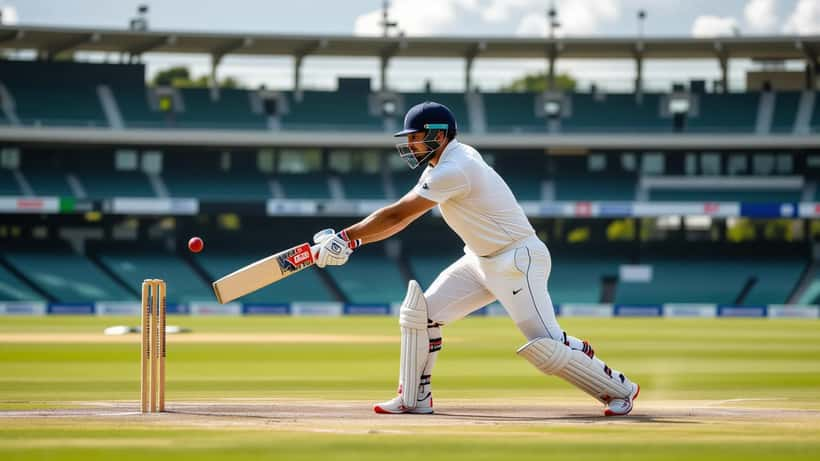
Liam Dawson's return to the England set-up in July 2026 has put a 35-year-old spin bowler back in the international spotlight, nearly three years after his previous Test appearance. The Hampshire all-rounder's recall is a story about form and persistence, but it also underlines a financial reality that most professional sportspeople face far younger than the rest of us: a career that can end, pause, or unexpectedly restart with almost no warning.
For the estimated thousands of British athletes competing below the very top tier, Dawson's late-career comeback is a useful prompt. A sporting income is rarely linear, and the years of peak earnings are compressed into a window that may close in a player's early thirties. A wealth manager would argue that planning for that volatility is not a luxury reserved for superstar salaries — it is the single most important financial decision an athlete makes.
Why an athlete's career is a financial outlier
Most careers build gradually. Earnings rise through a person's forties and fifties, and retirement arrives on a broadly predictable timetable. Professional sport inverts that curve. Earnings often peak between the ages of 25 and 32, then fall sharply, and few players know in advance when their final contract will come.
Dawson's own path illustrates the point. Written off in some quarters after 2022, he kept performing on the county circuit and earned a recall that many assumed would never come. That is the optimistic version. The more common version is a player whose top-level career quietly ends at 30, leaving four decades of adult life to fund from perhaps ten years of elevated income.
The financial planning challenge, then, is not simply "earn well." It is converting a short, front-loaded income into security that lasts fifty years or more. According to guidance from the government-backed MoneyHelper service, the core principles are the same as for any saver — but the timescales and the urgency are dramatically different for someone whose peak earning years may already be behind them at an age when others are just starting.
The three phases a wealth manager plans for
Specialists who advise sportspeople tend to split a career into three stages, and each carries its own risks.
The first is the earning phase. Here the temptation is to spend in line with a peak salary that will not last. A wealth manager's job is often to impose discipline: ring-fencing a percentage of every payment into long-term investments before lifestyle inflation sets in. The rule of thumb many advisers use is to treat a sporting income as if it were compressed — saving as though the career might end next season, not in a decade.
The second is the transition phase, which can arrive slowly or, as in Dawson's case, reverse unexpectedly. Injuries, deselection, or a change of coaching regime can cut income overnight. A well-structured plan holds enough accessible cash to cover a sudden gap without forcing a fire-sale of long-term investments at the wrong moment.
The third is the second-career phase. Very few athletes stop working when they stop playing; most need or want a second income stream, whether in coaching, media, business, or an unrelated field. The financial planning that happens during the earning years determines how much freedom a player has to choose that second act rather than take the first job available.
Pensions: the detail athletes most often miss
Because a sporting career is short and self-employment is common, pensions are frequently neglected. Yet the maths favours early contributions heavily. Money invested in a player's twenties has decades to compound, and the tax relief on UK pension contributions effectively boosts every pound saved. The gov.uk guidance on tax relief on private pension contributions sets out how basic and higher-rate relief works, and for a high earner in a peak year the effect can be substantial.
The problem is timing. An athlete earning strongly at 27 has both the cash and the tax incentive to fund a pension aggressively, but often lacks the long-term mindset. By the time the career winds down, the money to contribute may no longer be there. A wealth manager working with a sportsperson will typically push for maximum sensible contributions during peak seasons precisely because those windows do not return — even if, occasionally and happily, a player like Dawson gets a second one.
What Dawson's recall teaches the rest of us
You do not need an England call-up for this to be relevant. Anyone with a volatile or front-loaded income — contractors, commission-based salespeople, performers, founders — faces a version of the same problem. Income arrives in bursts, the good years are not guaranteed to repeat, and the discipline to save during them is what separates a comfortable later life from a precarious one.
The unglamorous conclusion is that the plan matters more than the peak. A modest income saved and invested consistently will usually outperform a large income spent as it arrives. That is not a message unique to cricket, but a 35-year-old spinner earning an unexpected recall is a vivid reminder that careers rarely follow the script — and that the financial version of "keep bowling" is to keep saving, keep investing, and keep a plan that survives whatever the selectors, or life, decide next.
When to seek professional advice
For anyone whose income is unpredictable, a conversation with a regulated wealth manager or financial adviser is worth having early rather than late. The value is not in picking a hot investment; it is in building a structure that turns irregular earnings into long-term security — spreading risk, using tax-efficient pension and ISA allowances, and holding enough in reserve to ride out the lean seasons. As Dawson's return shows, the next chapter can surprise you. A sound plan makes sure you are ready for it either way.
