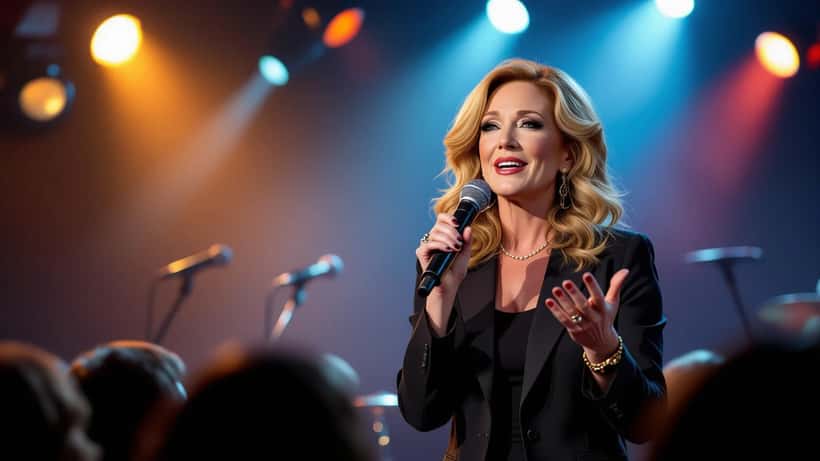
Kathy Griffin is back on the road in 2026, and her return is already selling out theatres across the United Kingdom. The comedian, whose career has survived boycotts, health scares and a very public falling-out with Hollywood power brokers, is using a stripped-back stand-up format to test new material ahead of what insiders say could be a streaming special later this year. For reputation and media consultants, the tour is a live case study in how a public figure can rebuild trust with an audience while staying true to a confrontational brand.
The new run, promoted under the working title “Laughs Without Filter,” opened in Manchester before moving to London, Birmingham, Glasgow and Edinburgh. Griffin’s set blends Trump-era anecdotes, health updates, generational clashes in comedy and self-deprecating takes on cancel culture, a term she has spent years dissecting from both sides. Audience reports suggest the material is sharper than her 2023 shows and that she is leaning into the volatility of live comedy rather than smoothing it out for broadcast. The choice to perform in mid-sized venues, typically between four hundred and nine hundred seats, gives the shows an intimacy that arena tours cannot replicate.
What makes the 2026 tour notable is not just the content but the distribution strategy. Griffin has bypassed the large comedy promoters she once relied on and is working with a small British agency that specialises in intimate venues and direct-to-fan ticketing. The result is lower production costs, closer proximity to the audience and a social-media feed dominated by fan-shot clips rather than polished trailers. That approach reduces financial risk while generating the authentic momentum that streaming platforms now look for when acquiring comedy specials. It also lets her team gather real-time feedback and adjust the setlist between cities.
For experts in personal branding, the lesson is that a career setback does not have to become a permanent identity. Griffin has repeatedly reframed adverse events, from the 2017 photo controversy to her 2021 lung cancer diagnosis, into stage material. Consultants working with executives, founders and professionals facing public criticism can apply the same principle: own the narrative, name the facts quickly, and convert the experience into a value proposition that audiences can root for. The technique is not about denial; it is about demonstrating growth in public and letting the audience witness the evolution.
The health angle remains part of the conversation. Griffin has spoken openly about losing part of her voice after surgery and about the mental adjustment of performing with a changed vocal range. Her 2026 shows reportedly include segments on navigating the NHS as an American visitor, a topic that resonates with British audiences and reinforces her gift for turning personal vulnerability into relatable comedy. Medical communication specialists note that her frankness mirrors best practice in patient advocacy, demystifying recovery while avoiding self-pity. Patients and practitioners alike can learn from the way she balances detail with humour, making a frightening subject approachable without trivialising it.
Legal and crisis-communications professionals also see a teaching moment in how Griffin manages defamation, harassment and contractual disputes in public. Rather than relying solely on statements of counsel, she documents disputes on social media, invites audience questions and turns legal friction into content. The boundary between transparency and litigation risk is thin, but her team appears to have found a rhythm that satisfies both her creative instincts and her lawyers’ caution. For any client embroiled in a public dispute, the takeaway is that messaging must be coordinated across legal, PR and social channels so that one channel does not undermine another.
The tour arrives as the UK comedy market continues to diversify beyond panel shows and arena tours. Audiences in 2026 are seeking smaller rooms, rawer performances and comedians who feel present rather than produced. Griffin, a veteran of every scale of venue, has positioned herself at the centre of that shift. Industry observers believe a successful British run could lead to European dates and a revised special that ditches the glossy Netflix model for something closer to a concert film. That format would suit her current material, which relies on immediacy and audience interplay rather than heavily produced sketches.
There is also a free-speech dimension to the tour that will feel familiar to anyone advising clients on public expression. Griffin has long argued that comedians should be allowed to fail publicly, and her 2026 set reportedly includes a segment on the difference between accountability and permanent exile. The distinction matters for institutions as well as individuals. Employers, platforms and professional bodies are increasingly asked to draw lines between harmful conduct, bad taste and legitimate satire. Griffin’s career is a long experiment in where those lines sit, and her live shows are a reminder that audiences, not algorithms, often make the final call.
From an economic standpoint, the tour is a lesson in revenue diversification. Merchandise sales, VIP meet-and-greets, podcast recordings after the show and limited-edition digital downloads are all part of the model. By owning more of the fan relationship, Griffin reduces her dependence on gatekeepers and captures value that would otherwise flow to intermediaries. Experts advising creators, consultants and small-business owners can use the same playbook: build direct channels, monetise trust in multiple formats, and treat every live interaction as content that can be repurposed.
For the expert-consultation marketplace, Griffin’s playbook offers a practical reminder: expertise is most valuable when it helps a client move from damage control to value creation. Whether the issue is reputation, health, media training, contract negotiation or public speaking, the goal is to give the client a credible next chapter. In 2026, Kathy Griffin is demonstrating that next chapter in real time, one sold-out room at a time.
