 Sophia Hamilton
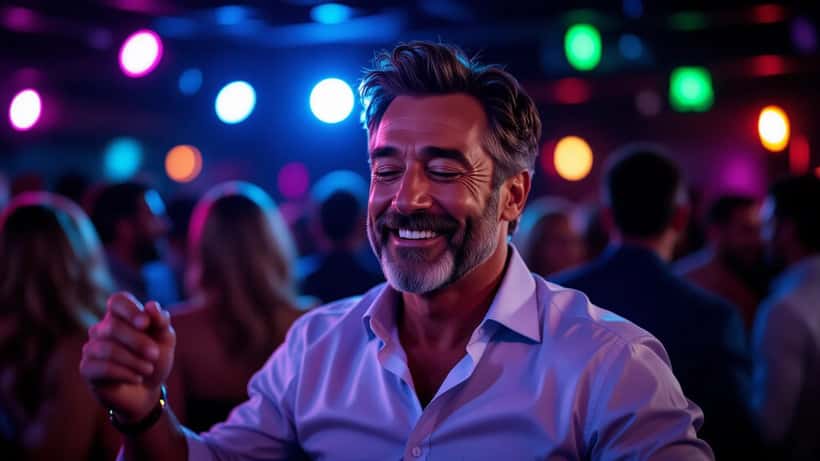
A clip of Jon Hamm dancing with his eyes closed in a neon-lit club has been circulating on TikTok and Instagram since late 2025. The scene comes from episode eight of Apple TV+'s Your Friends & Neighbours, which dropped its second season between April and June 2026. As UK fans share, remix and repost the footage, lawyers are warning that the fun can carry real copyright risk.
The Clip That Started It All
The meme shows Hamm's character, Andrew Cooper, losing himself on a dance floor to Turn the Lights Off by Kato and Jon. The footage was first spotted in the debut season of Your Friends & Neighbours in April 2025. By December 2025, users were pairing the clip with captions about payday, promotions or simply "vibing," according to reports from The Nightly and IMDb. The format proved durable: six months later, with Season 2 having aired its finale on 5 June 2026, the "Hamm dance" is still being recycled across British social media feeds.
Apple TV+ owns the copyright in the series. That means the underlying footage, soundtrack and any edited version that reproduces a substantial part of the original are all protected works. Individual users who simply watch the clip are not infringing. The legal questions begin when someone downloads, edits and re-uploads the material to a public platform.
Why This Is a Legal Minefield in the UK
In the United Kingdom, copyright arises automatically when an original film, sound recording or broadcast is created. The owner has the exclusive right to copy, distribute and adapt the work. Re-posting a meme is not automatically infringement, but it can be if it reproduces a "substantial part" of the original. UK courts look at quality, not just quantity: a few seconds of a key scene can be substantial if it captures the heart of the creative work.
The UK does provide a fair-dealing exception for caricature, parody or pastiche under section 30A of the Copyright, Designs and Patents Act 1988. However, this defence is narrow. It requires the use to be genuinely humorous or critical and to be "fair" in the sense of not competing with the original. A brand that uses the Hamm clip to promote a product, or an influencer who monetises a reaction video, is unlikely to qualify. The GOV.UK guidance on copyright exceptions sets out the conditions in plain English.
This is not the first time a viral entertainment moment has raised IP questions in the UK. The recent Eurovision 2026 season prompted similar debates about music copyright and artist rights on social platforms, as discussed in our earlier look at what UK artists need to know about music copyright.
When Sharing a Meme Becomes Commercial Use
Context matters. A private user sharing the clip to a small group of friends is at the low-risk end of the spectrum. By contrast, a business that posts the meme on its corporate Instagram account, a YouTuber who includes it in an advert-supported video, or an app that offers the clip as a sticker is moving into commercial territory. In those cases, the rights holder can argue that the use undermines the market for the original and demand a licence fee, a takedown or even damages.
Platforms such as TikTok and Instagram have their own repeat-infringer policies and content-recognition tools. A rights holder can issue a Digital Millennium Copyright Act notice or an equivalent UK report. Repeated strikes can lead to account suspension. For a creator whose income depends on social media, that is a serious business risk.
The distinction between personal and commercial use is not always obvious. A hobby account with no advertising can still attract sponsored posts later. A meme used in an internal team chat is different from the same meme used in a LinkedIn recruitment campaign. Because the line shifts with the facts, many UK creators and small businesses prefer to seek a short licence or use royalty-free alternatives rather than gamble on a fair-dealing defence.
What Rights Holders Usually Do
Major studios rarely sue individual fans for sharing a meme. The cost of litigation outweighs the gain, and viral clips can act as free marketing. However, that tolerance has limits. Rights holders are more likely to act when the use is commercial, when it misrepresents the show, or when it competes with licensed merchandise or promotional clips.
Apple TV+ has a clear interest in protecting Your Friends & Neighbours as a flagship series. With Season 2 concluding in June 2026 and a third season already confirmed, the studio may be more active in policing clips that could dilute its brand or divert traffic from its own channels.
What the Law Says About Screenshots and GIFs
Short GIFs and screenshots sit in a grey area. UK case law suggests that even a brief extract can be substantial if it takes the most memorable or commercially valuable part of a work. The England and Wales Cricket Board case is often cited: eight-second clips were held to be substantial because they captured the most exciting moments of a broadcast.
Applied to the Jon Hamm meme, a two-second GIF of the exact dance move that went viral could plausibly be treated the same way. The safer route is to rely on platform-native sharing tools where the original rights holder has already granted a licence, or to create wholly original commentary that does not reproduce the footage itself.
When to Consult an IP Solicitor
If you are a content creator, marketer or small business owner, the rules around memes can feel murky. A specialist intellectual property solicitor can review your intended use, assess whether a fair-dealing defence applies and negotiate a licence if one is needed. Getting advice before a post goes viral is far cheaper than dealing with a cease-and-desist letter after it has.
This article is for general information only and does not constitute legal advice. Copyright law is fact-specific, and a solicitor should be consulted for guidance on any particular situation.
As Jon Hamm's dance continues to loop across British screens, the lesson is clear: memes may be free to watch, but they are not always free to reuse. If your livelihood depends on sharing content, make sure you understand where the line falls before you hit publish.
