 Sophie Robinson
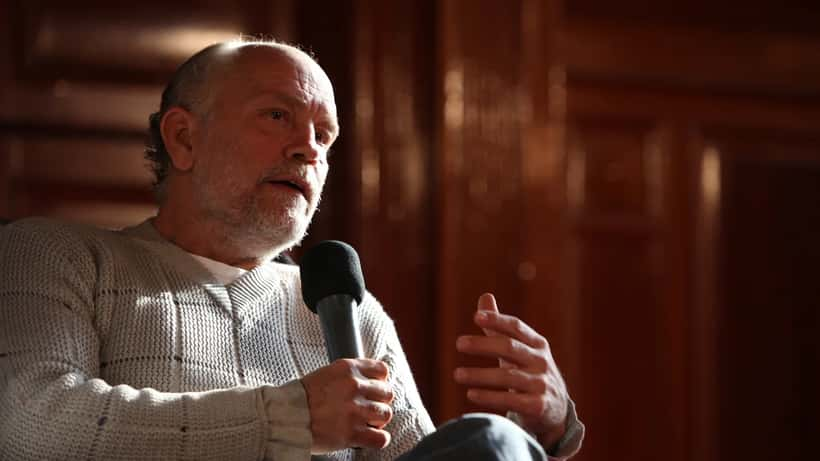
When Oscar frontrunner John Malkovich pulled out of his planned April 2027 Tel Aviv performance in September 2026, it was not artistic differences or a diary clash that forced his hand. An Israeli PR firm had published a press release quoting him directly — words he had never said, never approved, and never authorised. "The statements were printed as direct quotes from me, which is unacceptable and untenable," he said publicly. The firm later admitted he "did not make, provide, authorize or approve this statement." His case has shone a spotlight on a surprisingly common legal problem — one that can affect any UK individual or business, not just Hollywood actors.
The Malkovich Case: What Actually Happened
On 5 September 2026, an Israeli promoter's PR agency issued a press release ahead of Malkovich's scheduled performance of The Music Critic, a theatrical work composed by violinist Aleksey Igudesman at the Charles Bronfman Auditorium in Tel Aviv. The release quoted Malkovich saying he was "thrilled to return to Israel" and expressing "solidarity" with Israeli audiences — statements designed to promote the show during a politically charged moment.
There was one problem: Malkovich had said nothing of the sort. Neither he nor his representatives had seen, let alone approved, the quotes. When he discovered the release had been picked up by the Jerusalem Post and other outlets, he immediately cancelled the performance. "A PR company hired by the Israeli promoter drafted a quote for the article that was attributed to me, though I never made those statements," he explained.
The PR firm issued a formal apology confirming Malkovich "did not make, provide, authorize or approve this statement, nor was it approved by his representatives." The Jerusalem Post removed the fabricated quote. But the reputational and professional fallout — the cancelled show, the political associations, the media coverage — had already spread.
This scenario plays out in the UK every week, across industries far removed from Hollywood.
Why False Attribution is a Legal Minefield in the UK
Under English and Welsh law, publishing false direct quotes attributed to a real person can trigger several overlapping causes of action — each with distinct remedies and thresholds.
Defamation is the most familiar route. The Defamation Act 2013 requires that a statement lowers the claimant in the estimation of right-thinking members of society and that publication has caused or is likely to cause "serious harm" to their reputation. For individuals, reputational harm alone suffices. For businesses, the Act adds a higher bar: the publication must have caused, or be likely to cause, "serious financial loss."
Malicious falsehood is a related but distinct tort. It applies when a false statement is made maliciously — meaning the publisher knew it was false or was recklessly indifferent to its truth — and where the claimant suffered financial damage as a direct result. This can be easier to prove than defamation in false-attribution cases, particularly where a press release created a commercially false impression about the claimant's views or associations.
UK GDPR adds a third layer. Fabricating quotes and publishing them constitutes processing inaccurate personal data — a violation of the accuracy principle under Article 5(1)(d) of the retained EU GDPR as incorporated into UK law. This applies to any business that publishes false statements about identifiable individuals, including through press releases, case studies, and social media.
The practical consequence: a UK claimant who discovers false quotes attributed to them online has not one but potentially three concurrent legal pathways, each leading to different types of relief.
What the Defamation Act 2013 Actually Gives You
The 2013 Act provides a range of remedies for false publication:
- Injunctions to prevent further circulation of the false statement, including across syndicated outlets that have republished it
- Damages — both general damages for harm to reputation and special damages for provable financial loss such as lost contracts or cancelled engagements
- Section 12 orders: courts can direct the defendant to publish a summary of the court's judgment, functioning in practice as a compelled public correction — the outcome the Jerusalem Post provided voluntarily for Malkovich, but which UK courts can enforce
Timing matters under the Act. Section 8 introduced the "single publication rule": the one-year limitation period runs from the first date of publication, not from each subsequent republication or resharing. If a fabricated quote is picked up across twenty websites over six months, claimants cannot wait until the cycle runs its course — the clock starts ticking from the original release.
For businesses operating in reputationally sensitive sectors — law, finance, healthcare, professional services — the stakes are particularly high. A false endorsement or fabricated criticism published by a competitor, disgruntled supplier, or careless marketing agency can reach procurement decision-makers before anyone notices the error.
If you have encountered a similar situation and want to understand what this means for you, defamation solicitors listed on ExpertZoom can assess your position and advise on the fastest path to correction. For cases involving anonymous publishers, you may also find useful context in how UK courts can compel platforms to unmask anonymous accounts behind defamatory content.
A UK Contractor's False Testimonial: The Numbers That Matter
Consider a scenario drawn from a pattern seen regularly in UK commercial disputes. James is a 41-year-old IT consultant in Manchester, trading through a limited company. He completes a cybersecurity project for a software client in March 2026. Three months later, in June 2026, he discovers the client's marketing team has published a case study on their website quoting him directly by name and company — praising the client's product as "transformational" and "the best decision we made this year." James never said those words. He signed no testimonial release, and no one asked for his approval.
The case study includes a photograph of him taken at an internal team meeting.
If James does nothing: the false testimonial remains online. Two prospective clients who find it assume he has an ongoing commercial relationship with the software vendor — a direct competitor of one of his own clients. He loses a £28,000 contract when the conflict of interest is flagged during due diligence. Two further referrals fail to materialise over the following quarter as his professional standing in a niche sector is questioned.
If James acts within six weeks with a solicitor:
- A cease-and-desist letter costs between £600 and £800 in solicitor fees. In the majority of cases, this letter alone secures removal within 14 days — no court proceedings required.
- If the client refuses to remove the content, a formal claim for malicious falsehood allows James to recover the demonstrable financial loss: the £28,000 contract, evidenced by correspondence, plus general damages for reputational harm — typically assessed at £3,000 to £25,000 in modest commercial cases under current case law.
- A UK GDPR complaint to the Information Commissioner's Office is free to file and carries no litigation risk. The ICO can compel deletion of the inaccurate personal data and issue a formal reprimand to the business — which itself often prompts compliance.
The difference between acting and waiting is stark: £28,000-plus in lost revenue and an ongoing reputational wound, versus a £600–£800 letter that shuts it down in a fortnight.
Five Steps to Take if Someone Publishes False Words in Your Name
The sequence in which you respond to false attribution is as important as the response itself.
1. Preserve the evidence immediately. Screenshot the original URL, the publication date, the author, and the exact text before it is amended or deleted. Courts require evidence of the statement as it appeared at the time of publication.
2. Contact the publisher in writing before instructing a solicitor. A clear written request for immediate removal and retraction establishes a timeline and shows good-faith efforts to resolve the matter without litigation. Many publishers and PR agencies comply at this stage to avoid legal exposure.
3. Request a formal correction. Section 12 of the Defamation Act 2013 gives courts the power to order publications to issue summaries of judgments — but requesting a correction voluntarily first is standard practice, faster, and free. The Malkovich case demonstrates that this outcome is achievable even without legal proceedings, provided the claimant makes a clear, documented demand.
4. File an ICO complaint if your name, likeness, or job title appeared without consent. Publishing inaccurate personal data — including a fabricated testimonial quoting you by name — breaches UK GDPR. The ICO's online portal accepts complaints free of charge and can compel deletion.
5. Consult a defamation solicitor within six weeks of discovery. The one-year limitation period can feel generous, but early legal advice maximises available remedies and prevents the false statement from embedding itself across secondary sources. For cases involving press coverage, acting before syndicated outlets republish is critical.
The Graham Norton death hoax case illustrates how quickly false statements spread and how limited the window for effective action can be once a story reaches secondary outlets.
The Malkovich incident resolved without litigation: the PR firm apologised, the Jerusalem Post corrected the record, and the performance was cancelled. In the UK, this outcome is achievable — but it rarely happens without a formal, documented demand, and in contentious cases, professional legal guidance is essential to push publishers to act fully and swiftly.
This article is for informational purposes only and does not constitute legal advice. If you believe a false statement has been published in your name or your business's name, you should consult a qualified solicitor to assess the specific facts of your situation.
