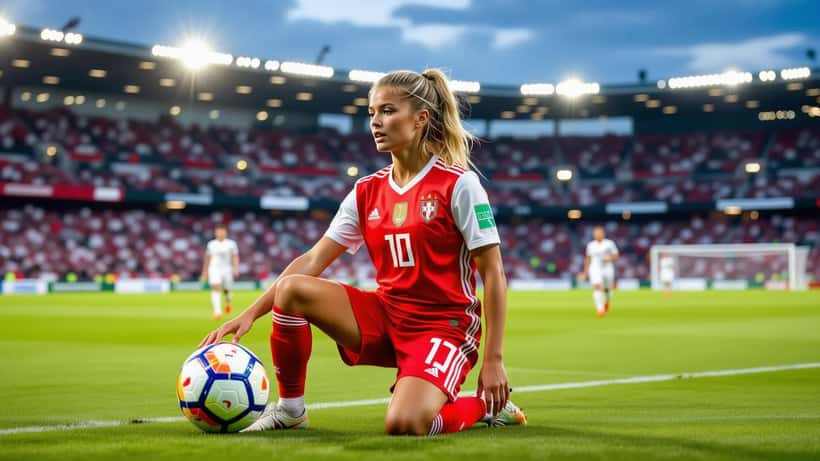
On the eve of Switzerland’s 2026 World Cup round-of-16 tie with Colombia, head coach Murat Yakin confirmed that 20-year-old midfielder Johan Manzambi had left the team’s final training session early with a knee problem. Hours later, the lineup sheet made it official: Manzambi would not play. For a player who had forced his way from the bench to the starting XI with three goals and two assists, the injury was a cruel twist — and a sharp reminder of how quickly a knee complaint can derail a tournament.
The setback came at the worst possible moment. Manzambi had become one of the breakout stars of the tournament, first announced to a wider audience with a 19-minute brace off the bench against Bosnia-Herzegovina, then backing it up with a goal and an assist on his first start against Canada. By the time Switzerland faced Algeria in the round of 32, he had already contributed five goal involvements in four matches and looked like the creative spark that could carry the Nati deep into the knockout rounds. Losing that momentum to a non-contact training injury stings.
What happened in Vancouver
Reports from the Swiss camp described the injury as a knee problem picked up during the final session before the Colombia match. Yakin told reporters that Manzambi, along with Ruben Vargas and Djibril Sow, had cut training short and would undergo further medical examinations. “This is going to be a very big loss,” Yakin said. “But this is football. You always have to adjust until the very last minute.”
The non-contact nature of the incident immediately raised concerns among medical observers. Non-contact knee injuries can cover a wide spectrum, from a simple muscular strain or contact-free hyperextension to more serious ligament or meniscus damage. Without imaging and a full clinical assessment, speculation is just that — speculation. What is clear is that the Swiss medical staff were not willing to risk the player in a knockout match, which suggests the symptoms were significant enough to rule him out on the night.
Why Manzambi’s absence changes Switzerland’s shape
Manzambi is not a like-for-like replacement for any other Swiss midfielder. At 20, he combines the energy of a box-to-box runner with the directness of a winger, and his ability to carry the ball at pace has given Switzerland an extra gear in transition. His late runs into the box have already produced three goals, while his vision has set up two more. Those are numbers that win tight games.
Against Colombia, Switzerland had to find that creativity elsewhere. Fabian Rieder was the most obvious beneficiary of Manzambi’s absence, slotting into the attacking midfield areas with Ardon Jashari providing additional industry. It worked on the night, but the margin for error shrinks dramatically in a quarter-final. If Manzambi is not available for a potential meeting with Argentina, Yakin may have to reshape his entire midfield balance.
The wider lesson: knee injuries need expert judgement
For amateur athletes and weekend players, Manzambi’s story is a familiar one. A sharp turn, an awkward landing, a tweak in training — and suddenly a season is in doubt. The temptation is to push through, apply ice, and hope for the best. But knee injuries are notoriously difficult to self-assess.
Pain location, swelling speed, instability, and the mechanism of injury all point to different diagnoses. A minor medial collateral ligament (MCL) sprain may settle in days; a meniscal tear can cause locking and swelling that worsens with activity; an anterior cruciate ligament (ACL) rupture often ends a campaign outright. These injuries can feel similar in the first few hours, which is why early expert assessment matters.
Sports medicine and physiotherapy professionals use a combination of clinical tests, imaging referrals, and load-management planning to decide whether an athlete needs rest, targeted rehabilitation, or surgical intervention. That early decision can be the difference between a swift return and a chronic problem that lasts for months.
Return-to-play timelines are never one-size-fits-all
If Manzambi’s injury is a low-grade strain, he could be back within days to a couple of weeks, which would keep a quarter-final appearance alive. A moderate ligament or meniscal issue might push his return to several weeks, making only a late-tournament cameo possible. A more severe structural injury would likely end his World Cup.
Those timelines matter for professionals because clubs and national teams have medical teams on standby. For everyone else, the same principle applies: recovery should be guided by function, not by the calendar. Returning to running, cutting, or jumping before the knee is ready increases the risk of re-injury and can turn a manageable problem into a long-term one. If you are unsure whether your knee is ready, getting a second opinion from a sports-medicine expert is a sensible step.
How expert guidance can help
The Manzambi case highlights the value of rapid, specialist input. A sports doctor or physiotherapist can interpret the mechanism of injury, recommend the right investigations, and build a progressive rehabilitation plan that protects the joint while rebuilding strength and confidence.
If you have picked up a knee injury during sport — whether it is a swollen joint after a five-a-side game or a lingering ache after running — speaking to an expert early can stop a small issue from becoming a season-ending one. Through a video consultation, you can describe the injury, discuss symptoms, and get clear guidance on whether you need rest, physiotherapy, or an in-person assessment.
For context, other high-profile footballers have faced similar crossroads. Gavi’s ACL recovery at the 2026 World Cup showed why surgical reconstruction does not automatically guarantee a quick return, while Yerry Mina’s muscle-injury comeback raised important questions about how players interpret pain signals. Thibaut Courtois’s ACL comeback journey also underlined why patience and load management are essential when a goalkeeper — or any athlete — returns from serious knee surgery.
Conclusion
Johan Manzambi’s knee injury is more than a Swiss selection headache. It is a case study in how quickly sporting fortunes can change and why expert medical judgement is the only reliable way to manage knee problems. Fans will hope the scans bring good news and that one of the tournament’s brightest young talents can return before the World Cup is over. In the meantime, his situation is a useful prompt for any active person: if your knee does not feel right after sport, get it checked. The right advice at the right time can save both your season and your long-term joint health.
