 Isobel Fraser
A growing jet fuel shortage linked to the 2026 Iran War is forcing European airlines to cut thousands of flights, with disruption expected to peak during the summer travel season. Jet fuel prices reached $1,838 per tonne in early April 2026 — nearly double the level of eighteen months ago — as conflict in the Middle East continues to disrupt supply through the Strait of Hormuz. For the millions of UK holidaymakers with summer flights already booked, the immediate question is not whether the shortage is real, but how to protect the money they have already spent.
What Is Causing the Shortage and How Bad Is It?
The disruption originates in supply chain constraints affecting kerosene production and distribution across the Middle East and European refinery networks. Airlines across the continent have begun cutting capacity in response.
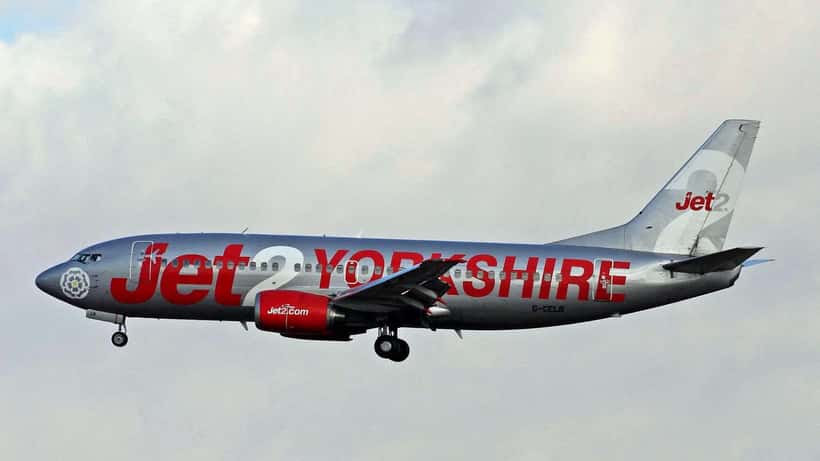
SAS announced the cancellation of 1,000 flights in April 2026 alone. Ryanair's chief executive Michael O'Leary stated publicly that further summer cuts were under consideration if the fuel situation did not improve. KLM confirmed 160 flight cancellations citing "rising kerosene costs," describing those routes as "no longer financially viable to operate." British carrier Jet2, one of the UK's largest package holiday operators, issued a statement on 23 April 2026 confirming that its own flights remain planned to proceed, while acknowledging the broader industry concern.
Regional UK airports, including London Oxford, have already experienced supply interruptions. Aviation analysts cited by CNBC on 23 April 2026 warned that European airports could face a fuel crunch within three weeks if supply chain disruption continues at the current rate.
Why EC 261 Compensation Is Unlikely to Apply
Many UK travellers assume that if their flight is cancelled, they are automatically entitled to compensation of up to £520 under UK261 (the UK's retained version of EU Regulation 261/2004). In a fuel-shortage scenario linked to geopolitical conflict, this is almost certainly not the case.
UK261 compensation applies to cancellations and long delays caused by the airline itself. However, it excludes "extraordinary circumstances" — events the airline could not reasonably have anticipated or prevented. Courts and regulators have consistently treated geopolitical crises, infrastructure failures beyond the airline's control, and major fuel supply disruptions as extraordinary circumstances.
This does not mean you are without rights. Even when compensation is off the table, airlines are still legally required to provide care and assistance: meals and refreshments during significant delays, hotel accommodation if you are stranded overnight, and a choice between a full cash refund and rebooking on an alternative flight. The right to a refund if your flight is cancelled is absolute, regardless of the reason for cancellation.
The Strongest Protection: Package Holidays
If your flight is part of a package holiday — booked as a bundle including flights and accommodation through a single operator — your financial protection is significantly stronger than if you booked each element separately.
Under the UK Package Travel and Linked Travel Arrangements Regulations 2018, your tour operator is legally responsible for the performance of the entire package, not just the flight. If your flight is cancelled or significantly altered and no suitable alternative can be provided, you are entitled to a full refund of the entire package price, not just the flight component.
Package holidays also offer protection against operator insolvency through ATOL (Air Travel Organiser's Licence), which is administered by the Civil Aviation Authority. If your ATOL-protected tour operator goes out of business before or during your trip, the ATOL scheme guarantees either your return home or a full refund. You can verify whether your booking is ATOL-protected at caa.co.uk/atol-protection.
For travellers with independently booked flights, there is no ATOL protection and no package travel regulations to fall back on. Refund rights under UK261 apply to the flight alone.
Financial note: This article provides general consumer guidance and does not constitute financial or legal advice. Your specific rights depend on your booking type, provider, and contractual terms. Consult a qualified professional if you are uncertain about your situation.
Travel Insurance: What Your Policy Might Not Cover
Travel insurance can provide meaningful protection in a fuel-shortage scenario — but only if your policy is structured appropriately. Standard travel insurance typically covers cancellation arising from specific named causes. A generalised fuel crisis may not be covered unless your policy includes "cancel for any reason" (CFAR) cover, which is available from specialist providers at a premium.
Key questions to ask your insurer right now:
- Does your policy cover flight cancellations caused by fuel supply disruptions?
- Is the current Middle East conflict classified as a "known event" that excludes coverage on new policies?
- Does your policy include missed departure cover if you cannot reach the airport due to knock-on disruption?
Most standard policies purchased before the conflict escalated in late 2025 will cover flight cancellations. Policies purchased after the disruption became widely reported are more likely to exclude this specific cause.
Section 75 and Chargeback: Credit Card Protection
If you paid for flights directly by credit card and the flight is cancelled without a refund, you may have a claim against your credit card provider under Section 75 of the Consumer Credit Act 1974, provided the transaction was over £100. This applies to the card provider as a joint liability, meaning you can claim from them if the airline fails to refund you.
For debit card payments, chargeback through your bank is available but is a scheme rule rather than a statutory right, making it less powerful than Section 75. Begin the chargeback process promptly — most schemes require a claim within 120 days of the transaction.
What Wealth Advisers Recommend: Practical Steps This Week
If you have a summer holiday booked, financial advisers recommend taking these steps now rather than waiting for cancellation notices:
- Confirm whether your booking is ATOL-protected — check your booking confirmation for the ATOL certificate.
- Review your travel insurance policy terms for cancellation and disruption coverage.
- Pay outstanding holiday balances by credit card where possible, to maximise Section 75 protection.
- Contact your tour operator directly to understand their contingency plans — operators are incentivised to find solutions rather than lose customers.
Expert Zoom connects UK travellers with qualified financial advisers and consumer law specialists who can review your specific booking situation and advise on the strongest course of action.
See also: Jet Fuel Crisis: UK Passenger Rights and Flight Cancellations 2026
With further disruption likely through July and August, acting on financial protection now — rather than when your cancellation notice arrives — is the single most effective step available.
