 Rebecca Taylor
Jane Asher, 95, Breaks Five World Swimming Records: What Doctors Say About Exercising Into Your 90s
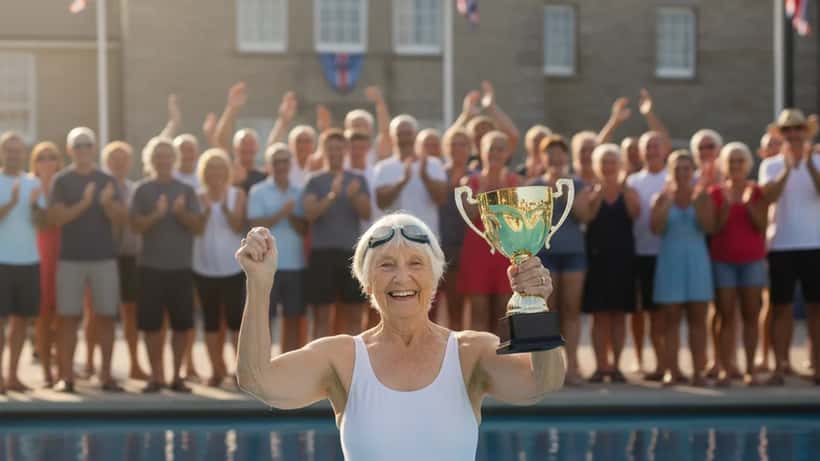
Jane Asher, a 95-year-old British swimmer from London, broke five world records at the 33rd Guernsey International Masters Open on 3 April 2026 — her latest additions to a career total of over 100 world records. Her times in the 95–99 age group included a 50m freestyle of 57.16 seconds, a 100m freestyle of 2:07.10, and a 200m freestyle of 4:38.4.
Asher, a holder of the British Empire Medal and a member of the International Swimming Hall of Fame, has become a global symbol of what active ageing can look like when supported by proper medical care and consistent training. But her achievements raise a question that many people over 60 are asking: how do I exercise safely at this age, and when should I involve a specialist?
Who Is Jane Asher — And Why Her Records Matter
This Jane Asher is not the actress. She is a competitive masters swimmer who has been pushing the limits of what science considers possible for the human body in its tenth decade. According to World Aquatics, masters swimming competitions are officially governed and the records she set are verified world records.
Her performances at Guernsey were officially ratified by World Aquatics, confirming she swam the 50m freestyle, 100m freestyle, 200m freestyle, 50m backstroke, and 50m breaststroke faster than any other woman on record in her age group. She is already eyeing the 2027 World Aquatics Masters Championships in Budapest.
For doctors and sports medicine specialists, Asher is not simply an inspirational story — she is a case study in what sustainable, medically supervised exercise looks like across a lifetime.
What Medical Science Says About Exercise After 70
The NHS England physical activity guidelines recommend that adults aged 65 and over aim for at least 150 minutes of moderate-intensity activity per week, with strength and balance exercises twice a week. These recommendations are based on evidence linking consistent exercise to reduced risk of falls, cardiovascular disease, type 2 diabetes, and cognitive decline.
For those over 70, the guidelines do not change in spirit — but the context matters. Exercise that is appropriate for a 70-year-old may differ significantly from what a 50-year-old does. Joint health, medications, bone density, and heart rate capacity all shape what is safe.
A GP or specialist can evaluate:
- Cardiovascular fitness — whether the heart can handle increased exertion safely
- Musculoskeletal health — whether joints and bones support specific activities without injury risk
- Medication interactions — some drugs for blood pressure or cholesterol affect exercise tolerance
- Balance and coordination — key factors when choosing which sport to pursue
The Difference Between Staying Active and Competing
Jane Asher trains regularly, competes internationally, and follows a structured programme. That level of intensity is not for everyone — nor should it be.
But her story illustrates an important medical principle: the body responds to consistent, progressive training at any age. Research published in the British Journal of Sports Medicine has found that masters athletes in their 80s and 90s maintain significantly higher aerobic capacity, muscle mass, and cognitive function than sedentary peers.
The most common mistake is stopping exercise entirely after a health scare or diagnosis — when carefully modified exercise is often part of the treatment plan, not a risk to avoid. A GP or specialist can design a programme that builds strength and reduces long-term risk, rather than increasing it.
Signs You Should See a Doctor Before Increasing Exercise
Not everyone needs specialist clearance before joining a swimming club or starting a walking group. But there are situations where getting medical advice first is genuinely important:
See your GP before starting or significantly increasing exercise if you:
- Have not been regularly active for more than a year
- Have been diagnosed with any cardiovascular condition, including high blood pressure or a history of heart attack
- Have been told you have osteoporosis or low bone density
- Experience chest pain, shortness of breath, or dizziness during mild exertion
- Are recovering from a recent illness, injury, or surgery
- Are taking regular medication (especially blood thinners, beta-blockers, or diuretics)
- Are aged over 75 and have not had a recent health review
The NHS provides free health checks to adults between 40 and 74 in England, but many older adults benefit from a more specific conversation about exercise capacity — something a GP can refer you for.
Swimming: Why It Remains One of the Best Sports for Older Adults
Jane Asher's choice of sport is medically significant. Swimming is widely considered one of the most suitable forms of exercise for people over 60 because:
- It is low-impact. Water buoyancy reduces the load on joints, making it suitable for people with arthritis, hip replacements, or knee problems.
- It builds cardiovascular and muscular fitness simultaneously. A 30-minute swim provides both aerobic and resistance training.
- It reduces fall risk. Although swimming itself does not train balance in the way that tai chi or yoga does, the cardiovascular and muscular benefits reduce fall risk overall.
- It is scalable. From a gentle breaststroke in a warm pool to competitive racing, swimming adapts to almost any fitness level.
For those with specific health concerns — such as cardiac conditions or recent surgery — hydrotherapy (supervised pool exercise led by a physiotherapist) offers the same low-impact benefits with direct medical oversight.
When a Specialist Is the Right Next Step
GPs are the appropriate first port of call. But in some situations, a direct referral to a specialist adds significant value:
- Cardiologist — for those with heart conditions wanting to exercise safely at higher intensities
- Rheumatologist or orthopaedic specialist — for those with joint disease, arthritis, or after joint replacement surgery
- Physiotherapist — for rehabilitation after injury, or for designing a specific strengthening programme
- Sports medicine physician — for active older adults wanting to train at competitive level
Expert Zoom connects patients with verified health specialists across the UK, including GPs and physiotherapists who can advise on exercise programmes for older adults. If Jane Asher's records inspire you to get active, speaking to a doctor first is the smartest move you can make.
A Record That Challenges What Ageing Means
Jane Asher's five world records in Guernsey on 3 April 2026 are more than a sports story. They are a reminder that the relationship between age and physical capacity is not fixed — and that with the right support, the body can do extraordinary things at any age.
The science is clear: consistent, medically appropriate exercise is one of the most powerful tools for healthy ageing. Whether you aim to swim competitively at 95 or simply want to stay independent into your 80s, the advice is the same — start, stay consistent, and get the right professional guidance.
This article provides general health information. Always consult a qualified medical professional before starting or changing an exercise programme, especially if you have a pre-existing health condition.
