 Abigail Clarke
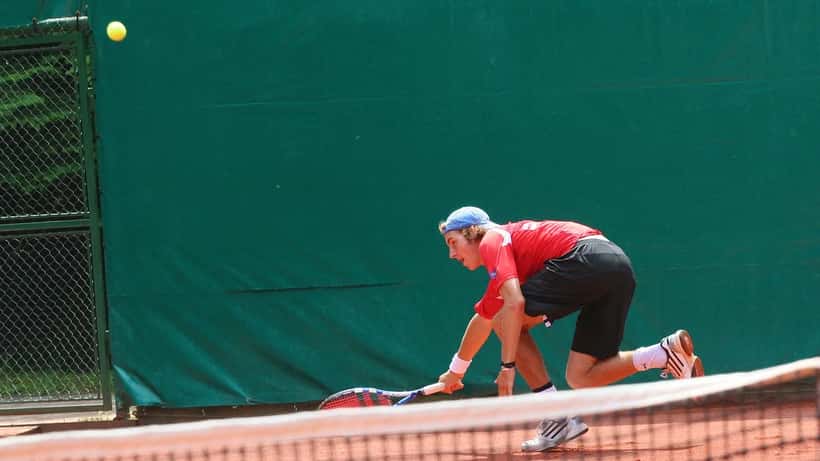
Jan-Lennard Struff walked off Centre Court on Sunday having achieved what no one — perhaps not even himself — had expected. At 36, on his 47th Grand Slam attempt, the German veteran reached the Wimbledon quarterfinals for the very first time, after Hubert Hurkacz retired injured in the fifth set with Struff ahead 3-6, 6-7(5), 7-6(2), 7-5, 4-2. The milestone makes Struff the oldest man in the Open Era to reach a first Grand Slam quarterfinal — a fact that has captivated not just tennis fans, but sports scientists and health professionals watching closely from the All England Club.
A Career Measured in Persistence
Struff turned professional in 2007 and has spent nearly two decades as a formidable but rarely headline-grabbing presence on the ATP Tour. He had reached the fourth round at Wimbledon twice before, but the quarterfinals had always eluded him — until this July. His reward is a match against World No. 1 Jannik Sinner, scheduled for Court 1 at 14:00 on 7 July 2026. Sinner leads their career head-to-head 3-0 and arrives as defending champion.
Yet the numbers that most fascinated the sporting world on Sunday were not Sinner's statistics. They were Struff's age, and the weight of 47 failed Grand Slam attempts behind him.
What Science Says About Athletic Performance After 35
The conventional model of athletic performance suggests a peak somewhere between the ages of 22 and 27, followed by gradual decline. VO₂ max — the body's maximum oxygen uptake capacity — decreases by roughly 10% per decade after 30, while muscle mass typically reduces at 3 to 8% per decade from that same point. For most professional tennis players, these physiological realities mean retirement comes well before the age of 36.
Yet elite athletes who extend their careers productively tend to share certain characteristics that go beyond raw talent. According to the NHS guide on exercise and staying active, adults who remain consistently active into their thirties and forties can significantly slow the rate of these physical changes — provided their training is appropriately structured and recovery is prioritised.
For Struff, that has meant adapting. His game has always been built around his serve — one of the most powerful on the Tour — and a heavy forehand. As his twenties gave way to his thirties, he refined the tactical use of those weapons rather than relying purely on grinding athleticism. The result this Wimbledon has been a player performing the most calculated tennis of his career.
His run at SW19 also echoes the data emerging from other impressive Wimbledon performances this fortnight, suggesting that grass courts reward experience and tactical intelligence as much as raw physical output.
The Role of Recovery and Mental Conditioning
Recovery, not training volume alone, is the foundation of peak performance for athletes past 35. Struff has spoken previously about overhauling his recovery protocols — increasing physiotherapy sessions, prioritising sleep, and adjusting his competition schedule to manage cumulative fatigue. These are adjustments that have become standard among elite veterans competing into their mid-thirties.
Psychological conditioning matters equally. The ability to stay composed under pressure, regulate emotional responses during five-set matches, and maintain self-belief through a 47-attempt wait for a breakthrough result — these are not passive attributes. They are trained skills. Struff's fifth-set composure against a seeded, injured Hurkacz reflected exactly this kind of mental architecture, developed across nearly 20 years of professional competition.
Five Health Signals Recreational Athletes Should Not Ignore
Struff's story is inspiring for elite athletes. But for the millions of recreational players — the weekend tennis fans who will pick up a racquet this week, energised by Wimbledon — it raises a practical question: how do you know when your own body needs professional support as you age?
A health or sports medicine specialist can help at several key inflection points:
1. Pain that persists beyond 48 hours after exercise — Muscle soreness is expected. Pain lingering in joints or tendons, or recurring in the same location after every session, warrants professional assessment.
2. A noticeable drop in stamina or strength — If familiar exercise feels unexpectedly harder than it did six months ago, it may reflect cardiovascular, hormonal, or nutritional changes that a professional can investigate and address.
3. Recurring injuries in the same location — Repeated strains signal a biomechanical issue. Addressing it early prevents it becoming chronic and career-limiting — at any level of sport.
4. Dizziness or chest tightness during activity — These are red flags at any age, and particularly important to investigate for anyone over 35 who has recently increased training intensity.
5. Poor recovery between sessions — If rest days no longer leave you feeling refreshed, a health specialist can identify whether sleep quality, nutrition, or an underlying health factor is contributing.
This article is for informational purposes only and does not constitute medical advice. Always consult a qualified health professional before starting or modifying an exercise programme, particularly if you have pre-existing health conditions.
Tuesday's Quarterfinal: The Next Chapter
Struff faces his stiffest test yet when he steps out against Sinner on 7 July 2026. The World No. 1's return game is the best in professional tennis, his baseline consistency is relentless, and he has not dropped a set this tournament. Statistically, the 36-year-old German is a heavy underdog.
But statistics did not predict Struff's quarterfinal appearance. They did not predict that a man on his 47th major attempt would break through at the age when most of his contemporaries have long since retired. Whatever the result against Sinner, Jan-Lennard Struff has already written a story worth remembering — and one that challenges everything we assume about sport, ageing, and what a well-managed body can still achieve on the grandest stage in tennis.
