 Sophia Hamilton
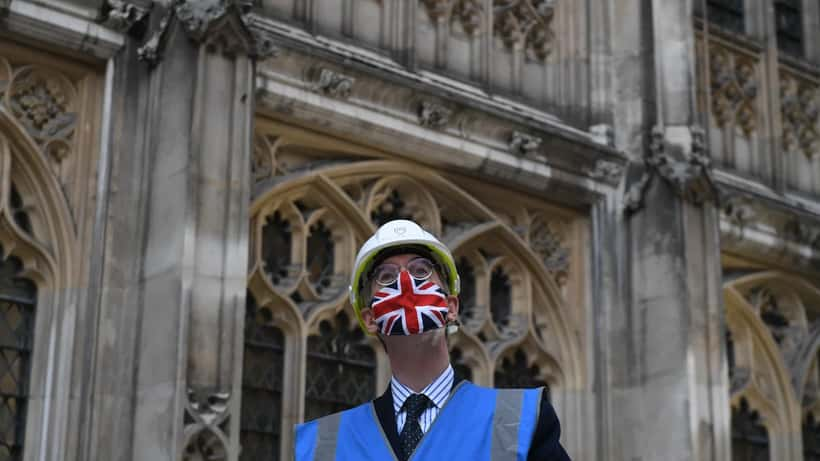
Sir Jacob Rees-Mogg announced in 2026 that he is "very strongly" considering standing as a parliamentary candidate at the next general election, expected in 2029, after losing his North East Somerset constituency to Labour by more than 5,000 votes in July 2024. The former Cabinet minister — now hosting a nightly political programme on GB News — has told supporters he loves politics "too much" to walk away. His potential comeback has reignited a question that surfaces every electoral cycle: what are the actual legal and financial rights of anyone who decides to stand for parliament in the United Kingdom?
From Westminster to GB News — and Possibly Back
Rees-Mogg, 56, served as MP for North East Somerset from 2010 until the Labour landslide of July 2024, having previously held senior Cabinet roles including Lord President of the Council and Leader of the House of Commons. Since losing his seat, he has remained firmly in public life through GB News, where his State of the Nation programme broadcasts nightly. His stated intention to return to Westminster in 2029 makes him one of the most high-profile potential comeback candidates in recent Conservative Party history.
But beyond the political drama, his situation illuminates a legal reality that applies equally to a first-time candidate in a marginal seat as to a veteran former minister: standing for parliament carries significant employment and financial consequences that most people substantially underestimate before they commit.
What UK Employment Law Actually Says to Would-Be Candidates
The legal framework governing parliamentary candidates in employment is more limited than many people assume. The Representation of the People Act 1983 provides the statutory foundation for candidacy, but employment protections flow primarily from the Employment Rights Act 1996 and subsequent case law.
The key provisions break down as follows. Employees are entitled to up to four weeks of unpaid leave before and including polling day — this is a statutory minimum and employers cannot lawfully refuse it. However, if the campaign period in a contested marginal constituency runs six to eight months before the formal election is called, all of that pre-nomination campaigning takes place outside the statutory protections. Candidates are burning through annual leave entitlement, accepting unpaid arrangements with their employer's informal agreement, or simply funding their own time.
If a candidate wins, their first 30 days of parliamentary leave may be treated as paid at the employer's discretion — after that, the remainder is unpaid until the MP's IPSA salary commences. Critically, employers cannot lawfully dismiss an employee solely for choosing to stand as a candidate: doing so would constitute automatic unfair dismissal under Section 99 of the Employment Rights Act 1996. However, employers are under no obligation to extend paid leave beyond the legal minimum, and many employment contracts — particularly in financial services, law, and roles involving security clearance — contain conflict-of-interest clauses that a candidate must identify and address before announcing their intention to stand.
This is where specialist employment law advice makes a tangible difference. Reviewing a contract for political-activity clauses before making a public announcement costs a fraction of what it costs to manage an employment dispute mid-campaign.
The Financial Stakes: Deposits, Campaign Costs, and the Resettlement Question
Most people know that standing for parliament involves a deposit. Fewer know exactly what they are risking. Every parliamentary candidate must lodge £500 with the returning officer at the time of nomination. That sum is returned only if the candidate secures more than 5% of the total valid votes cast in the constituency. Across the 2024 general election, approximately 40% of all candidates forfeited their deposit — meaning a substantial proportion of those who stood lost £500 before their first campaign leaflet was distributed.
The deposit, however, is the smallest line item in most campaign budgets. A competitive single-seat parliamentary campaign typically costs between £10,000 and £50,000 depending on the constituency's size, competitiveness, and the candidate's reliance on paid staff versus volunteers. The Independent Parliamentary Standards Authority (IPSA) does not reimburse campaign costs for unsuccessful candidates. For a salaried professional standing in a marginal seat, the realistic personal outlay over a full electoral cycle can exceed an entire year's salary.
For those who do win — and then subsequently lose a later election — the state provides some financial cushion. MPs who leave the Commons at a general election are entitled to a resettlement grant worth up to £65,738, equivalent to between 50% and 100% of the annual MP salary of £98,599 (as of April 2026), scaled according to age and length of service. A longer-serving, older MP receives the higher rate. A first-term MP who loses after five years in the Commons receives the lower rate.
If You Are the 42-Year-Old Solicitor in a Marginal Seat
Consider a specific scenario: a 42-year-old solicitor earning £75,000 per year, selected 18 months before the expected 2029 election as a prospective parliamentary candidate for a genuinely marginal constituency.
Under the current legal and financial framework, here is what she faces concretely:
Her statutory entitlement to unpaid leave covers only four weeks before polling day. At her salary, four weeks of unpaid leave represents approximately £5,769 of net income forgone at the statutory minimum. However, the 18 months of active pre-election campaigning that precedes that statutory period costs considerably more — estimated campaign expenditure of around £22,000 across travel, printed materials, social media, and a part-time campaign coordinator.
If she wins, her MP salary of £98,599 exceeds her current earnings. If she wins and then loses at the subsequent election after serving one term (approximately five years), her resettlement grant at age 47 or older would be £65,738 at the full rate. If she is younger, it drops to £49,299 (50% rate).
The if/then arithmetic is direct: if she loses in 2029, she exits the campaign approximately £28,000 out of pocket with no statutory right to recover that sum. If she wins and later loses, the resettlement grant partially offsets the career disruption — but the net position across two elections, accounting for campaign costs, remains negative. Every candidate should model this arithmetic in full before filing their nomination papers.
What a Specialist Lawyer Actually Addresses
An employment solicitor or financial adviser with experience in parliamentary candidacy will focus on four specific areas that most candidates overlook until too late.
First, contract review before public announcement. Some employment contracts in regulated industries, senior financial roles, or security-cleared positions contain clauses that create material conflicts of interest with elected political office. Identifying those clauses — and negotiating modifications if possible — is far simpler before the candidacy is public.
Second, formalising leave arrangements in writing. Many employers are accommodating when approached early and professionally. Without written documentation, informal agreements unravel under the pressure of a six-week campaign when operational demands peak simultaneously. A written agreement protects both the candidate and the employer.
Third, election expenditure compliance. All candidates are required to submit a Declaration of Campaign Expenditure within 70 days of polling day. Errors in that declaration — even genuinely innocent accounting mistakes — constitute a criminal offence under the Representation of the People Act 1983. A solicitor specialising in electoral law can help candidates set up compliant expense-tracking from the first day of the campaign period, not retrospectively.
Fourth, financial modelling for the win scenario. If a candidate wins and serves, decisions about pension contributions, savings, and financial reserves during the parliamentary period have long-term consequences. The MP salary and pension scheme are distinct from most private-sector arrangements, and planning the transition in advance avoids the financial disruption that catches many new MPs off guard in their first term.
Before the 2029 Nomination Deadline
The deadline for nomination papers in a UK general election typically falls around 15 working days before polling day. Once that window opens, the financial exposure is live and the legal consequences are in motion. The right point to take specialist advice is not the week the election is called — it is 12 to 18 months beforehand, when the pre-campaign period is beginning and both employment arrangements and financial planning can still be structured properly.
Sir Jacob Rees-Mogg has decades of parliamentary experience, a financial services background through Somerset Capital Management, and access to specialist advisers on all of these questions. A first-time candidate standing in a competitive seat in 2029 almost certainly does not — and that asymmetry plays out in expensive and sometimes career-ending ways once the campaign is under way.
If you are considering standing as a parliamentary candidate, consult a qualified employment lawyer and a financial adviser with relevant experience well before the election is called. The UK Political Crisis 2026: What Are Your Rights article on Expert Zoom covers related legal rights in the current political environment.
This article contains general information only and does not constitute legal or financial advice. If you are considering standing as a parliamentary candidate or need guidance on employment rights in this context, you should seek independent advice from a qualified solicitor or financial adviser regulated by the FCA.
