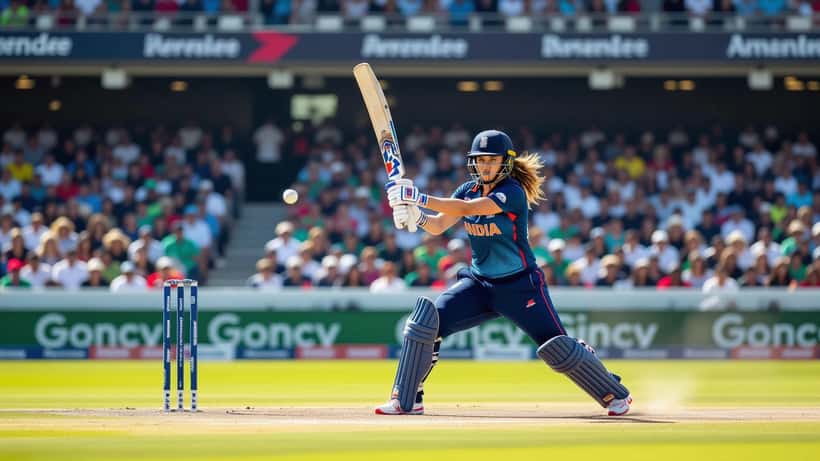
The India Women versus England Women T20I series in 2026 has already produced two tight contests, with England levelling the ledger at 1-1 after a 26-run win in the second match. For spectators, the headline is the on-field battle between Harmanpreet Kaur and Charlie Dean. For professionals watching the business of sport, the real drama is what happens around the boundary rope: player contracts, eligibility rulings, squad rotation and the high-stakes decisions that decide whether a touring party leaves with momentum or regrets. Expert Zoom’s advisers follow these moments because the same principles apply to any high-performance organisation.
England’s victory at the second T20I was built on a late-innings surge. Freya Kemp’s 13-ball 39 turned a competitive total into a daunting one, and the bowlers defended 168 with disciplined death overs. India started the chase well but lost momentum through the middle, a pattern that has appeared in several of their recent run chases against top-tier opponents. The result keeps the series alive and sets up a decider that both teams will use as a final tune-up before the ICC Women’s T20 World Cup.
That context matters for any leader. A single series is rarely decisive, yet the margins are thin enough that every selection call, fitness update and tactical tweak can alter the trajectory of a campaign. The organisations that win consistently are not necessarily the ones with the most talent; they are the ones that manage risk, contracts and communication under pressure.
Contracts and equality remain central to the conversation
Women’s cricket has moved well beyond the era of amateur schedules, and the England-New Zealand series earlier in the year showed how equal-pay contracts are reshaping expectations. When England and India meet, both boards are effectively being judged on whether their investment in players is translating into results and sustainability.
For athletes, the contract is more than a salary. It governs image rights, injury provisions, central-retainer obligations and dispute-resolution mechanisms. For employers and HR teams outside cricket, the parallel is obvious: unclear terms create friction, and friction costs points in the market. Whether you are negotiating a senior hire or a sports retainer, the advice is the same: define the deliverables, protect both parties for injury or termination, and revisit the agreement as the commercial environment evolves.
The England camp has used its contract structure to keep a core group together while rotating specialists for different formats. India has increasingly done the same, blending experienced names with younger players who can field, bowl and bat with equal impact. The result is a squad that looks deeper on paper, even if execution has been inconsistent.
Eligibility rules create both opportunity and risk
The T20 World Cup is also putting eligibility in the spotlight. The Netherlands’ historic debut at the tournament highlighted how ICC eligibility rules can open doors for players with mixed heritage or residency histories. For England and India, the question is almost the opposite: how do you keep a player pool eligible, settled and motivated when franchise leagues, residency periods and dual-nationality questions are constantly in play?
Legal clarity here is not a back-office concern. A last-minute eligibility challenge can remove a key bowler from a squad or force a board to pay compensation for an unavailable player. Sports-law specialists advise federations to audit eligibility at least twice a year and to document every switch, residency period and approval. The same discipline applies to companies hiring across borders: immigration status, tax residency and contractual restrictions should be verified before the offer is signed, not after.
Leadership under pressure defines close series
Charlie Dean’s captaincy in the second T20I was a textbook example of using resources in real time. She moved Kemp up the order to exploit a weak death-over phase, trusted Sophie Ecclestone to close the innings, and kept her fielders in positions that forced India’s batters to take risks. Harmanpreet Kaur, by contrast, acknowledged that her side had played too many dot balls and lost the initiative during the middle overs.
Those decisions map directly onto executive leadership. When a market shifts unexpectedly, the leaders who win are the ones who have already rehearsed scenarios, empowered deputies and built enough trust to change the plan mid-stream. A captain who waits until the 18th over to adjust the field is no different from a founder who waits until a revenue line drops to address a known operational weakness.
Injury, rotation and the economics of a tour
Long tours also expose the financial side of high-performance sport. Travel, accommodation, medical support and contingency players all carry cost. A single hamstring strain can force a board to fly out a replacement, adjust accommodation and rewrite the media plan. That is why modern sports organisations treat medical and logistics teams as part of the strategy function, not as support staff.
For India, the Australia tour earlier this year provided a reminder of how quickly a series can unravel when injuries and form coincide. England’s build-up to the men’s T20 World Cup also showed how selection headaches can dominate the conversation before a ball is bowled. The women’s setup has been more settled, but the decider against India will still test whether the squad has enough depth to absorb a bad day.
What businesses can learn from INDW vs EN-W
The series is a useful mirror for any organisation preparing for a high-stakes cycle. Three lessons stand out.
First, depth beats dependence. England’s ability to win without every star firing is a sign of a healthy squad culture. Businesses should build the same redundancy: no single client, employee or supplier should be able to derail the plan.
Second, contracts must keep pace with value. As women’s cricket grows, player remuneration, image rights and performance bonuses are being renegotiated almost annually. Any enterprise that leaves its talent agreements unchanged for years risks losing its best people to competitors who move faster.
Third, clarity under pressure is a competitive advantage. Whether it is a captain setting a field or a board responding to a supply-chain shock, the teams that communicate clearly and decide quickly tend to survive the tight moments.
The INDW vs EN-W decider will decide the series, but its lessons will last longer than the trophy presentation. For founders, legal advisers and HR leaders, cricket in 2026 is showing how investment, governance and culture combine to produce results when it matters most. If your own organisation is heading into a busy season, the same fundamentals apply: know your squad, know your contracts and be ready to adapt before the final over begins.
