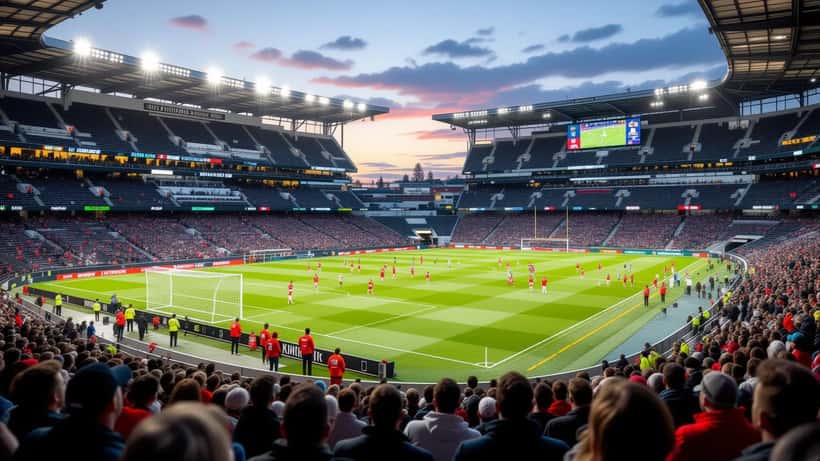
In association football, the interval between the two halves of a match is normally 15 minutes. That single sentence answers the question millions of fans type into search engines every matchday, yet the real story is more nuanced. The length, purpose, and enforcement of half time become especially important in 2026, when the expanded FIFA World Cup across the United States, Canada, and Mexico will put every procedural detail under a global spotlight.
The Laws of the Game, maintained by the International Football Association Board (IFAB), state that players are entitled to an interval at half time not exceeding 15 minutes. Referees have limited discretion to shorten it in exceptional circumstances, but in standard professional fixtures the break is fixed at a quarter of an hour. For anyone organising a tournament, broadcasting a fixture, or advising a club on logistics, that 15-minute window is a hard constraint that touches everything from medical protocols to commercial scheduling.
At the 2026 World Cup, FIFA is expected to apply the standard 15-minute half time across all tournament matches, including the group stage and knockout rounds. Because the tournament will feature 48 teams and 104 matches, the cumulative broadcast and stadium management implications are enormous. A stadium that hosts two matches in a single day must reset pitch conditions, security zones, and hospitality operations within the intervals. Tournament consultants and venue operators therefore treat half time not merely as a pause in play, but as a logistical interval whose length is negotiated months in advance.
For clubs and national teams, the 15-minute break is also a tactical and medical battlefield. Coaching staffs use the first three to five minutes to deliver data-driven feedback, often supported by performance analysts who have just processed the opening 45 minutes. Medical teams assess fatigue, hydration, and any knocks picked up during the half. Sports scientists increasingly advise that the second half performance curve is heavily influenced by what happens in this narrow window. Getting the recovery strategy wrong can mean a drop in pressing intensity or an increased injury risk after the restart.
The half-time interval also has a legal and regulatory dimension that is easy to overlook. In some jurisdictions, employment and working-time rules apply to players and matchday staff. A 15-minute rest period may be counted differently depending on whether it is classified as active work, standby, or a genuine break. Clubs that operate academies or employ part-time matchday stewards sometimes seek expert employment-law advice to ensure compliance during long tournament days. The interval is short, but the compliance obligations around it are not.
Broadcasters add another layer of complexity. A 15-minute half time must accommodate advertising blocks, studio analysis, and, in many markets, betting-odds updates. In the United States, where commercial breaks are structured differently from European broadcasts, the 2026 World Cup will test how FIFA and its media partners align the global clock with local advertising conventions. Media-rights consultants and production lawyers are already reviewing how stoppage-time announcements and half-time programming interact without extending the break beyond the regulated limit.
Extra time introduces a separate rule. In knockout competitions, if a match is level after 90 minutes, teams receive a brief five-minute interval before the two 15-minute extra-time periods begin. There is then another short pause at the end of the first extra-time period before teams change ends. These shorter breaks are not the familiar 15-minute half time, and players must adapt their recovery routines accordingly. Tournament medical consultants often recommend different carbohydrate and hydration protocols for knockout fixtures because the total rest time across 120 minutes is compressed.
Lower down the football pyramid, half time can feel different. In amateur leagues the interval is still nominally 15 minutes, but in practice it may be shortened by referee discretion, weather interruptions, or floodlight constraints. Youth competitions sometimes use shorter breaks to keep young players moving and to fit multiple games into a single venue. For clubs and league administrators, understanding the permitted flexibility is important when scheduling fixtures and negotiating venue hire.
The relevance of half-time rules extends beyond football. Rugby union uses a ten-minute half time, while American football structures its intermission around a longer entertainment and commercial spectacle. Cross-sport venue consultants who advise on multi-use stadiums must reconcile these different interval cultures, particularly in North American venues that will host both soccer and gridiron events during 2026. The 15-minute football interval is therefore part of a broader operational conversation about how venues switch between codes and audiences.
For fans and bettors, half time matters too. Live betting markets often price the next goal or match outcome during the interval, and odds can shift dramatically based on substitutions or tactical changes announced in the tunnel. Data consultants who serve betting operators note that the 15-minute window is one of the most information-dense periods of any match, because managers reveal intentions through substitutions and formation changes that reshape the second-half narrative.
As the 2026 tournament approaches, organisations that want to avoid costly errors should treat half time as a managed process rather than a natural pause. Venue operators need clear run-of-show documents. Medical teams need recovery protocols aligned to the 15-minute clock. Broadcasters need contingency plans for overruns. Clubs and national associations need to understand how FIFA’s competition regulations interact with local employment and safety laws. In each case, expert consultation can turn a routine interval into a competitive advantage.
So the short answer remains 15 minutes. The complete answer is that those 15 minutes connect tactics, medicine, broadcasting, employment law, and stadium operations in ways that will be visible to billions during the 2026 World Cup. Whether you are running a club, covering a tournament, or simply watching at home, the half-time whistle is only the beginning of the action.
