 Emily Wang
HBO is casting 21 Hogwarts student roles for its new Harry Potter series, announced on 5 March 2026 — and while fans are obsessing over who plays Oliver Wood, entertainment lawyers are watching something else: a landmark test of how intellectual property, child labour law, and streaming rights collide in one of Hollywood's biggest bets of the decade.
What HBO Just Announced
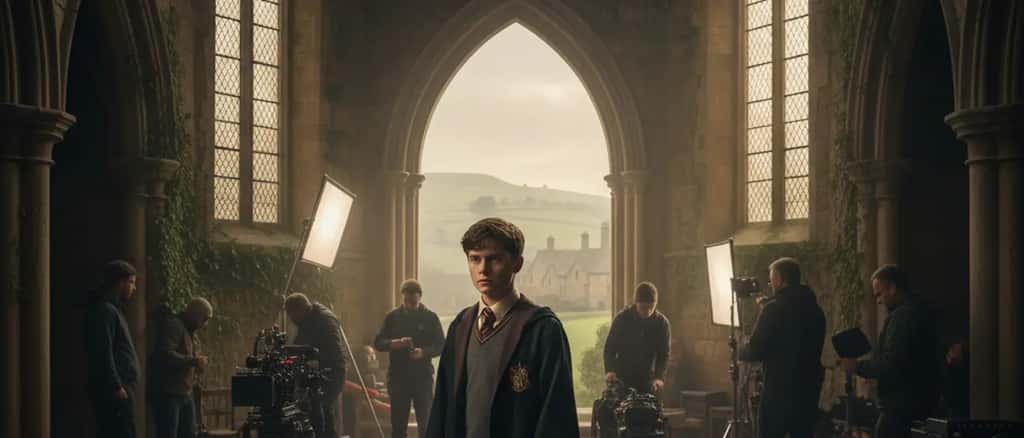
The new Harry Potter series, produced for HBO and HBO Max, confirmed on 5 March 2026 the casting of 21 student characters across all four Hogwarts houses. Key names include Orson Matthews as Oliver Wood, Laila Barwick as Pansy Parkinson, and Anjula Murali as Padma Patil. Lead trio Dominic McLaughlin (Harry), Arabella Stanton (Hermione), and Alastair Stout (Ron) were confirmed in late 2025.
The series — showrun by Francesca Gardiner with director Mark Mylod — has been filming since July 2025 and is scheduled to premiere in early 2027. J.K. Rowling is executive producer. Seven seasons are planned, one per book.
In late March 2026, HBO confirmed a rollout across new European markets including the UK, Ireland, Germany, and Italy.
Why Entertainment Lawyers Are Paying Close Attention
The Harry Potter IP situation is extraordinarily complex. Warner Bros. Discovery holds the film rights; J.K. Rowling retains significant creative control through her executive producer role; the Wizarding World brand is managed by a separate entity. With 7 planned seasons and potentially hundreds of cast members, the licensing web is one of the most intricate in television history.
IP licensing in multi-season adaptations creates compounding obligations. Each season renews royalty clauses, character rights, and approval mechanisms. The EU Audiovisual Media Services Directive (AVMSD) requires streaming platforms to ensure at least 30% of their catalogues include European works — making the UK/EU rollout simultaneously a commercial and compliance decision.
Trademark enforcement is another pressure point. The Harry Potter brand is licensed across merchandise, theme parks, and stage productions in 185 countries. When a new adaptation launches, it triggers a wave of new licensing opportunities — and disputes. Small businesses using Potter imagery, fan creators, and derivative work producers face renewed scrutiny.
Child Actor Welfare: A Legally Sensitive Area
Of the 21 newly cast student roles, the majority are young actors — some likely under 16. In England and Wales, the Children and Young Persons Act 1963 and the Children (Performances and Activities) Regulations 2014 tightly regulate:
- Working hours: Under 13s can work a maximum of 5 hours per day on set; 13-15 year olds up to 7.5 hours
- Licensing requirements: Every local authority must issue performance licences for child performers
- Education continuity: Tutors on set are legally required for children missing school
- Trust funds: Income earned by minors can be protected through contractual arrangements, though UK law does not automatically mandate this — unlike in some US states
J.K. Rowling's original cast members — Daniel Radcliffe, Emma Watson, Rupert Grint — navigated complicated financial arrangements as child stars. Watson notably used trust fund protections available in the UK to preserve a significant portion of her earnings. However, no automatic legal mechanism guarantees this for new performers.
Parents of child actors should consult an entertainment lawyer before signing any production contract. Key clauses to scrutinise include: residual payment structures, image rights in perpetuity, social media conduct clauses, and earnings protection arrangements for minors.
Streaming Rights: What the HBO-European Deal Means for Viewers
The Harry Potter series marks a significant milestone in the post-Brexit streaming landscape. UK viewers will access the series through Sky Atlantic and NOW — HBO's British partner — not directly through HBO Max. This is a distinction that matters for rights holders and consumers alike.
This arrangement highlights a structural issue in European content rights: territorial fragmentation. A British production company that licences content to HBO in the US and Sky in the UK creates distinct rights chains. For independent producers, writers, or directors involved in production, residual payments and backend participation differ significantly depending on which rights were granted and to which territory.
The EU's Digital Single Market framework provides some cross-border portability for consumers within the EU — meaning a subscriber in one member state can access their streaming service when temporarily in another. UK residents do not benefit from this post-Brexit, reinforcing the complexity of rights management.
What This Means If You're in the Entertainment Industry
If you work in content creation, screenwriting, production, or fan content, the Harry Potter reboot creates real legal questions:
- Independent filmmakers should check whether their work could be considered derivative of the Potter IP — even parody or commentary works can attract cease-and-desist letters
- Merchandise sellers using Potter imagery without a licence face escalating risk as Warner Bros. ramps up brand enforcement around the new series
- Streaming creators should understand how the EU AVMSD's 30% European content quota affects commissioning decisions — and what opportunities this creates for European talent
The Harry Potter HBO series is not just entertainment news. It is a live demonstration of how intellectual property, child welfare law, and digital rights converge — and why expert legal advice matters when navigating the entertainment industry.
Consulting an entertainment lawyer before signing any contract — whether as an actor, writer, or content creator — is the single most valuable step you can take to protect your work and your earnings.
