 Eleanor Stone
Rockstar Games has announced "The Goodtime State — Vice City Collection", a $400 (approximately £330) merchandise bundle tied to Grand Theft Auto VI's 19 November 2026 release. The set contains more than 50 Vice City-branded items — clothing, accessories, and collectibles — but no copy of the game. For UK fans eyeing the pre-order, the question is not only whether the merchandise is worth the price. It is whether the product meets the standards UK consumer law demands, and what your rights are if you feel misled.
The £330 Vice City Collection: What Rockstar Is Actually Selling
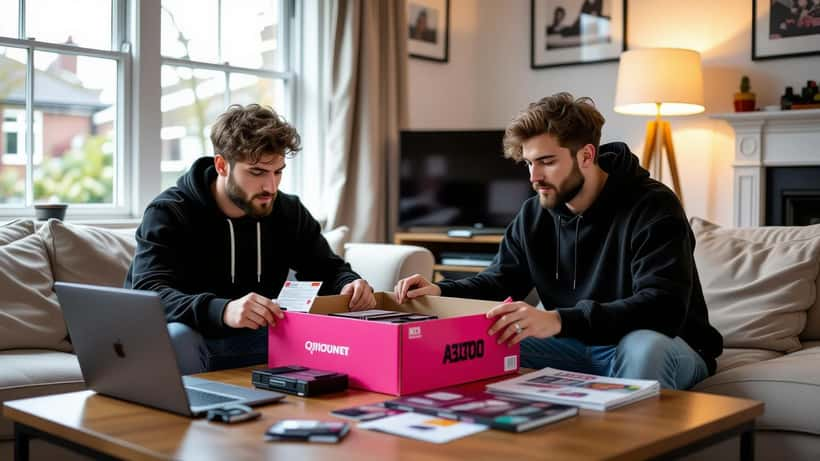
The Goodtime State — Vice City Collection was unveiled by Rockstar in September 2026. Inside the premium box, buyers receive over 50 items inspired by GTA VI's neon-drenched Florida setting, under the Vice City brand. Clothing, accessories, collector-grade merchandise — all of it tied to the world of the game. Not included: the game itself, a download code, or any form of access to GTA VI.
This landed with a thud for many fans. The $400 price point (roughly £330 at current exchange rates) is substantial, and the Vice City branding creates a strong association with the game. Rockstar's wider marketing campaign has leaned heavily into the Vice City aesthetic: a "Welcome to Vice City" sign appeared on the roof of Miami's Kaseya Center in September, visible from the air as planes approach Miami International Airport. A 34-track GTA VI original album inspired by Vice City's atmosphere is also confirmed for the November launch window.
The marketing machine is running at full speed. That makes it worth understanding exactly what you are buying — and what the law says you are entitled to.
UK Consumer Law and the "As Described" Standard
Under the Consumer Rights Act 2015, goods sold in the UK must satisfy three core standards: they must be of satisfactory quality, fit for purpose, and — critically here — as described. If a product description, imagery, or promotional material creates a reasonable impression that the product includes the game when it does not, that is where legal risk arises.
The "as described" standard does not require deliberate deception. If a consumer makes a purchase based on a description that was materially inaccurate or misleading, the law offers remedies regardless of intent. According to the legislation.gov.uk text of the Consumer Rights Act 2015, a trader must ensure that any pre-contractual information given to the consumer forms part of the contract and must be accurate.
If Rockstar's own listing clearly states "does not include the game" in plain, prominent language, then the legal position shifts: buyers are deemed to have made an informed choice. The burden, however, is on the seller to make that exclusion obvious — not buried in a footnote.
The ASA, Misleading Advertising, and Gaming Merchandise
The Advertising Standards Authority (ASA) enforces the UK Code of Non-broadcast Advertising (CAP Code). Under the CAP Code, marketing communications must not mislead consumers by omitting material information that would affect their purchasing decision.
Whether a product marketed under the Grand Theft Auto VI brand, at £330, could reasonably be expected by a consumer to include the game is exactly the kind of question the ASA assesses. Past rulings on gaming bundles — particularly those involving "ultimate" or "premium" labels — have shown that presentation and context matter as much as the literal text of a product page.
If you believe Rockstar's advertising crossed a line, a complaint can be filed directly with the ASA at asa.org.uk. The ASA cannot force a refund, but upheld rulings carry significant reputational weight and can result in the advertising being removed or amended.
When a UK Collector Feels Misled: A Concrete Scenario
Consider this situation: James, a 31-year-old GTA fan in Leeds, pre-orders the Vice City Collection in September 2026 for £330 on his credit card. He watches a Rockstar promotional video showing Vice City imagery, game branding, and the phrase "the ultimate GTA VI experience". He assumes — reasonably — that the package includes access to the game. When the box arrives on 19 November, there is no disc and no download code.
Under the Consumer Rights Act 2015, James's options depend on how the product was described at the point of sale:
If the listing did not clearly exclude the game: James has a right to a full refund under Section 9 (goods must match their description). He should contact the retailer first — not Rockstar directly, as his contract is with the seller.
If the listing did exclude the game but the advertising implied otherwise: James can file an ASA complaint about the promotional material. He can also pursue a Section 75 claim through his credit card provider (applicable because the purchase exceeds £100), which holds the card issuer jointly liable with the retailer under the Consumer Credit Act 1974.
The if/then rule here: if the product description at checkout did not clearly state the game was excluded, and you paid £330 believing it was included, then you have a strong basis for a full refund under the Consumer Rights Act 2015. If the description was technically accurate but the broader advertising was misleading, a Section 75 claim or ASA complaint are your strongest routes.
Time matters: the 30-day short-term right to reject under the Consumer Rights Act begins from the date you receive the goods, not the date you ordered. Do not wait.
Pre-Order Rights and the 14-Day Cooling-Off Period
Pre-orders add a layer of complexity. Under the Consumer Contracts (Information, Cancellation and Additional Charges) Regulations 2013, UK consumers who purchase goods online have a 14-day cooling-off period. Crucially, this period begins when you receive the goods — not when you placed the pre-order.
This means:
- Pre-ordering in September 2026 and receiving in November still gives you 14 full days from delivery to cancel and return for a full refund, no questions asked.
- The cooling-off period applies to physical goods in almost all circumstances.
- For digital goods (download codes, in-game content), the cooling-off protection may be waived once you begin downloading — so avoid activating any digital component you are unsure about.
For a £330 purchase, a 14-day return window without needing to justify your decision is a meaningful right. Use it if the product does not meet your expectations.
Section 75 and Chargeback: Your Financial Safety Net
Two financial routes are worth knowing before you spend £330:
Section 75 (Consumer Credit Act 1974): If you paid by credit card and the purchase is between £100 and £30,000, your credit card provider is jointly liable with the retailer for breaches of contract or misrepresentation. You can claim directly from your card issuer without going back to the retailer. This is one of the most powerful consumer protections in UK law.
Chargeback: If you paid by debit card or a credit card where Section 75 does not apply, chargeback is a Visa/Mastercard/Amex scheme mechanism that allows your bank to reverse the transaction. It is not a legal right, but banks typically process legitimate chargebacks within 45 days. Success rates are high for cases involving goods not received or materially misdescribed items.
For gaming merchandise disputes, chargebacks have a good track record — especially where the product's contents were not clearly stated at the point of sale.
When to Speak to a Consumer Rights Solicitor
Most disputes with large retailers resolve via direct contact or a chargeback. But some situations benefit from professional advice before you act:
- The retailer has refused a refund and you believe the grounds are legally sound
- The value at stake is significant (£330 sits well above the threshold for small claims)
- The transaction involves a cross-border element — for instance, buying directly from Rockstar's US-based store and being uncertain which jurisdiction applies
- You are considering whether an ASA complaint alone is sufficient, or whether civil action is warranted
A 30-minute consultation with a consumer rights solicitor via Expert Zoom can clarify your exact legal position before you commit to a course of action. If the UK's Online Safety Act already affects what gaming companies can legally collect about you, the rights around what they can charge you for merchandise are equally worth understanding. Getting advice early — before deadlines pass — is consistently more effective than seeking help after a claim window has closed.
GTA VI's November 2026 launch is shaping up to be one of the biggest gaming releases of the decade. The Vice City Collection may be exactly what many fans want. But knowing what you are buying, and what the law says about it, costs nothing. Spending £330 without that knowledge might.
Disclaimer: This article provides general legal information for educational purposes only and does not constitute legal advice. For advice specific to your situation, consult a qualified solicitor registered with the Solicitors Regulation Authority.
