Gry Marita Braut: The Quiet Force Behind Erling Haaland’s 2026 Norway Shirt Tribute
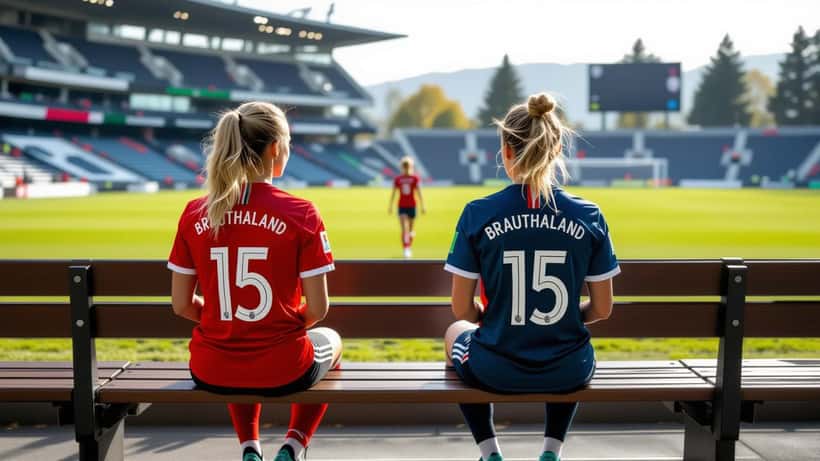
When Erling Haaland ran out for Norway in the 2026 World Cup qualifying campaign, fans noticed something different on the back of his shirt. Instead of the familiar “Haaland,” the Manchester City striker’s kit now read “Braut Haaland.” The change was a deliberate nod to his mother, Gry Marita Braut, a former Norwegian heptathlon champion who has spent most of her son’s career away from the spotlight.
The move quickly made Gry Marita Braut one of the most searched names in the UK. For parents, coaches and anyone interested in high-performance development, the sudden attention is a reminder that elite athletes are rarely self-made. Behind almost every headline-grabbing performance is a network of family influence, early discipline and emotional support.
Who is Gry Marita Braut?
Gry Marita Braut was a successful track-and-field athlete in Norway during the 1990s, winning the national heptathlon title. The heptathlon demands versatility across seven disciplines, from sprinting and jumping to throwing and distance running. Competing at that level requires not just physical talent but also time management, resilience and an unusual ability to switch between very different skills under pressure.
After stepping away from competitive athletics, Braut chose a private life, even as her son became one of the most recognisable footballers on the planet. That discretion has only added to public curiosity. While Alf-Inge Haaland, Erling’s father, is often seen at matches and involved in career decisions, Braut has rarely given interviews.
Why the shirt name matters in 2026
Haaland’s decision to add “Braut” to his international kit follows a Norwegian tradition of using both parents’ surnames. In 2026, with Norway pushing for a place at the expanded World Cup in North America, the gesture carried extra symbolism. It was a public acknowledgement that his mother’s side of the family is part of his identity, not just a footnote in his biography.
For families raising young athletes, the moment is worth studying. Haaland has often spoken about the competitive but supportive environment in which he grew up. Having one parent who played professional football and another who reached national-champion level in athletics meant that training, nutrition, recovery and mental toughness were normal dinner-table topics.
What experts say about parental influence in sport
Sports psychologists and youth-coaching specialists consistently point to the same finding: the way parents frame competition in early childhood is one of the strongest predictors of long-term athletic development. Children who see sport as a source of enjoyment and personal growth tend to stay in the system longer and handle setbacks better than those who feel pressured to perform.
Gry Marita Braut’s background suggests she understood that balance. A heptathlete cannot afford to obsess over a single event; success comes from consistency across seven disciplines. That mindset — process over outcome, patience over instant results — appears to have filtered into Haaland’s approach to football.
Privacy as a performance tool
Another lesson from Braut’s low profile is the value of boundaries. In an era where athlete families often become media brands, she has kept her distance from the cameras. That choice can protect both the athlete’s focus and the family’s wellbeing.
Career coaches and mental-health professionals who work with young performers often recommend that families designate clear roles: one parent handles logistics, another provides emotional support, and neither becomes a public spokesperson unless necessary. Braut’s absence from the limelight may be one reason Haaland has remained notably level-headed despite intense scrutiny.
Practical takeaways for parents and mentors
If you are raising a child with sporting ambition, the Haaland-Braut story offers several practical insights:
- Model a balanced relationship with sport. Talk about effort, learning and recovery rather than only scores and rankings.
- Respect the child’s ownership. Erling Haaland’s surname choice was his own. Young athletes perform best when they feel their career belongs to them, not to their parents.
- Protect downtime. High-level training is exhausting. Family life should provide mental recovery, not extra pressure.
- Draw on your own experience carefully. Braut’s athletic background gave her credibility, but she did not turn every conversation into a coaching session.
- Plan for life beyond the highlight reel. A heptathlon career is built on gradual improvement. The same long-term thinking helps young athletes survive injuries, form slumps and career transitions.
The bigger picture for 2026
Haaland’s shirt change is a small detail, but it has sparked a much larger conversation about how elite performers are shaped. As Norway chases a first World Cup appearance in decades, the country’s best player is reminding the world that talent is inherited and nurtured as much as it is trained.
For anyone seeking expert guidance on parenting high-achieving children, sports psychology or career planning for young athletes, the message is clear: start with the environment, not just the outcome. The experts available through consultation platforms can help families design that environment with the same care that Gry Marita Braut appears to have brought to her own.
