 Amelia Ward
April's Pink Full Moon Is Here — And It May Be Disrupting Your Sleep Tonight
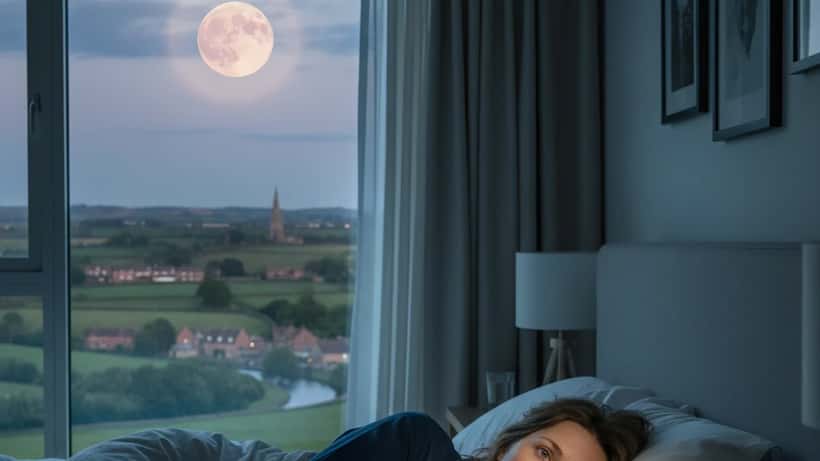
The April 2026 full moon, known as the Pink Moon, reached its peak on Thursday 2 April at 4:11 a.m. BST, and millions of Britons searching for it are about to discover something unexpected: the science on lunar sleep disruption is more solid than most people think. A growing body of research confirms that the full moon genuinely affects sleep quality — and the spring timing may make the impact even stronger this year.
What the science actually says
For decades, the idea that a full moon affects human behaviour was dismissed as folklore. But multiple peer-reviewed studies now support the connection — at least where sleep is concerned.
A landmark study led by Professor Christian Cajochen at the University of Basel, published in Current Biology, found that during the days surrounding a full moon, participants took approximately 5 minutes longer to fall asleep, slept roughly 20 minutes less per night, and experienced around 30% less deep (slow-wave) sleep. These effects occurred even when participants were in a windowless laboratory with no visual exposure to moonlight — suggesting the mechanism goes beyond simple light exposure.
Research published in Science Advances (2021), drawing on sleep data from 464 participants across rural and urban communities in Argentina, also found that sleep onset was delayed by 30 minutes and total sleep duration fell by 46 minutes in the nights before a full moon. The disruption was more pronounced in communities with less artificial lighting.
The spring timing of the April Pink Moon adds an extra layer. According to new research cited by GreekReporter.com this week, the spring Pink Moon occurs during a period when the body is already adjusting to longer daylight hours. Researchers note that this seasonal shift may amplify lunar effects on the body's circadian rhythms, making sleep patterns more sensitive in April than at other times of the year.
Why it matters for your health
Poor sleep is not a minor inconvenience. According to the NHS Sleep and Health guidance, chronic sleep deprivation — even at the level of losing 20-30 minutes per night — has measurable impacts on:
- Cognitive function: Memory consolidation, reaction time, and decision-making are all impaired after poor sleep.
- Immune system: Sleep is the period during which the body repairs tissue and strengthens immune responses. Disrupted sleep weakens this process.
- Mental health: There is a well-documented bidirectional relationship between sleep disruption and anxiety and depression — poor sleep worsens mood disorders, and mood disorders worsen sleep.
- Cardiovascular health: Research has linked habitual short sleep (under 7 hours) to increased risk of hypertension and heart disease.
For most people, one or two disrupted nights around a full moon is a temporary inconvenience. But for those who already struggle with sleep disorders — insomnia, sleep apnoea, restless leg syndrome — the lunar period can tip the balance toward a more serious episode.
Who should speak to a GP or sleep specialist?
The majority of adults experience occasional poor sleep without needing medical intervention. However, there are clear signals that your sleep issues deserve professional attention:
Speak to your GP if:
- You have had difficulty falling or staying asleep for more than 3 nights per week, over 3 or more months (this meets the clinical threshold for insomnia disorder)
- You regularly wake up feeling unrefreshed, regardless of how many hours you slept
- A partner tells you that you snore loudly, gasp, or stop breathing during sleep — these are signs of possible sleep apnoea, which is associated with serious cardiovascular risk
- Your sleep problems are significantly affecting your work, relationships, or daily functioning
- You are using sleep aids (including over-the-counter antihistamines or alcohol) more than two or three nights per week to get to sleep
Signs you may benefit from a sleep study: If your GP suspects a sleep disorder like obstructive sleep apnoea, they may refer you for a polysomnography (overnight sleep study) or a home sleep apnoea test. These assess breathing, oxygen levels, and brain activity during sleep.
Sleep specialists and therapists: For insomnia specifically, Cognitive Behavioural Therapy for Insomnia (CBT-I) is now recommended as the first-line treatment by the British Sleep Society — ahead of sleeping tablets. A GP can refer you, or you can seek a private sleep therapist directly.
Practical steps for tonight
If you want to mitigate the Pink Moon's potential sleep disruption, evidence-backed sleep hygiene measures can help:
- Blackout curtains: Even if the mechanism isn't purely visual, reducing light in the bedroom improves sleep quality in general.
- Consistent sleep schedule: Going to bed and waking up at the same time every day — including weekends — is the single most effective sleep regulation strategy.
- Avoid screens for 60 minutes before bed: Blue light from phones and tablets delays melatonin secretion, compounding any lunar effect.
- Cool bedroom temperature: The ideal temperature for sleep is between 16°C and 18°C. A warmer April night may already be raising your bedroom temperature above this range.
- Limit alcohol in the evening: Alcohol helps you fall asleep faster but fragments sleep architecture and suppresses REM sleep — the exact opposite of what you need during a period of disrupted deep sleep.
When it's more than just the moon
The Pink Moon is a useful reminder that sleep health deserves attention. But if you find yourself regularly exhausted, struggling to function, or relying on caffeine and stimulants to get through the day, the issue is unlikely to be lunar. It may be a sleep disorder, an underlying health condition, work-related stress, or an undiagnosed mental health issue — all of which a GP can help investigate.
April's full moon passes within days. Chronic sleep problems don't. If you've been dismissing your sleep issues as "just stress" or "normal," consider this your prompt to speak to a health professional.
YMYL disclaimer: This article is for informational purposes only and does not replace professional medical advice. If you have concerns about your sleep or health, consult your GP or a qualified healthcare professional.
