 Grace Davies
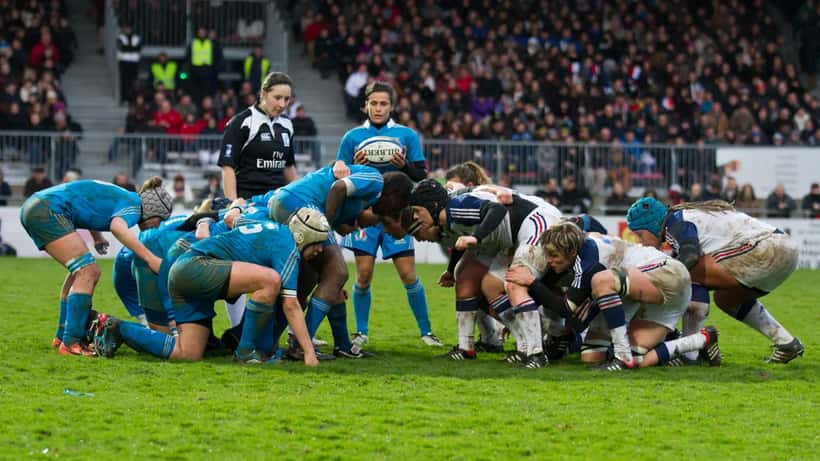
France and Ireland clash tonight in Clermont-Ferrand in Round 3 of the 2026 Women's Six Nations, with kickoff at 8:10 PM UK time. The match at Stade Marcel-Michelin could reshape the championship title race — and it shines a light on the extraordinary physical demands placed on elite women's rugby players, demands that sports medicine specialists say are still widely underestimated.
Tonight's Stakes at the Top of Women's Rugby
Ireland enter the match in France having won just once on French soil since 2017 — a nine-year drought against one of Europe's most formidable home sides. France have been devastating in the 2026 tournament so far: a 40-7 demolition of Italy in Round 1 and a 38-7 victory over Wales in Round 2 have put Les Bleues joint top of the table with England on 10 points.
Ireland's task is therefore immense. Captain Dorothy Wall and No. 8 Aoife Wafer have spoken openly about the hunger within the squad to end that losing run. Wafer, widely regarded as one of the best back-row forwards in the world, told Irish Rugby: "We've got to keep motoring on and rip into France." Winger Béibhinn Parsons arrives in outstanding form after scoring three tries in Ireland's 57-20 win over Italy in Round 2.
It is a match that UK fans are watching closely. The result in Clermont directly affects England's own title defence — France are the only team who can realistically overtake the reigning champions, and their head-to-head meeting in Bordeaux on 17 May now looms as a potential decider.
The Physical Demands Players Never Stop Managing
What happens to these athletes' bodies is a story rarely told in match previews. Women's rugby has specific injury patterns that researchers and sports doctors have documented in increasing detail over the past decade, and the findings matter for anyone involved in physical sport.
Shoulder injuries — including acromioclavicular joint sprains and rotator cuff tears — are among the most common complaints in the women's game, primarily from the tackle. Knee ligament injuries, particularly anterior cruciate ligament (ACL) tears, occur at rates that are significantly higher in women than men across contact sports, a disparity researchers attribute to anatomical, hormonal, and neuromuscular factors. The RFU has invested in ACL prevention programmes at elite level, including neuromuscular warm-up protocols that have demonstrably reduced injury rates in junior women's rugby.
Concussion remains the most discussed acute injury in rugby at all levels. World Rugby's Head Injury Assessment protocols apply equally in the Women's Six Nations, and any player suspected of concussion is immediately removed for medical evaluation. Return-to-play decisions following concussion require a graduated protocol — typically taking a minimum of three weeks for elite players.
The cumulative load of an international rugby season should not be underestimated. Players competing in a full Six Nations campaign, plus their provincial club seasons, accumulate significant musculoskeletal fatigue. According to the NHS, most sports injuries benefit from early assessment: injuries that do not improve within 48 to 72 hours, or that involve joint instability, significant swelling, or persistent pain, require prompt medical attention.
Why Women Athletes Face Distinct Challenges
Research across several sports medicine journals has highlighted that female athletes are underrepresented in sports injury studies, meaning many clinical protocols were developed primarily on data from male athletes. This is changing, but practitioners working with women in sport emphasise that treatment cannot simply be transposed from men's research.
Hormonal fluctuations across the menstrual cycle affect joint laxity, pain sensitivity, and recovery rates in ways that are still being systematically studied. Ireland's narrow defeat to France in the 2025 Rugby World Cup quarter-final — separated by just 5 points — has brought these conversations to the surface. Ireland coach Scott Bemand has spoken about individualised load management as a deliberate part of the squad's preparation for 2026.
The physical commitment on display at Stade Marcel-Michelin tonight is a product of thousands of hours of conditioning, physiotherapy, and medical oversight — infrastructure that was largely absent from women's rugby a decade ago. Professional contracts for women's rugby players in England and Ireland, introduced from 2017 onwards, were the mechanism that made specialist medical support possible as standard.
When to Consult a Sports Medicine Specialist
Whether you play social tag rugby, train for a half-marathon, or are inspired by tonight's match to take up a new activity, knowing when a sports injury requires professional attention is something many people get wrong.
Self-managing with rest and over-the-counter pain relief is appropriate for minor strains and sprains. But the following symptoms should prompt a consultation with a sports medicine doctor or physiotherapist:
- Persistent pain beyond 72 hours that does not improve with rest
- Swelling around a joint that does not reduce within 24 to 48 hours
- Any sensation of instability or "giving way" in a joint, particularly the knee or ankle
- Numbness or tingling, which may indicate nerve involvement
- An acute episode where you heard or felt a distinct "pop" — this can indicate ligament rupture
Early specialist assessment does not just resolve injury faster. It also identifies whether a structural problem exists that, left untreated, increases the likelihood of re-injury. ACL ruptures, for example, are frequently mistaken for a sprained knee in the immediate aftermath — a misdiagnosis with significant long-term consequences.
The Six Nations as a Mirror for Grassroots Sport
More than 100,000 women and girls play rugby in England alone, with participation rising sharply following the Red Roses' Grand Slam campaigns. Every Women's Six Nations match increases that participation. As Wafer, Parsons, and Wall attempt to end Ireland's French drought tonight in Clermont, their performance will inspire the next generation of players — many of whom will benefit from the kind of specialist sports health advice that the professional game now treats as standard.
Players at elite level have immediate access to team doctors and physiotherapists. Amateur players often do not. If you take part in contact sport and have sustained an injury that is not resolving, or you are returning to physical activity after a period of rest and want guidance on injury prevention and rehabilitation, a sports medicine specialist can provide a structured, evidence-based plan tailored to your body and your goals.
This article is for general health information only. Always seek advice from a qualified medical professional for the diagnosis and treatment of sports injuries.
